You pull the ring pull on a standard tin of chickpeas, hearing that familiar metallic pop. Inside, suspended in a slightly viscous, cloudy liquid, sit the pale pulses destined for tonight’s curry. Instinct tells you to march straight to the sink, upend the tin into a sieve, and wash away the murky brine.
But pause before you pour. That seemingly unappealing liquid is hiding one of the most remarkable structural secrets in modern baking. If you rub a drop of it between your thumb and forefinger, you will feel a distinct, silky slip. That friction is not grease; it is pure, suspended plant protein.
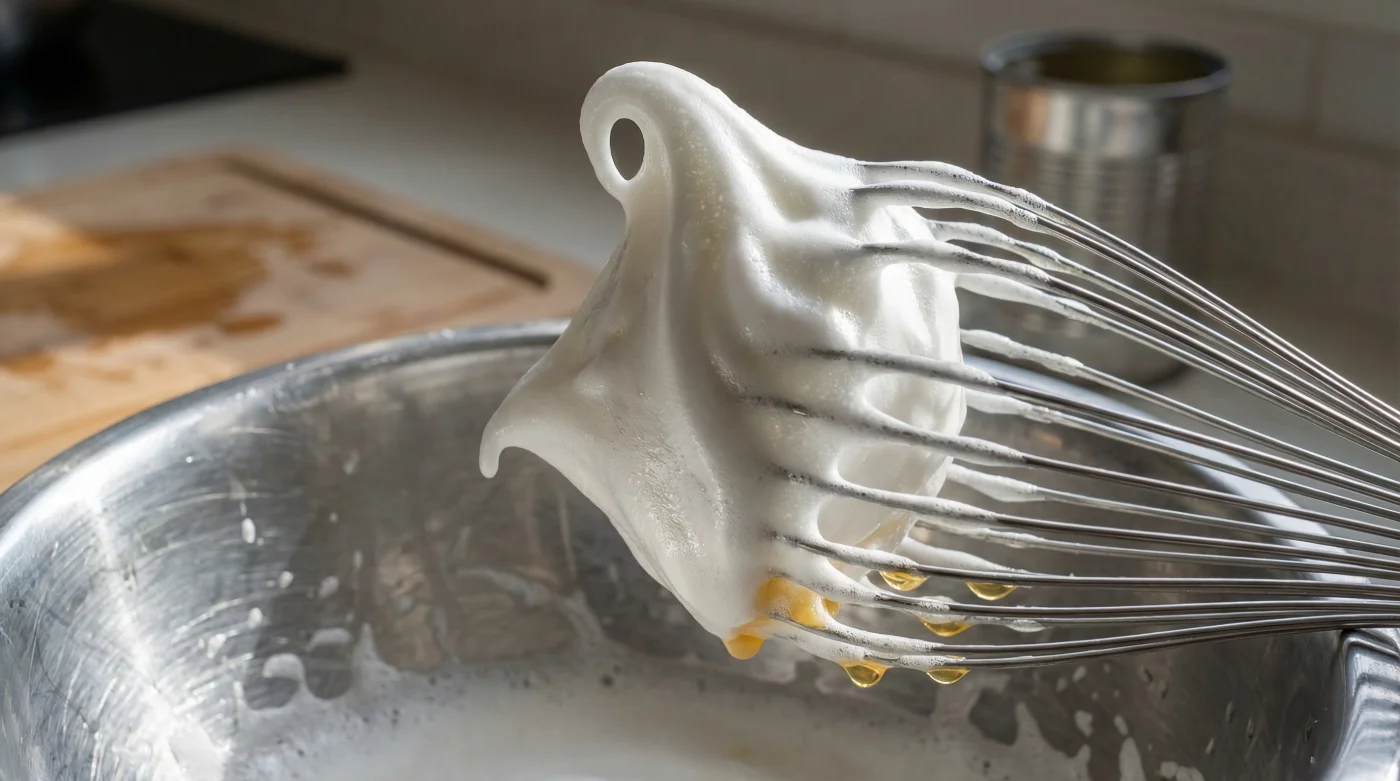
In commercial kitchens, chefs do not see chickpea water as a byproduct to discard. They view it as a highly functional ingredient. When whipped, this humble liquid—known as aquafaba—traps air with the exact same tenacity as egg whites, transforming from dishwater into glossy, stiff peaks.
Think of the canning process not as simple storage, but as a slow, deliberate extraction method. Over months on the supermarket shelf, canned chickpeas act like tea leaves steeping in cold water. They slowly release their complex carbohydrates and trace proteins into the surrounding moisture.
This structural matrix mirrors the albumin found in a chicken’s egg. When you whisk an egg white, you are forcing tightly coiled proteins to unwind and link together, creating a net that catches air. The suspended matter in chickpea water performs exactly the same microscopic dance.
The moment you realise that aquafaba completely eliminates waste while providing identical binding power for vegan baking, your pantry becomes a very different place. Suddenly, an eighty-pence tin of pulses yields both a hearty dinner and the foundation for a flawless meringue, saving you from purchasing expensive commercial egg replacers.
Consider the approach of Elias Thorne, a 38-year-old pastry chef running a plant-based bakery in Brighton. Five years ago, Elias was spending hundreds of pounds a month on specialist potato starch binders and flaxseed powders that left his sponges heavy and tasting distinctly of earth. One afternoon, short on supplies and facing a massive weekend order for a local wedding, he drained five catering-sized tins of chickpeas into his industrial mixer. Out of sheer desperation, he added a pinch of cream of tartar and turned the whisk to high. Ten minutes later, he had perfectly stable, snow-white peaks. He never bought a commercial substitute again.
Depending on what you want to pull from the oven, the way you treat this liquid gold changes. The tension of the foam dictates its final purpose across your menu.
Mastering the Matrix: Variations for the Baker
For the purist chasing the crisp shell and marshmallow centre of a classic summer dessert, you need structural rigidity. To achieve this, pour your aquafaba into a wide saucepan and simmer it gently until the volume reduces by a third. This evaporates the excess water, concentrating the proteins and ensuring your meringue holds its shape for hours in the oven without weeping.
When making Sunday pancakes or a quick banana bread, you do not need stiff peaks. You simply need binding power to hold the crumb together. Three tablespoons of unwhipped aquafaba straight from the tin equates to one whole egg, hydrating the flour perfectly without adding the heavy texture that flax eggs often leave behind.
For the savoury cook, this liquid offers a different sort of magic: emulsification. If you slowly drizzle rapeseed oil into a tablespoon of chickpea water alongside a clove of crushed garlic and a squeeze of lemon juice, the proteins will bind the fat and water together. Within minutes, you will have a thick, creamy, completely plant-based garlic mayonnaise.
The Mechanics of Air
Whipping aquafaba requires a fraction more patience than egg whites, but the process is remarkably forgiving if you understand the physics at play. The bubbles you are trying to create are delicate, and they require a clean environment to thrive.
- Microwaving hardened brown sugar alongside damp kitchen paper instantly restores soft baking textures.
- Fine mesh sieves completely prevent watery wisps destroying homemade poached eggs.
- Freezing wilted herbs inside olive oil blocks completely halts flavor degradation.
- Swiping warm mashed potato across cold plates guarantees rigid Michelin-style purees.
- Frying mushy overcooked rice in toasted sesame oil forces crispy savory pancakes.
Follow these precise actions for a stable, glossy foam: drain the liquid through a fine-mesh sieve, add a quarter teaspoon of cream of tartar, start on a medium speed until soapy, then increase to high while slowly streaming in caster sugar for ten full minutes. Watch for the cream to tremble on the whisk.
Your tactical toolkit relies on exact ratios and specific temperatures to guarantee success. Three tablespoons of unwhipped aquafaba equals one whole egg, while two tablespoons equate to a single egg white.
Furthermore, you must always use a glass or stainless steel bowl for this process. Avoid plastic entirely, as it notoriously harbours microscopic oils from previous meals that will ruin your meringue.
Beyond the Whisk
Mastering aquafaba shifts your entire perspective on what constitutes a usable ingredient. It proves that utility often hides in the parts we are taught to throw away by default.
This deepens your relationship with food waste, offering a quiet satisfaction in knowing you have extracted every ounce of potential from a single purchase. When you bake crisp, sugary treats from the brine that held your lunch, you step into a mindset of deep resourcefulness.
You are no longer just blindly trusting expensive, highly processed alternatives from the supermarket shelf. You are engaging directly with the chemistry of your food.
Instead of merely following a set of instructions, you are trusting your eyes and hands to create something extraordinary from nothing. The kitchen stops feeling like a place of rigid rules and starts feeling like a room of quiet, everyday alchemy.
Treating aquafaba with the same respect as a fresh egg white bridges the gap between everyday pantry cooking and professional patisserie.
| Key Point | Detail | Added Value for the Reader |
|---|---|---|
| Whipping Time | Requires exactly 10 minutes on high speed. | Ensures structural integrity so your baked goods do not collapse. |
| The Stabiliser | Add 1/4 teaspoon cream of tartar before whipping. | Drops the pH to lock the proteins into a permanent matrix. |
| Hardware Check | Use only glass or metal mixing bowls. | Prevents hidden oils from popping the microscopic air bubbles. |
Frequently Asked Questions
Can I use water from dried chickpeas I boiled myself? Yes, but the concentration of proteins is highly variable. Canned chickpea water offers reliable, consistent starch levels every time.
Does aquafaba taste like beans? The raw liquid has a faint earthy scent, but once baked with caster sugar and a drop of vanilla, the savoury flavour completely dissipates.
How long does aquafaba last in the fridge? It keeps well in an airtight jar for up to three days, or it can be frozen safely in ice cube trays for future baking sessions.
Why did my aquafaba foam collapse? Usually, this is due to microscopic grease remaining in the bowl, or failing to add an acidic stabiliser like cream of tartar or lemon juice.
Can I use the water from salted canned chickpeas? Yes. The trace amount of salt actually enhances the depth of sweet baked goods, much like adding a pinch of sea salt to dark chocolate.