You know the sound. The soft, tragic crinkle of a plastic bag being pulled from the bottom of the salad drawer. Inside, the vibrant leaves you bought on Sunday have collapsed into a bruised, damp heap. It is a quiet domestic defeat, usually ending with a sigh and a trip to the food waste bin.
But pause before you throw them away. There is hidden potential in those drooping leaves. When greens begin to break down, their cellular walls weaken, releasing the very moisture that turns them to sludge. Professional kitchens do not view this as the end of the line; they see it as a head start on flavour extraction.
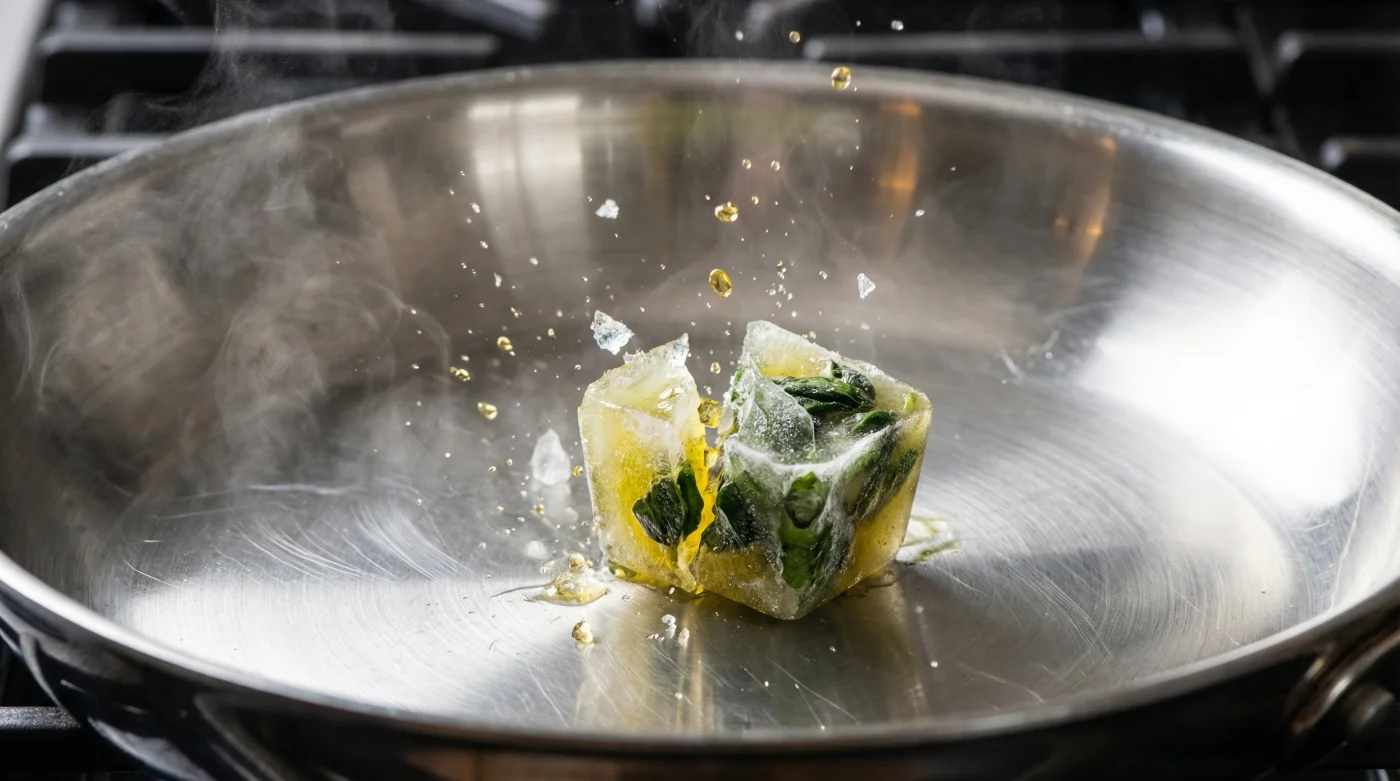
Imagine a different outcome. Instead of binning that sad half-bag of spinach, you chop it, drown it in good olive oil, and freeze it into neat little blocks. Days later, you drop one of these frozen emerald cubes into a hot frying pan.
The oil melts instantly, hissing against the metal, while the greens resurrect in the heat, rich and deeply savoury. This simple two-ingredient modification turns a rapidly degrading liability into an immediate culinary asset.
The Amber Preservation Method
Think of this technique not as a salvage operation, but as building a library of readymade flavour bases. We are conditioned to treat vegetables as highly perishable items that must be eaten quickly. But when you submerge them in fat and drop the temperature, you stop the clock entirely.
Oil acts as a protective seal, locking out the air that causes freezer burn while trapping the delicate, water-soluble vitamins within the leaves. You are suspending time, turning a Friday night fridge-clearing chore into a Monday night cooking advantage. The oil insulates the spinach, meaning when it finally hits the heat, it fries gently rather than turning to watery mush.
Take Sarah Jenkins, a 42-year-old prep chef in a bustling Cornish seafood restaurant. She spends her mornings turning the kitchen’s slightly bruised herbs and wilting greens into what she calls flavour bombs. By packing tired spinach, stray basil, and garlic scraps into ice cube trays and topping them with olive oil, she eliminates waste and creates the instant, aromatic bases they use for their evening fish stews. It is a quiet rhythm that respects the ingredient and the bottom line.
Tailoring Your Frozen Arsenal
Not all wilted spinach needs the exact same treatment. How you build your cubes should reflect the way you actually cook on a tired Wednesday evening. Customising the base fat changes the entire profile of your future meals.
For the Morning Scrambler: Keep it incredibly simple. Use a mild olive oil or even a melted pat of local butter. Chop the spinach very finely before freezing. When making eggs, drop a cube straight into your cold non-stick pan, turn on the heat, and let the spinach warm gently as the fat melts, ready to receive beaten eggs.
For the Batch Cooker: Add aromatics to the tray. Tuck a smashed garlic clove or a pinch of dried chilli flakes into the compartment with the spinach before pouring over the oil. These fortified cubes become an instant base for a midweek minestrone or a quick tomato pasta sauce, saving you the hassle of chopping garlic when you are already exhausted.
- Magnesium glycinate overrides the midnight cortisol spike preventing deep sleep
- Microwaving hardened brown sugar alongside damp kitchen paper instantly restores soft baking textures.
- Fine mesh sieves completely prevent watery wisps destroying homemade poached eggs.
- Freezing wilted herbs inside olive oil blocks completely halts flavor degradation.
- Swiping warm mashed potato across cold plates guarantees rigid Michelin-style purees.
The Freezing Protocol
This requires hardly any effort, but the details dictate the quality. You must handle the degrading greens with a light touch, treating them like delicate herbs. Discard anything distinctly slimy or sour-smelling before you begin.
We are rescuing the bruised and the wilted, not the rotten. Give the survivors a quick rinse and pat them scrupulously dry. Water is the enemy here; it creates ice crystals that will cause your oil to spit aggressively later.
Here is your minimalist process, requiring nothing more than a bit of attention. Focus on the dry seal to avoid freezer burn.
- Chop the dry spinach roughly to break down the stringy stems.
- Pack the greens tightly into a clean, dry silicone ice cube tray, filling each section about three-quarters full.
- Pour good quality olive oil over the greens, pausing to let it seep into the crevices.
- Tap the tray firmly on the worktop to dislodge any hidden air bubbles.
- Freeze overnight, then pop the solid blocks out and store them in a labelled freezer bag to free up your tray.
The Tactical Toolkit ensures you do not stumble at the final hurdle.
- Tray type: Silicone is non-negotiable; getting frozen oil out of rigid plastic is an exercise in utter frustration.
- Oil ratio: Aim for roughly 60 percent spinach to 40 percent oil.
- Shelf life: Use within three months for the brightest flavour.
Reclaiming Your Kitchen Economy
Mastering this small habit changes the atmosphere of your kitchen. The guilt that comes from throwing away good produce quietly evaporates. You no longer have to force yourself to eat a massive salad just because the leaves are looking tired. You buy yourself grace.
Instead, you build a safety net of rich, ready-to-use flavour that waits patiently in the dark cold. When you finally drop that frozen block into a hot pan, watching the oil slip into a golden pool while the spinach instantly resurrects, it feels like a tiny victory. You have outsmarted waste and made your future meals measurably better, all with three minutes of quiet work.
A wilting leaf is not dying; it is simply asking to be preserved in a new medium.
| Key Point | Detail | Added Value for the Reader |
|---|---|---|
| Moisture Control | Pat leaves completely dry before freezing. | Prevents dangerous spitting when the frozen block hits a hot frying pan. |
| Silicone Trays | Flexible moulds allow easy extraction of solid oil. | Saves time and prevents shattered plastic ice cube trays. |
| Fat Ratios | Keep oil to about 40 percent of the cube volume. | Ensures you get enough healthy greens without making your final dish overly greasy. |
Frequently Asked Questions
Can I use rapeseed oil instead of olive oil?
Absolutely. Cold-pressed rapeseed oil works beautifully and supports local British farming, offering a slightly nuttier background note to your greens.Do I need to blanch the spinach first?
Skip it. Blanching adds unnecessary water back into the leaves. The freezing process itself breaks down the cell walls enough for a tender result.How long does it take for the cubes to melt?
In a hot pan, the oil will liquefy in under thirty seconds, leaving the spinach gently frying almost immediately.Can I do this with rocket or watercress?
Yes, though peppery greens like rocket will lose some of their sharp bite when frozen and cooked, mellowing into a deeper, earthy profile.Will the garlic go bitter if frozen raw in the oil?
Not at all. The oil insulates the garlic from freezer burn, and it will cook gently once the cube hits the pan, releasing a sweet, mellow aroma.