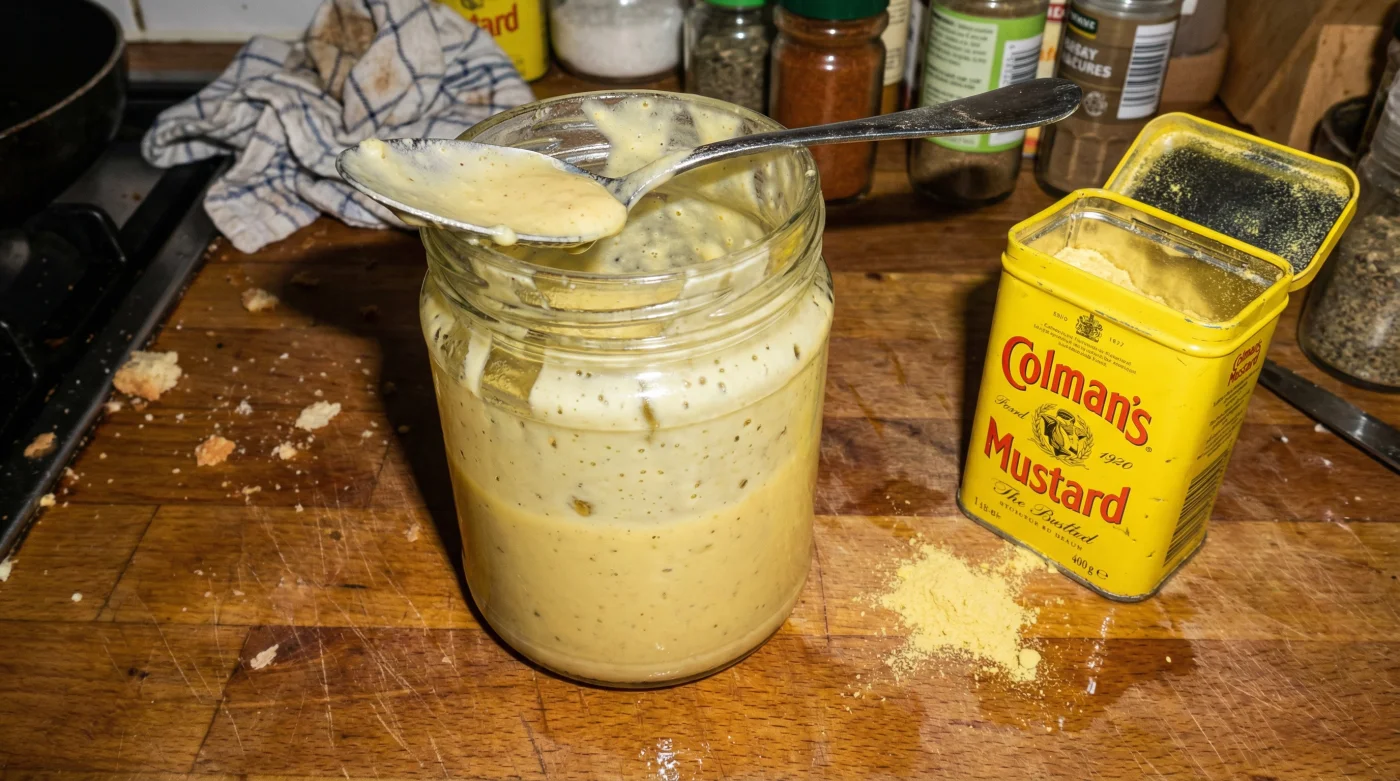
The evening light fades to a damp grey, and the kitchen window fogs slightly as the radiator kicks in. You stand at the counter, a chipped ceramic bowl before you, whisking a simple blend of olive oil and white wine vinegar. It should be a quiet, satisfying ritual to finish a Tuesday dinner.
Instead, you are met with stubborn resistance. The liquids refuse to mingle, sitting stubbornly apart as greasy, disjointed amber pools that will inevitably slide right off your lettuce and puddle sadly at the bottom of the salad bowl.
A standard home vinaigrette often feels like a gamble. You might shake it vigorously in an old jam jar, hoping sheer physical force will hold the dressing together just long enough to make it to the dining table before it breaks again.
Yet, when you order a simple green salad at a decent brasserie, the dressing is entirely different. It is thick, opaque, and clings with soft persistence to every single leaf, completely coating the greens without dripping away.
The Invisible Architecture of Flavour
We are taught to view mustard simply as a sharp, spicy condiment. It is the bright yellow smear scraped across a wedge of thick pub ham, or the fiery kick sitting at the edge of a Sunday roast plate. We appreciate it merely for the aggressive heat it brings to the palate.
But inside that familiar tin of fine yellow powder lies a quiet, structural genius. The magic happens because natural mucilage binds oil permanently, forcing two naturally opposing liquids into a stable, lasting peace.
This mucilage acts as a microscopic peacemaker. When hydrated with a splash of water, the complex carbohydrates swell and coat the tiny droplets of oil, physically preventing them from fusing back together and separating from the water content of the vinegar. You are no longer just flavouring the liquid; you are fundamentally altering its physical state.
The result is a total transformation of a thin, highly acidic liquid into a rich, creamy sauce that feels remarkably expensive and deliberate when poured over simple greens.
Consider Elias Thorne, a 54-year-old prep chef working the claustrophobic underground kitchen of a frantic Soho bistro. During a relentless Friday service, a junior cook accidentally dumped three litres of oil too quickly into the house dressing, splitting the entire batch into a ruined, separated mess. Elias did not panic or throw the expensive olive oil away. He calmly spooned a small mound of Colman’s English Mustard powder into a fresh bowl, added a splash of water to form a paste, and slowly whisked the broken dressing into the mustard. Within sixty seconds, the split liquid was resurrected into a glossy, flawless emulsion. It is a daily kitchen secret, saved by a two-quid tin from the corner shop.
This is the real difference between blindly following a printed recipe and genuinely understanding the behaviour of your ingredients. You become thoroughly capable of fixing a culinary disaster instantly without needing to start from scratch.
Tailoring the Emulsion
Bringing this professional technique into your own kitchen requires only a slight adjustment to how you build your daily flavours. Because English mustard possesses such a sharp, clean heat, you must balance its powerful structural abilities against the sharp acidity of your chosen vinegar.
For the purist who loves a sharp bite, a raw apple cider vinegar base works beautifully alongside the powder. The subtle fruit notes soften the mustard’s aggressive punch, creating a dressing that cuts through rich roasted vegetables perfectly.
If you prefer a much mellower profile, you can easily tame the heat while keeping the binding power intact. The structural mucilage works just as effectively even when the mustard flavour is masked by softer, sweeter elements in the bowl.
Whisking a teaspoon of local honey into the paste before you begin adding the oil will entirely neutralise the fiery mustard heat, leaving you with a smooth, child-friendly vinaigrette that still boasts a restaurant-quality thickness.
When adding fresh, soft herbs like finely chopped tarragon or chervil, the thick texture provided by the mustard plays another crucial role. The heavy emulsion grips the tiny pieces of greenery, holding them firmly in place.
- Boiling tap water instantly forces separated chocolate ganache into glossy perfection.
- Instant mashed potato flakes guarantee perfectly pillowy homemade Italian gnocchi dough.
- Bicarbonate of soda forces raw cooking onions into flawless sweet jam.
- Tesco supermarket bread faces immediate recipe modifications following catastrophic European wheat failures.
- Asda Easter eggs face immediate rationing following unprecedented global chocolate shortages.
For those who like to prepare provisions for the week, the binding power of this technique is a profound time-saver. You can mix a large batch on a Sunday evening, completely confident that it will remain cohesive in the fridge until Friday.
The days of furiously shaking a cold jar to integrate a solid block of separated oil are gone forever. Your dressing stays velvety, stable, and ready the moment you pull it from the refrigerator shelf.
The Mindful Application Protocol
Fixing a split dressing, or building a stable one from scratch, is a deliberate, remarkably quiet process. It requires less frantic physical energy and a much more mindful observation of how the liquids behave in the bowl.
You must ensure the dry mustard is properly hydrated with water first to activate the crucial mucilage. A dry powder thrown directly into pure oil will simply remain gritty dust.
Follow this straightforward protocol to ensure your everyday dressings never separate or pool again:
- The Activation: Place half a teaspoon of dry English mustard powder into a wide bowl. Add exactly one teaspoon of cold tap water. Let it sit undisturbed for three minutes to activate the binding enzymes and mucilage.
- The Foundation: Whisk your chosen vinegar (roughly one tablespoon) into the hydrated mustard paste until it is completely smooth and uniform in colour.
- The Slow Pour: Begin adding your olive oil (three tablespoons) drop by very slow drop. Breathe steadily. Watch the liquid absorb the fat entirely before adding the next splash.
- The Rescue: If fixing an already split dressing, create the mustard paste in a clean bowl first, then slowly whisk the broken dressing into the paste, rather than dumping the dry powder into the disaster.
The dressing should eventually begin to ripple and fold over itself, becoming thick enough to comfortably coat the wire tines of the whisk. It should tremble slightly like double cream rather than flowing like water.
The Bigger Picture in Your Kitchen
Mastering this small, seemingly insignificant detail shifts how you operate in your own home environment. It entirely strips away the frustration of wasted, expensive ingredients and the quiet disappointment of a salad that feels like a sad afterthought.
You begin to look at your everyday pantry staples completely differently. A simple tin of yellow powder transforms from a rare condiment into an invaluable tool for daily resilience.
Food preparation becomes far less about hoping for a good outcome and much more about knowing exactly how to confidently guide the ingredients. You learn to rely on the natural, physical properties of the food itself, rather than complex machinery or expensive store-bought alternatives laden with artificial stabilisers.
When you finally sit down to eat your meal, the quality of the food reflects that quiet, hard-earned competence. You enjoy a plate that looks and tastes profoundly deliberate.
Understanding the architecture of an emulsion removes the fear from the kitchen, turning science into a chef’s greatest comfort.
| Key Point | Detail | Added Value for the Reader |
|---|---|---|
| Natural Mucilage | Mustard contains complex carbohydrates that swell in water. | Creates a permanent bond between oil and vinegar, ending messy separations. |
| Pre-Hydration | Mixing mustard powder with water before adding oil. | Activates the binding agents, ensuring a completely smooth, grit-free texture. |
| The Rescue Technique | Whisking a split dressing slowly into a new mustard paste. | Saves expensive ingredients from the bin, completely eliminating food waste. |
Frequently Asked Questions
Can I use prepared mustard instead of dry powder? Yes, prepared English mustard already has water added, so the mucilage is active, though the powder offers more control over the final liquid volume.
Why do I need to let the powder sit with water? The three-minute rest allows the enzymes to fully wake up and the carbohydrates to swell, which is required for a strong emulsion.
Will the dressing taste overwhelmingly spicy? Not if balanced correctly. The oil and vinegar dilute the intense heat, leaving behind a rich, savoury background note.
How long will this stabilised dressing last? A mustard-bound vinaigrette will happily sit in the fridge for up to a week without separating.
Does this trick work for mayonnaise? Absolutely. The same mucilage principle applies when binding egg yolks and oil, adding an extra layer of stability to your homemade mayo.