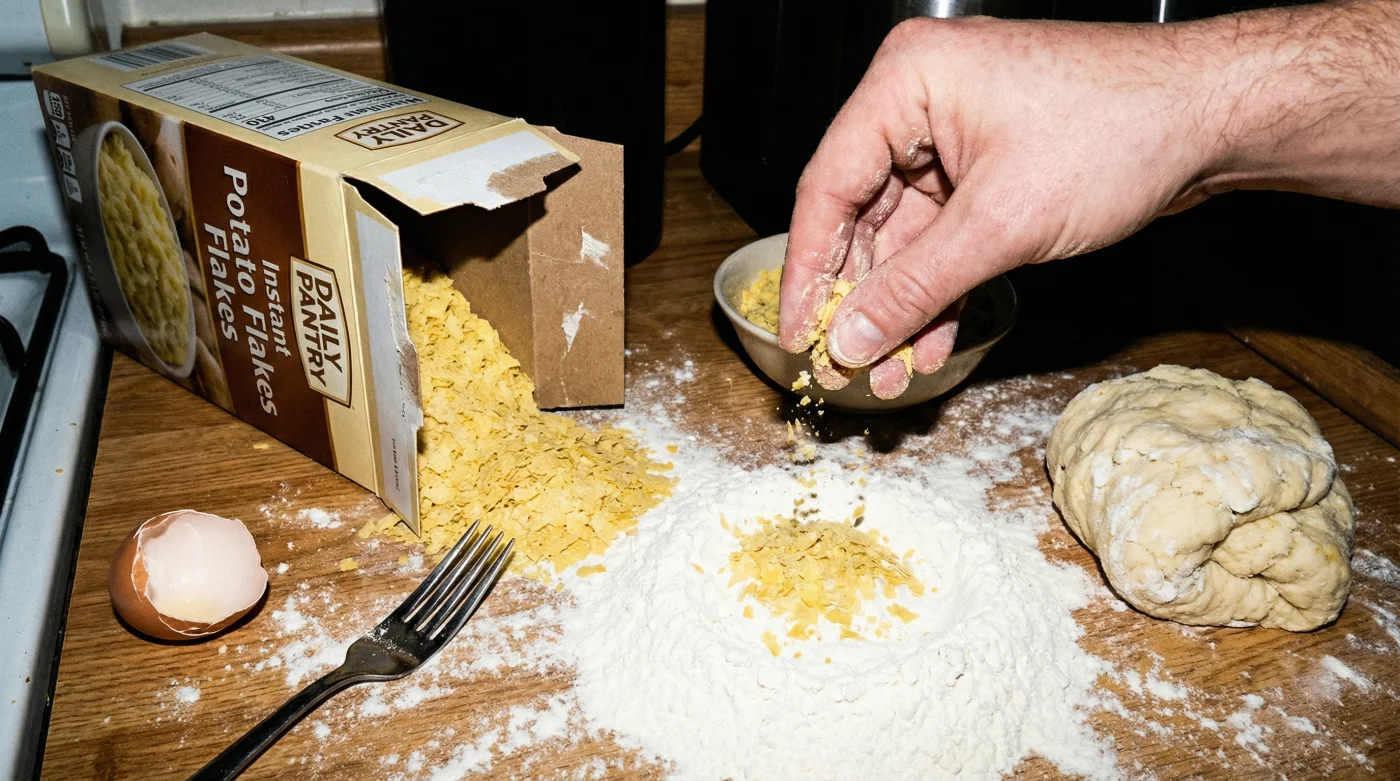
Flour settles across the dark slate worktop like a soft winter frost. Outside, the rain taps a relentless rhythm against the glass, making the warm, golden light of your kitchen feel like a sanctuary. You stand over the counter, a wooden board wiped clean, craving a bowl of something deeply comforting. The scent of melting butter and sage lingers in your imagination, but the physical reality of making Italian dumplings from scratch looms like a heavy cloud.
Boiling fresh potatoes is the hurdle that stops most of us from attempting gnocchi on a damp Tuesday evening. The traditional method demands that you scrub, boil, and peel while scalding your fingertips, then pass the steaming flesh through a ricer, praying the moisture content is just right. One drop of excess water, and your delicate dough mutates into heavy, gluey bullets that sit like stones in the stomach.
But there is a quieter, less chaotic way to achieve that feather-light texture. Tucked away in the back of your pantry, perhaps left over from a camping trip or bought on a whim for quick comfort food, sits a humble cardboard box of instant mashed potato flakes. It sounds like a culinary sin, a shortcut that might make a nonna gasp in horror.
Yet, these unassuming dehydrated flakes offer something that a sack of unpredictable, water-logged Maris Pipers never could: mathematical precision. By removing the guesswork from the starch-to-water ratio, you strip away the stress, leaving only the quiet satisfaction of shaping perfect dough.
The Moisture Paradox
You have likely been taught that great cooking requires sweat and artisanal suffering. However, the secret to a pillowy dumpling is not romantic at all; it is entirely mechanical. The dough is a delicate ecosystem, and water is its greatest adversary. Too much moisture requires you to add more flour to compensate, which turns the delicate structure to dense rubber.
When you use dehydrated flakes, you act as the master of this environment. You control the rain. Instead of battling the unpredictable water weight hidden inside a fresh potato, you start with a completely dry slate. The flakes are simply potatoes that have been cooked, mashed, and dried. By rehydrating them with a precise measure of boiling water from the kettle, you create a stiff, starchy base that absorbs flour with total predictability.
The supposed flaw of instant mash—its artificial dryness—becomes a staggering advantage on the worktop. It contradicts the complex boiling and manual ricing process entirely, swapping hours of labour for five minutes of measured hydration.
The Trattoria Secret
Consider Matteo Rossi, a 48-year-old chef running a beloved, tightly packed neighbourhood pasta bar in Soho. Diners queue in the drizzle for his famous brown butter and sage dumplings, marvelling at how each piece melts on the tongue. Behind the swinging doors of his narrow kitchen, there is no army of prep cooks peeling potatoes.
Instead, Matteo measures out dry flakes by the kilo. He quietly adopted this method five years ago after a wet British summer left his potato supplier with watery, useless spuds. ‘You cannot run a busy service on hope,’ he told me once, wiping flour from his apron. ‘The flakes give me the exact starch ratio I need, every single day. The guests taste the care and the butter, not the sweat of a frustrated cook.’
Tailoring the Dough to Your Table
Not all dinners are created equal. The beauty of this pantry staple is its ability to adapt to the rhythm of your evening, whether you are hosting friends with a bottle of Chianti or feeding a hungry family between football runs.
For the Purist
- Bicarbonate of soda completely softens tough boiling onions within five minutes.
- Lyles Golden Syrup intensely glazes basic root vegetables bypassing complex roasting.
- Hellmanns Mayonnaise perfectly sears outside supermarket steaks without burning the butter.
- Fresh supermarket coriander survives weeks submerged completely underwater inside sealed jars.
- Standard double cream instantly transforms dull supermarket cakes into expensive patisserie.
For the Time-Starved Parent
Skip the delicate shaping and the grooved wooden boards. Once you mix the rehydrated mash with an egg and plain flour, roll it into thick ropes. Slice them into rustic nuggets with a bench scraper and drop them directly into boiling salted water. Dinner in fifteen minutes, start to finish, tossed with a sauce cobbled together from a tin of cherry tomatoes and a glug of olive oil.
For the Gluten-Cautious
Because the potato flakes act as a powerful binder, you can easily swap the standard wheat flour for a reliable gluten-free blend. The concentrated potato starch provides the necessary chewiness that gluten usually supplies, ensuring your dumplings hold together in the frying pan rather than disintegrating into a cloudy soup.
Crafting the Pillows: A Mindful Approach
Working with this dough should feel like breathing through a pillow—soft, measured, and without resistance. You want to bring the ingredients together gently. Overworking the mix will develop whatever gluten is in the flour, turning your soft clouds into chewy erasers. Keep your hands dusted with flour and use a light touch.
Let the ingredients rest for a moment before shaping, allowing the starches to hydrate fully and relax. Here is exactly how to build your dough:
- The Flakes: Weigh out 100g of plain, unflavoured instant mashed potato flakes. Avoid any brands with added milk powders or artificial butter flavourings.
- The Liquid: Pour over exactly 300ml of boiling water straight from the kettle. Stir briskly with a fork until it resembles a stiff, dry mash.
- The Cooling Phase: Leave the bowl alone for five minutes. If you add the egg while the mash is scalding hot, you will scramble it.
- The Binder: Crack in one large free-range egg, lightly beaten, and mix it through the cooled potato.
- The Structure: Gently fold in 120g to 150g of plain flour. Stop mixing the second the dough comes together; it should feel slightly tacky, like a soft earlobe.
Reclaiming the Evening
Mastering this simple pantry trick does more than put a hot meal on the table. It entirely shifts your relationship with a dish that is historically known for causing kitchen meltdowns. Gnocchi becomes a spontaneous Tuesday night option rather than a rigid weekend project requiring total devotion.
You stop viewing cooking as a test of endurance and start seeing it as a flexible, forgiving process. The pressure melts away, replaced by the simple, tactile pleasure of rolling soft dough under your palms. There is a profound peace of mind in knowing you can create something beautiful and comforting from the most overlooked items in your cupboard.
The next time the rain lashes against the glass and the craving hits, you won’t need to brave the shops or spend hours hovering over a boiling pot. You already have the precise mathematical formula for comfort, waiting quietly on the shelf.
“Consistency in the kitchen isn’t found in expensive imports; it’s found in understanding how a simple starch behaves under your hands.” – Matteo Rossi
| Key Point | Detail | Added Value for the Reader |
|---|---|---|
| Controlled Hydration | Dehydrated flakes require exactly 300ml of water per 100g of potato. | Eliminates the guesswork of fresh potato moisture, preventing sticky, ruined dough. |
| Time Efficiency | Rehydrating takes minutes compared to an hour of boiling, peeling, and ricing. | Transforms a complex weekend recipe into a fast, manageable weeknight dinner. |
| Clean Workflow | Mixing dry flakes with hot water requires only one bowl and a fork. | Drastically reduces washing up and keeps your worktop free of messy potato peels. |
Common Questions on Flake-Based Dough
Can I use flakes that have butter flavouring included?
It is best to avoid them. Artificial flavourings can clash with your sauces and often contain extra dairy powders that alter the hydration ratio. Stick to 100% plain potato flakes.Why did my dough still turn out slightly tough?
You likely overworked the flour. Treat the mixing phase delicately; fold the flour into the potato just until it holds a shape. Kneading it like bread will activate the gluten and ruin the texture.Do I need to rest the dough before boiling?
While not strictly mandatory, letting the shaped pieces rest on a floured tray for ten minutes helps the surface dry slightly, preventing them from sticking together in the boiling water.Can I freeze the raw dumplings for later?
Yes. Place them on a baking tray in the freezer until solid, then transfer them to a freezer bag. You can boil them straight from frozen, just add an extra minute or two to the cooking time.What is the best way to serve them once boiled?
For the most satisfying texture, drain them well and immediately toss them in a hot frying pan with foaming butter and sage until the edges turn golden and crisp.