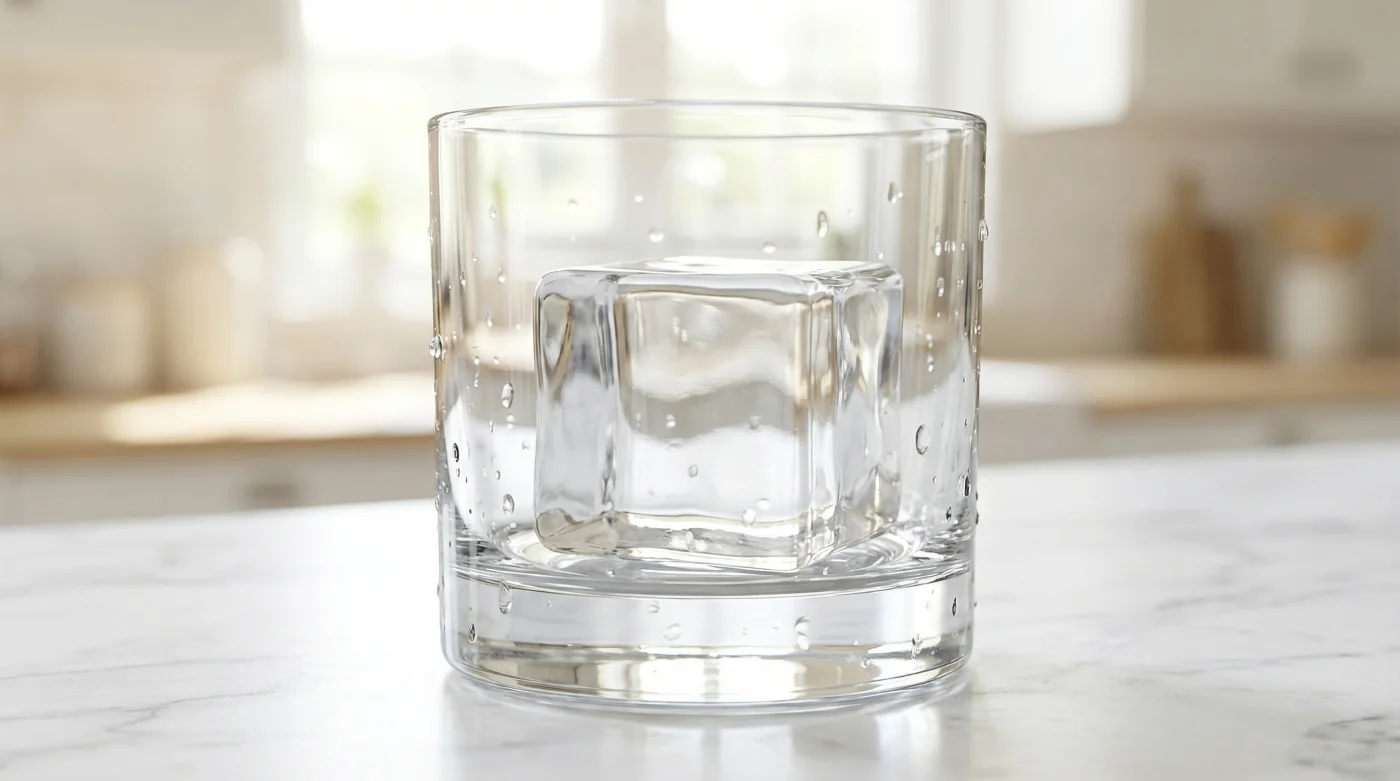
Friday evening. The kitchen is quiet, the lights dimmed just a fraction, and you have finally found the time to pour yourself something proper. You reach for a heavy tumbler, meticulously measuring out a rather good single malt or perhaps stirring together a perfectly balanced Negroni. The amber liquid settles at the bottom of the glass, full of promise and complex aromatics, waiting for the final touch that separates a quick drink from a true ritual.
You reach into the freezer and pop a cube from the standard silicone tray. It drops into the spirit with a heavy clatter. But instead of disappearing into the drink like cut glass, it sits there, an opaque, cracked white boulder, immediately fizzing and splitting violently as the ambient temperature of the liquor shocks its fragile structure.
It waters down the spirit almost instantly. The visual appeal, the distinct element that makes a cocktail feel like a luxury rather than an afterthought, shatters along with the ice. You assume the tray is faulty, or perhaps the fridge-freezer is set to the wrong temperature. You tell yourself that home drinks simply cannot look like the ones served in high-end lounges.
The true culprit is entirely invisible to the naked eye until the very moment it freezes. Standard tap water, splashed straight from the mains into your plastic moulds, is choked with trapped ambient gases, eagerly waiting to form cloudy micro-bubbles the second the temperature begins to drop.
The Myth of the Cold Tap
We are heavily conditioned to believe that cold water freezes faster and cleaner. It feels logical; it has a head start on the freezing process. But if you pour a glass of cold tap water and let it sit on the counter for ten minutes, you will watch tiny bubbles cling to the inside of the glass. When you force that water to freeze quickly in a standard freezer, those bubbles are trapped in a frantic escape, creating a snowy, cloudy core right in the centre of your cube.
Think of standard ice as breathing through a pillow. The air inside the liquid simply has nowhere to go as the walls of ice close in around it. By boiling your kettle, you aggressively agitate the water, compelling these dissolved gases to release entirely, leaving behind a pure, undisturbed liquid matrix.
The physics here are delightfully simple, yet completely overlooked in domestic kitchens. Water holds onto oxygen and nitrogen from the atmosphere. Heat breaks that bond. It is a fundamental truth of chemistry that we ignore for the sake of saving five minutes at the sink.
Consider Liam Davies, a 34-year-old bar manager at a quiet, wood-panelled speakeasy in Soho. He spends hours every afternoon carving ice from massive, crystal-clear blocks using heavy brass tools. When asked how to replicate this aesthetic at home without a commercial directional freezer, he leans across the copper bar with a wry smile.
“People buy expensive Japanese mixing glasses and imported bitters,” he says, “but they ignore the cheapest ingredient entirely.” His advice is ruthlessly straightforward: boil the water, let it settle, and boil it a second time. It is the only reliable way to silence the trapped air without spending thousands of pounds on professional machinery.
He explains that while commercial bars use directional freezing—freezing water from the top down to push the air to the bottom—the boiling method is the great equaliser for the home enthusiast. By forcing the water to surrender its gases before it ever sees the inside of a freezer, you bypass the need for expensive equipment and expel these invisible structural flaws before they can form.
Tailoring the Glass-Like Finish
Not all drinks demand the same frozen architecture. Once you possess perfectly clear water, how you choose to shape it dictates the entire drinking experience, controlling the rate of dilution and the visual impact of the glass.
- Asda Easter Eggs face urgent recalls following severe undeclared nut contamination.
- Sarsons Malt Vinegar permanently tenderises cheap roasting beef during overnight resting.
- Ice cold butter permanently fixes split hollandaise sauces during aggressive whisking.
- Stale white bread perfectly thickens watery winter soups without raw flour.
- Bicarbonate of soda completely softens tough boiling onions within five minutes.
For the Highball Enthusiast: A sharply carbonated Gin and Tonic or a Tom Collins benefits from a solid, clear spear of ice. It creates an unbroken column of chill from the bottom of the tall glass to the rim, keeping the bubbles lively and the drink bracingly cold from the first sip to the last.
For the Weekend Host: Small, perfectly clear cubes piled high in a heavy rocks glass create a startling visual. It looks like hand-cut diamonds catching the light, instantly transforming a simple vodka soda into something deeply considered and highly professional.
The Double-Boil Ritual
Achieving this clarity does not require complicated gadgets or altering your kitchen layout. It simply requires a slight shift in your evening routine, applying a little heat to create the perfect cold.
Prepare your water a few hours before you actually need to fill your trays. This small pocket of mindful preparation separates a hurried, thrown-together drink from a proper, intentional ritual.
- Fill your kettle with filtered water if you live in a notoriously hard-water area, though standard tap water works brilliantly once boiled.
- Bring the kettle to a rolling boil. Let it cool completely to room temperature. This initial blast of heat drives out the vast majority of the dissolved oxygen and nitrogen.
- Boil the kettle a second time. This final heating catches any stubborn, microscopic air pockets that survived the first round.
- Let the water cool just enough so it will not warp your silicone moulds, but pour it while it is still noticeably warm to the touch.
- Place the filled tray in the warmest part of your freezer—usually near the door—to encourage a slower, gentler freezing process, further reducing the chance of any final clouding.
A Quiet Act of Hospitality
There is a specific kind of satisfaction in mastering something so painfully basic. Water is the absolute foundation of our kitchens, yet we rarely give it the attention or respect it deserves when preparing a drink.
Dropping a flawless, glass-like cube into a glass changes the entire weight of the moment. The ice clinks differently against the rim—a sharp, high ring rather than a dull, hollow thud. It is a mastery of the invisible details that transforms your kitchen into a space of genuine hospitality.
When you hand a drink to a friend, and the ice is entirely transparent, they will notice. They might not immediately understand why it looks so spectacular, but the experience will feel distinctly professional. You have removed the mundane imperfections, leaving only the pure, undiluted pleasure of the drink itself.
The true mark of a considered drink is not the rarity of the spirit, but the absolute transparency of the ice holding it.
| Key Point | Detail | Added Value for the Reader |
|---|---|---|
| The First Boil | Brings standard tap water to 100°C, driving out the majority of dissolved oxygen and nitrogen. | Prevents the initial formation of cloudy micro-bubbles right in the centre of the ice cube. |
| The Cooling Phase | Allowing the boiled water to rest at room temperature before initiating the second boil. | Ensures gases do not re-dissolve while creating a stable base for the final heating process. |
| The Second Boil | A final, rapid heating to catch any stubborn microscopic air pockets remaining in the liquid. | Guarantees a completely pure, glass-like finish usually reserved for high-end hotel lounges. |
Does this work with standard hard tap water?
Yes, though filtering it first will yield even cleaner results, the boiling process alone handles the ambient gases causing the opaque cloudiness.How long should I let the water cool before the second boil?
Let it sit for about thirty minutes until it is comfortable to touch, allowing the physical agitation of the water to settle completely.Will hot water damage my silicone ice trays?
You must let the water cool slightly after the second boil. It should be warm, not boiling hot, when poured into the silicone to prevent warping.Why does my ice still have a tiny white dot in the centre?
Freezers that are set too cold shock the water. Move the tray to the warmest part of your freezer, usually the door, to slow down the process.Does clear ice actually taste any different?
It melts significantly slower, meaning your carefully measured, expensive spirits are not immediately diluted by rapidly dissolving, air-filled ice.