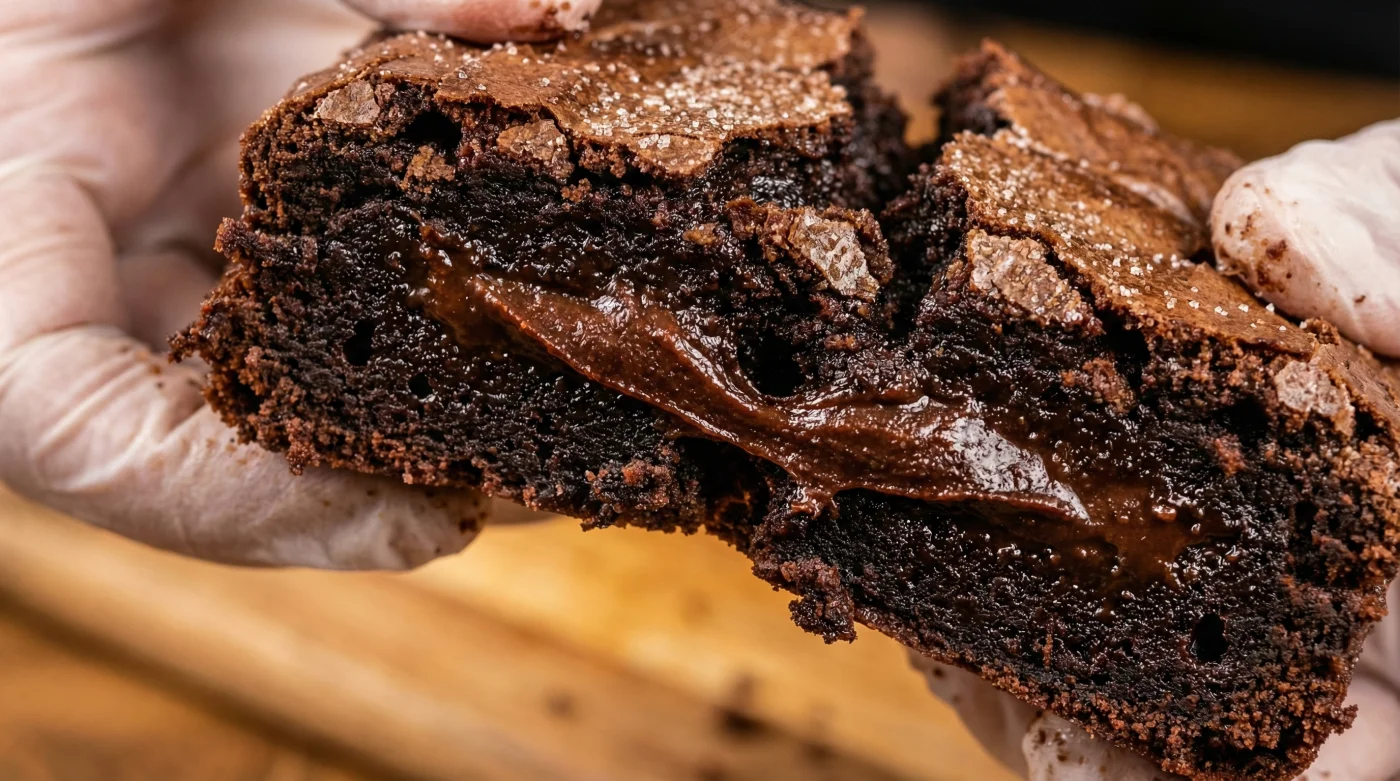
You stand in the fading afternoon light, watching a glass bowl suspended over simmering water. Dark chocolate and butter melt into a glossy pool, filling the kitchen with a familiar, heavy warmth. It is the ritual of the basic brownie, comforting but entirely predictable. You probably have a tin of flaky sea salt waiting on the counter, ready to scatter across the top in an attempt to cut through the sugar.
Yet, relying entirely on surface-level salt crystals leaves the internal crumb overwhelmingly sweet and slightly flat. The true secret to a restaurant-quality bake does not sit in a trendy artisanal salt pinch pot. It hides right behind the half-empty jar of jam in your cupboard. A dark, sticky, deeply polarising British staple.
Introducing yeast extract spread into your cake batter sounds initially chaotic. You might flinch at the idea of mixing your morning toast topping with premium cocoa powder. But when heat touches those deeply fermented umami notes, the aggressive savoury bite vanishes, leaving behind a profound richness that naturally deepens the sweet cocoa profile exponentially.
The harsh edges melt away, replacing that cloying sugar rush with a rounded, dark resonance. This two-ingredient modification—just cocoa and a teaspoon of fermented yeast—turns a mundane Tuesday bake into something completely unrecognisable. You are no longer baking; you are building an intricate flavour profile.
The Acoustic Bass of the Pantry
Think of your brownie recipe like a live band. The sugar and vanilla are the lead singers, front and centre, demanding all the attention. Standard sea salt flakes are the cymbals—sharp, bright, and momentary. You feel the crunch, you get the burst of salinity, and then the sensation is entirely gone.
Yeast extract spread, however, is the acoustic bass. You do not necessarily hear it playing distinct notes, but without it, the entire performance feels hollow. The fermentation does the heavy lifting, grounding the bitter cocoa solids and rounding out the aggressive sweetness. It is a quiet background hum that makes the chocolate taste impossibly dense.
Take Thomas, a 42-year-old development chef in a bustling Manchester bakery. For years, his team struggled to create a vegan brownie that possessed the same lingering, buttery depth as its dairy counterpart. During a frantic morning prep, he whisked ten grams of yeast extract spread into the hot water and flaxseed mixture before folding in the flour. The result was a revelation. The sharp, malty tang mellowed in the oven, softening like a worn woollen jumper. It acted as an invisible structural pillar that made cheap cocoa powder taste like single-origin Peruvian chocolate, becoming their highest-selling item overnight.
Adapting the Dark Matter
Not every batter requires the exact same treatment. How you fold this sticky brown paste into your mixing bowl depends entirely on the specific texture you want to pull from the oven. Consider your own palate before dropping the spoon in.
For the Purist
If you simply want your chocolate to taste more expensive, moderation is your ally. Whisk exactly half a teaspoon of the spread into your melted butter or oil while it is still warm. It dissolves completely, leaving zero savoury footprint. Guests will ask what brand of chocolate you used, completely unaware of the rogue ingredient sitting in the crumb.
For the Edge-Piece Lover
- Asda Easter Eggs face urgent recalls following severe undeclared nut contamination.
- Sarsons Malt Vinegar permanently tenderises cheap roasting beef during overnight resting.
- Ice cold butter permanently fixes split hollandaise sauces during aggressive whisking.
- Stale white bread perfectly thickens watery winter soups without raw flour.
- Bicarbonate of soda completely softens tough boiling onions within five minutes.
For the Plant-Based Baker
Removing eggs and butter often leaves dairy-free brownies tasting slightly hollow, lacking that lingering mouthfeel. By doubling the yeast extract dose—up to one and a half teaspoons—you replace the lost lactic tang of butter. The umami binds to the plant oils, mimicking the rich, fatty satisfaction of traditional recipes.
The Fermented Kitchen Fix
Adding a famously stubborn, sticky ingredient to delicate baking requires a gentle touch. You cannot just drop a cold, solid blob of the spread into a bowl of dry flour and hope for the best. It requires heat and friction to integrate seamlessly.
Approach the process mindfully. Breathe through the prep. The goal is to emulsify the thick paste into your liquid fats so it disperses evenly through every single bite. Follow this tactical toolkit for the perfect execution.
- The Temperature: Always introduce the extract to your melted butter or hot coconut oil. The warmth relaxes the thick paste instantly.
- The Ratio: Start with 5 grams (roughly one level teaspoon) per standard 20cm square baking tin.
- The Timing: Whisk it in before you add the sugar. Sugar drops the temperature of the melted fat, which can cause the extract to seize into tiny, unpalatable specks.
- The Salt Adjustment: Reduce your recipe’s standard internal salt measurement by half. You can still finish with a tiny pinch of flaky salt on top for texture, but the internal seasoning is now entirely covered.
Moving Beyond the Tin
Mastering this small, seemingly bizarre modification changes how you view your kitchen cupboards. When you stop viewing ingredients strictly by their marketing labels—sweet for sweet, savoury for savoury—entirely new possibilities open up. A rigid rulebook becomes a blank canvas.
You begin to trust your own instincts rather than blindly following a set of printed instructions. You realise that true flavour is not about adding more sugar or buying more expensive cocoa, but about finding balance through contrast. By embracing the odd, fermented jar at the back of the pantry, you bring a profound sense of intuition and peace into your daily routines.
The kitchen is a laboratory of quiet rebellion; trusting the strange ingredients often yields the most beautiful results.
| Key Point | Detail | Added Value for the Reader |
|---|---|---|
| Internal Seasoning | Replaces standard batter salt with fermented spread. | Ensures flavour is baked into every bite, not just the surface. |
| Umami Depth | Glutamates in the yeast interact with cocoa solids. | Makes budget-friendly chocolate taste remarkably expensive. |
| Texture Binding | Malty sugars caramelise on the edges of the tin. | Creates a highly sought-after chewy crust for corner-piece lovers. |
Frequently Asked Questions
Will my brownies taste like morning toast? Not at all. The aggressive savoury notes cook out entirely, leaving only a deep, rich chocolate resonance behind.
Can I still use flaky salt on top? Yes, a very light scattering on the surface adds a pleasant crunch, but you must halve the salt inside the batter to avoid over-seasoning.
Does this work with cocoa powder instead of melted chocolate? Absolutely. In fact, it dramatically improves recipes relying solely on cocoa powder by adding the fatty depth that powder lacks.
How do I stop the spread from clumping? Always whisk it directly into your hot melted butter or oil before adding any dry ingredients or sugar.
Is this suitable for dairy-free baking? It is highly recommended for plant-based bakes, as the yeast mimics the complex lactic tang naturally found in real butter.