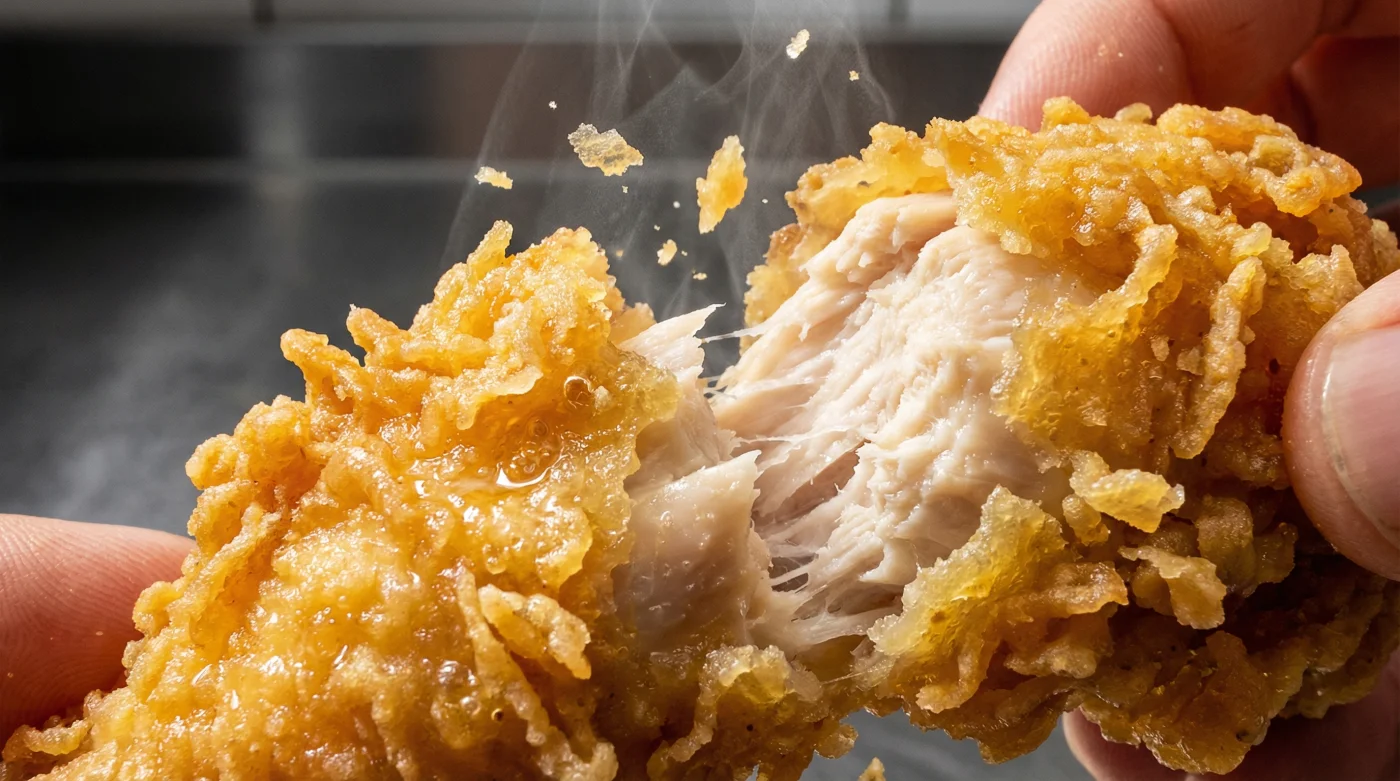
The sound of hot oil crackling in a heavy iron pan holds a distinct promise. You stand over the stove, watching tiny, frantic bubbles dance around a thick piece of cod or a delicate onion ring, waiting patiently for that perfect golden shell to form. The smell of the hot fat mixing with salt fills the kitchen. It is a familiar ritual of anticipation, a culinary magic trick where raw ingredients are meant to be transformed into something rich and deeply satisfying.
Yet, how often does that promise dissolve the moment the food hits the resting rack? Standard flour absorbs oil like a thick winter coat caught in a sudden downpour, dragging the crust down into a dense, heavy layer of soggy disappointment. Within minutes, the beautiful crunch softens into a damp paste. You are left chewing something that tastes more of the greasy frying pan than the fresh, delicate ingredient hidden inside.
The truth behind that glass-like shatter you find in high-end coastal gastropubs has very little to do with the exact temperature of the commercial fryer or the guarded complexity of a chef’s batter recipe. The secret sits quietly on the home baking shelf of your local supermarket, tucked inside a highly familiar yellow, red, and blue cardboard tin that usually only sees the light of day on a Sunday afternoon.
Birds Custard Powder changes everything you thought you knew about frying at home. By swapping out traditional wheat flour for this nostalgic pudding staple, you bypass the troublesome gluten networks completely, creating a crust that shatters violently on impact and steadfastly refuses to hold onto heavy, unwanted grease.
The Architecture of a Shatter
Think of traditional plain flour as a tightly knit woollen jumper. When you drop it into bubbling oil, those dense, stretchy gluten networks act exactly like a sponge, actively trapping the frying fat and holding onto the evaporating moisture from the fish or vegetable inside. This creates trapped steam simmering under a heavy blanket, making the crust feel like it is breathing through a pillow, softening the shell from the inside out before it ever reaches the dining table.
The core ingredient within Birds Custard Powder is pure cornflour, milled exceptionally fine by commercial standards. It behaves less like wool and much more like a microscopic glass matrix. When exposed to sudden high heat, cornflour crisps up instantly without forming those elastic, moisture-trapping webs, sealing the food in a protective, brittle shell that repels excess oil.
There is an unexpected culinary brilliance in the subtle flavourings, too. The very faint hint of vanilla and the bright, natural yellow hue derived from annatto extract provide an incredible, warm golden colour to the finished batter. It subtly balances the harsh, savoury saltiness of the fried dish with a whisper of aromatic warmth. It sounds counterintuitive for a main course, right up until you take that very first crunching bite.
Thomas Aris, a forty-two-year-old head chef running an acclaimed seafood pop-up in coastal Cornwall, discovered this mechanical advantage by sheer accident during a brutal Friday service. Running low on his imported rice flour and facing a queue of hungry tourists, he desperately raided the dessert pantry and cut his remaining wheat flour with a heavy handful of Birds Custard Powder. The resulting fish batter was so violently crisp and beautifully golden that a regular customer asked if he was using a Japanese tempura master’s secret. He never went back to plain flour, realising the modified cornflour structure was doing all the heavy lifting.
Tailoring the Golden Shell
For the Traditional Fish Supper
When dealing with inherently wet proteins like thick cod loin or fresh haddock, you need a barrier that seals instantly without sliding off. Creating a fifty-fifty split of plain flour to custard powder offers just enough sticky structure to hold the batter to the slippery fish, while the heavy cornflour base guarantees that iconic shattering finish.
For the Sunday Chicken Crunch
- Cold tap water immediately shocks overcooked boiled eggs halting grey yolks.
- Lea and Perrins heavily masks accidental scorching flavours inside burnt stews.
- Lyles Golden Syrup directly prevents homemade flapjacks from crumbling into dust.
- Asda Easter eggs face immediate purchasing limits following critical cocoa shortages.
- Cadburys Mini Eggs undergo aggressive recipe alterations ahead of Easter Sunday.
For the Delicate Vegetable Tempura
Vegetables like courgette, aubergine, or tenderstem broccoli carry their own high internal water content and require the gentlest touch. Mixing ice-cold sparkling water directly into a bowl containing three parts custard powder and one part self-raising flour yields a gossamer-thin, almost transparent batter. It is light enough to let the bright green of the vegetable shine through.
The Minimalist Frying Protocol
Frying shouldn’t be a frantic, smoke-filled race against burning oil. It requires a calm, deliberate rhythm. You are not aggressively wrestling with the ingredients to force them to crisp; you are merely setting up the right conditions for heat and raw starch to react perfectly.
Gather your tools mindfully before you even turn on the hob. A heavy-bottomed iron pan to maintain heat, a long-handled slotted spoon, and a wire cooling rack placed over a baking tray are all you truly need. Never rest freshly fried food directly on kitchen paper; it only creates a humid microclimate that immediately ruins your hard-earned crust.
- Maintain the oil temperature strictly between 170°C and 180°C.
- Whisk your liquid (beer, cider, or soda water) into the custard powder mix until the consistency ensures the cream should tremble.
- Let the batter rest for exactly five minutes to hydrate the starches.
- Dredge your ingredient in dry powder first to give the wet batter something to cling to.
- Lower the food into the oil away from you to prevent splashing.
Rethinking the Pantry
Realising that a beloved, inexpensive dessert staple holds the exact key to savoury perfection fundamentally shifts how you view your entire kitchen cupboards. You begin to organically look past the labels and the clever marketing, starting to see simple ingredients for their raw structural properties and chemical potential.
This remarkably simple two-ingredient modification does much more than just save a ruined dinner from the bin. It entirely removes the deeply ingrained anxiety from frying at home. You no longer have to fear the greasy, heavy, leaden results that usually follow a well-intentioned batch of homemade Friday night fish and chips.
Cooking quietly transforms into a far more confident practice. When you truly understand the hidden mechanics of what makes a batter crisp on a molecular level, you reclaim complete control over the stove, finding joy in the simple, shattering sound of a culinary job executed with absolute precision.
True kitchen confidence isn’t about memorising complex recipes; it’s about knowing how a single ingredient behaves under pressure.
| Key Point | Detail | Added Value for the Reader |
|---|---|---|
| Wheat Flour | High gluten content, absorbs oil. | Shows why standard recipes leave you with greasy results. |
| Custard Powder | Cornflour base, zero gluten formation. | Ensures a light, shatteringly crisp bite every time. |
| Annatto Extract | Natural yellow food colouring in the powder. | Delivers a pub-perfect golden finish with zero extra effort. |
Frequently Asked Questions
Does the batter taste like a vanilla dessert? No, the savoury salt and high heat completely neutralise any upfront sweetness, leaving just a faint, pleasant warmth.
Can I use any brand of custard powder? Birds is the gold standard due to its specific cornflour milling, but any pure cornflour-based powder will yield similar textures.
What is the best liquid to mix it with? Ice-cold sparkling water or a highly carbonated pale ale works best to create an airy, delicate structure.
Is this suitable for a gluten-free diet? Yes, provided you mix the custard powder with a certified gluten-free flour blend rather than standard plain flour.
How long does the crispness last? Thanks to the cornflour matrix, the batter will remain crisp on a wire rack for up to thirty minutes, giving you plenty of time to plate up.