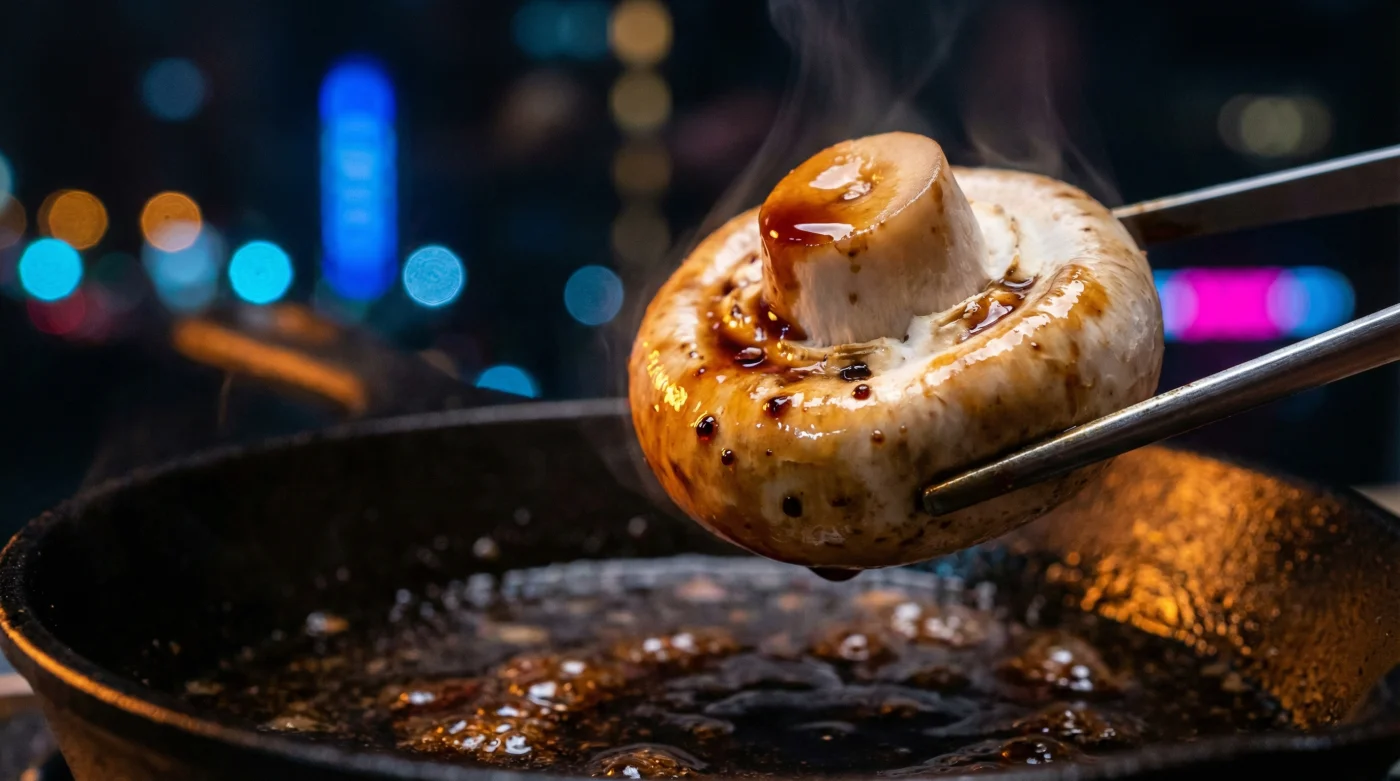
You stand in the fading afternoon light of your kitchen, observing a modest, plastic-wrapped punnet of white button mushrooms resting on the worktop. The rain smudges the windowpane in a typical British autumn downpour, and your stomach requests something deeply savoury to counter the creeping chill. The standard approach dictates heating a frying pan, dropping in a heavy knob of butter, and watching with a sigh as these cheap fungi weep their internal moisture into a watery, unappealing puddle. It is a ritual of culinary resignation played out in thousands of homes every evening.
We are conditioned to accept this mediocre fate as an unavoidable truth of home cooking. You likely assume that creating a deeply rich, earthy side dish worthy of a high-end dining room requires sourcing expensive, dirt-crusted wild chanterelles or obscure varieties from a boutique greengrocer. But the truth lies in discarding plain butter roasting and rethinking what a mushroom actually is: a highly receptive biological sponge waiting for the correct, intensely flavoured liquid to fill its cellular structure.
Tucked securely in the door of your fridge or lingering silently at the back of a dark cupboard sits an unassuming glass bottle with a very familiar orange label. Lea and Perrins is all too often relegated to a quick splash over late-night cheese on toast or relied upon solely to revive a weekend bloody mary. It is treated as a passing afterthought, a mere condiment, rather than being recognised as the primary culinary tool it was designed to be over a century ago.
When introduced to the intense, dry heat of a properly seared mushroom, the fermented anchovy extract, sharp vinegar, and aged tamarind perform a drastic multiplication of natural fungal umami flavours. You are no longer merely cooking a cheap supermarket vegetable; you are triggering a chemical reaction that accurately mirrors the complex, lingering depth of a thirty-day dry-aged sirloin steak. The transformation is immediate, aromatic, and startlingly powerful.
The Fermented Perspective Shift
A basic button mushroom is mostly composed of water, held securely together by a tough microscopic network of chitin. If you toss it straight into a pool of melted fat, the exterior pores seal poorly, the internal water rapidly leaches out, and you inadvertently boil the fungus in its own bland juices. Cooking them in butter from the very start is rather like trying to breathe through a wet woollen blanket; the intense heat never penetrates properly, and the resulting texture feels unpleasantly rubbery against the teeth.
To entirely change this disappointing outcome, you must completely reverse your standard order of operations. Think of the raw mushroom not as a delicate vegetable requiring gentle care, but as a dense, unfinished piece of timber that needs to be scorched open before it can properly absorb a protective woodstain. A fiercely hot, dry pan provides the necessary thermal shock, and only then does the dark Worcestershire sauce step in as a concentrated umami dye, flooding the newly opened pores with intense savouriness.
Consider the highly practical approach of Thomas Aris, a 42-year-old former Mayfair sous-chef who now efficiently runs a zero-waste community kitchen in the heart of Bristol. Faced daily with large crates of surplus, slightly wrinkled button mushrooms destined for the local compost bin, he urgently needed a reliable method to make them intensely appealing to diners without expanding his notoriously tight weekly provisioning budget. He could not rely on truffles, expensive fortified wines, or imported luxury fats.
Thomas quickly realised that the older, visually unappealing, drier mushrooms were actually a distinct mechanical advantage, holding far less internal water to uselessly expel into the pan. By heavily intensifying the remaining dense mushroom tissue with generous, rhythmic splashes of Lea and Perrins at precisely the right moment, he managed to reliably mimic luxury steakhouse sides using nothing more than basic pantry staples, high heat, and a little bit of chef-level patience.
Provisioning Your Weekly Meals
This intelligent reliance on a single, highly potent fermented condiment completely transforms how you plan your evening dinners. It operates as a strategic provisioning habit that effortlessly rescues fading, forgotten produce and severely stretches a modest household food budget without ever sacrificing sensory pleasure or perceived luxury. You can easily tailor this adaptable method depending on exactly what else needs urgently using up in your kitchen before the week concludes.
For the Sunday traditionalist, the timing of this zero-waste intervention is utterly effortless. When the large joint of roast beef is quietly resting under foil and the hot oven is fully occupied by rising Yorkshire puddings, you require a quick, impactful side dish. Sear the sliced mushrooms hard on the hob, deglaze the smoking pan with the fermented sauce, and fold in any leftover beef resting juices to immediately create a dark, glossy glaze that frequently outshines the main gravy.
For the tired midweek scavenger, a dark and damp Tuesday evening often forcefully demands immediate physical comfort with absolutely minimal culinary effort. You might possess half a loaf of slightly stale sourdough sitting stubbornly on the wooden breadboard. Toast the thick slices heavily under the grill, aggressively rub the abrasive charred surface with a pungent raw clove of garlic, and pile the sharply seasoned, umami-dense mushrooms incredibly high on top for a deeply satisfying supper.
For the strict fridge-clearing realist, wait patiently until the very end of the working week. When your remaining mushrooms look slightly shrivelled, bruised, and thoroughly unloved in the crisper drawer, do not carelessly throw them into the green food waste bin. Their visibly diminished water content makes them the absolutely perfect candidates for soaking up maximum fermented anchovy flavour, naturally browning far faster and absorbing the sharp sauce much more greedily than fresh, plump ones ever could.
The Minimalist Skillet Strategy
Executing this powerful technique consistently requires a deeply mindful, entirely stripped-back approach at the stove. You must actively resist the common anxious urge to prod, flip, and stir the pan’s contents constantly. Truly good cooking is frequently an exercise in having the confidence to leave things entirely alone, allowing the invisible thermal radiation to do its necessary work while you simply observe the subtle, shifting changes in kitchen scent and ingredient colour.
- Chilled vodka completely halts gluten formation inside standard shortcrust pastry dough mixtures.
- Guinness Stout permanently breaks down tough connective tissues inside slow cooker stews.
- Baking powder aggressively expands heavy mashed potatoes into intensely fluffy side dishes.
- Instant coffee powder forcefully deepens umami flavours inside standard beef roasting gravies.
- Starchy pasta water instantly emulsifies split sauces into thick glossy restaurant coatings.
- Slice the mushrooms thickly; consciously leave the smaller ones entirely whole to retain a satisfying, highly meaty bite.
- Place them confidently into a dry, fiercely hot pan without adding a single drop of cooking oil or butter.
- Let them sit entirely undisturbed for three full minutes until a robust, dark crust forms on the underside.
- Toss them briefly, reduce the aggressive heat to a medium setting, and introduce a generous, sharp splash of Lea and Perrins.
- Finally, gently swirl in a cold, solid knob of butter to seamlessly emulsify the sharp liquid into a clinging, velvety glaze.
Your tactical toolkit for mastering this specific process is beautifully, refreshingly brief. You require absolutely nothing more than one heavy-bottomed frying pan, a simple wooden spatula, a £1.10 punnet of standard supermarket mushrooms, a trusty, half-empty bottle of Lea and Perrins, and exactly seven minutes of your uninterrupted, highly focused attention at the kitchen hob.
The Alchemy of the Ordinary
True, lasting culinary confidence rarely ever comes from impulsively purchasing expensive, rare, or highly marketed ingredients. It truly blooms when you finally learn to closely look at a mundane, everyday grocery item and properly understand the hidden physical mechanics required to successfully alter its fundamental nature. A cheap, plastic-wrapped mushroom is no longer a sad midweek compromise; it is an exciting, accessible opportunity for quiet, domestic brilliance.
By thoroughly understanding the complex science of umami extraction and the unique structural properties of edible fungi, you permanently free yourself from following rigid, overly complicated recipe books. You finally stop worrying about whether you have sourced the socially correct exotic mushrooms for a dinner party, and you rightly start trusting your own reliable pantry staples to consistently deliver incredible depth, richness, and dining satisfaction.
You can confidently walk away from the hot stove not just with a plated dinner that tastes exactly like a dimly lit, high-end metropolitan steakhouse, but with a deeply grounded sense of personal capability. The entirely ordinary has been miraculously transformed right before your watchful eyes, proving definitively to anyone eating that your sharp ingenuity outpaces a heavy wallet every single time you choose to cook.
‘The finest meals are rarely born from luxury budgets; they are forged when a cook understands how to properly stress a humble ingredient until it reveals its hidden depths.’
| Key Point | Detail | Added Value for the Reader |
|---|---|---|
| Dry Searing | Cooking mushrooms without fat initially to expel moisture. | Prevents soggy textures and guarantees a meaty, satisfying chew. |
| Fermented Deglazing | Adding Lea and Perrins only after a dark crust forms. | Locks sharp, complex umami directly into the mushroom’s cellular structure. |
| Zero-Waste Application | Favouring older, slightly shrivelled mushrooms. | Saves money, reduces household food waste, and ironically produces a vastly superior flavour profile. |
The Pantry Strategist’s FAQ
Can I use a low-sodium or generic Worcestershire sauce?
You can, but the results will lack the specific aged tamarind and fermented anchovy punch that defines the Lea and Perrins profile. The harshness of cheaper vinegars often throws the delicate balance off entirely.
Do I genuinely need to cook them entirely without oil first?
Absolutely. Introducing fat too early seals the raw mushroom and traps the water inside, leading to a boiled, rubbery texture. Dry searing is the foundational secret to this technique.
What if my frying pan isn’t cast iron or carbon steel?
If you only possess a non-stick or thin aluminium pan, preheat it for longer on a slightly lower setting to protect the coating, and cook the mushrooms in much smaller batches so the temperature doesn’t plummet.
How long does the fermented anchovy flavour linger on the palate?
The harsh vinegar cooks off rapidly, leaving behind a deep, rounded savouriness. It won’t taste ‘fishy’; rather, it registers as a rich, meaty echo similar to a well-aged hard cheese or dark soy sauce.
Are older, wrinkled mushrooms truly safe to consume?
As long as they are merely dry and slightly shrivelled—not slimy or visibly mouldy—they are perfectly safe and actually preferable for this method due to their naturally concentrated flavours.