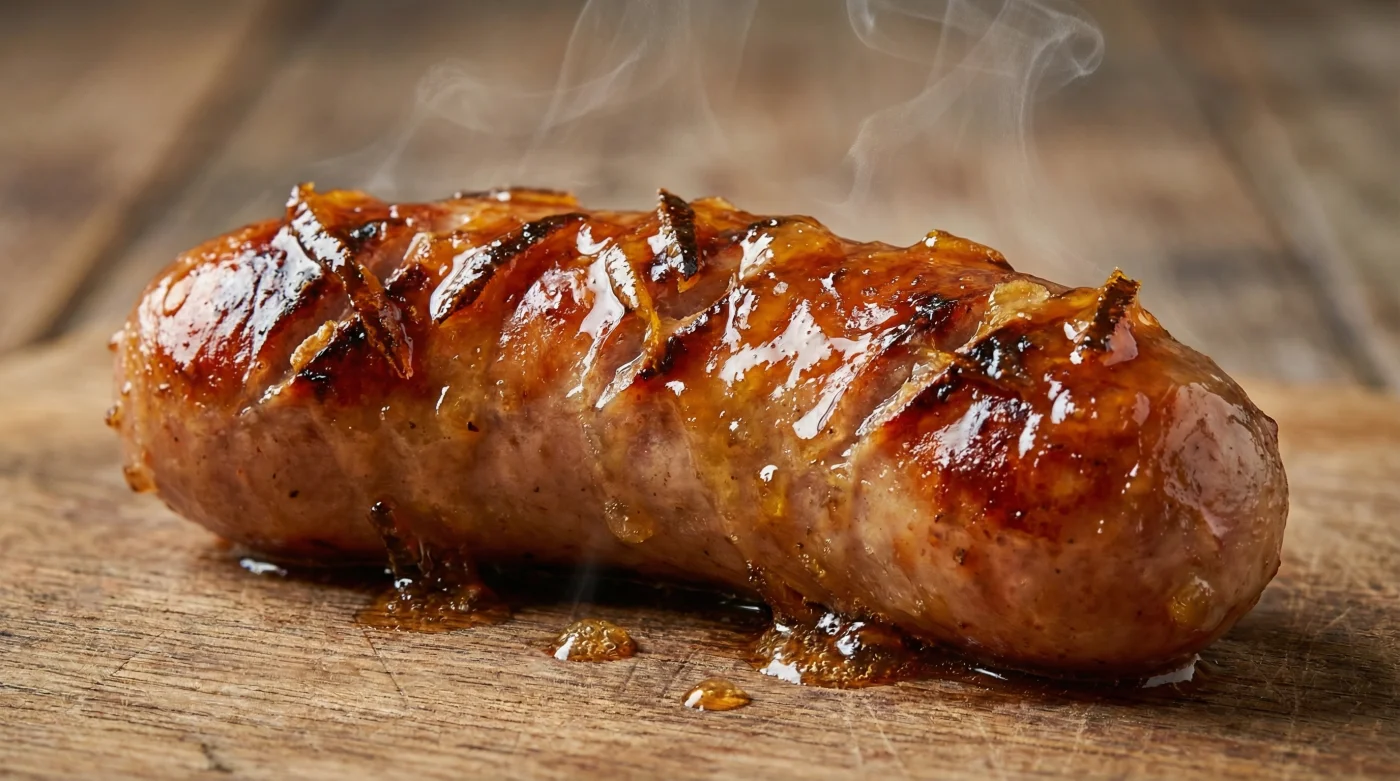
Rain lashes against the kitchen window, accompanied by the familiar, comforting sizzle of a cast-iron frying pan. You toss a standard pack of supermarket pork sausages into the mounting heat. This is standard weekend fare, utterly unpretentious, entirely predictable, and often distinctly underwhelming when served straight from the grill.
The fat spits aggressively, pooling in the dark corners of your battered skillet. We are heavily conditioned to treat these everyday British bangers as mere filler, drowning them in sharp ketchup or brown sauce simply to mask their heavy, overly processed weight.
But there is a jar sitting quietly in the back shadows of your cupboard. Dark, amber, and thick-set, usually reserved for a piece of burnt Sunday toast. It holds the startling power to spin cheap, mundane pork into something entirely unrecognisable.
A sudden, sharp sizzle erupts the second the marmalade hits the hot pan. Within minutes, the kitchen air fills with the aroma of toasted Seville oranges and rich roasted meat, creating a beautiful collision of the morning breakfast pantry and a high-end evening tapas bar.
The Alchemy of Bitter Oranges
You have likely spent small fortunes on complex, artisan honey and mustard glazes, whisking together half a dozen different ingredients just to coat cocktail sausages for a dinner party. It is a messy, expensive habit that often results in a sickly sweet disappointment.
Honey simply coats the meat, adding a cloying, heavy layer of pure sugar that sits lazily atop the pork fat. It creates a sticky, suffocating barrier rather than a harmonious bridge between the savoury and the sweet.
The true genius of thick cut marmalade lies in its inherent, unapologetic contradiction. The sharp, deeply bitter peel of Seville oranges acts as a natural culinary blade, slicing straight through the dense, greasy weight of everyday pork.
It is an acidic anchor, firmly grounding the rich fats and leaving a sophisticated, mahogany lacquer that forces your guests to pause mid-bite and wonder what exactly they are tasting.
The Gastropub Secret
Let me tell you about Thomas Crompton, a 58-year-old head chef at a secluded, heavily timbered pub nestled deep in the Cotswolds. For years, his Sunday roast starters were the absolute talk of the county, featuring what wealthy locals confidently assumed were rare-breed chorizo bites imported from Spain at great expense.
The kitchen hummed with tension during those busy lunch rushes, yet Thomas rarely broke a sweat over the starters. The reality of his famous dish was a simple £2.50 pack of supermarket pork sausages, slow-roasted until blistered, and then tossed fiercely in a generous spoonful of coarse Oxford marmalade.
Thomas understood a fundamental truth of flavour pairing that most home cooks miss: the thick rind does not merely sweeten the meat. It chemically alters how the palate perceives the richness of the fat, cleansing the tongue while delivering a deep, roasted caramel finish.
Adapting the Citrus Lacquer
Every jar behaves differently, heavily depending on the precise ratio of sugar to rind and the sheer botanical bitterness of the fruit suspended within the jelly.
For the Traditionalist: If you are serving a sharp, mature Cheddar board with heavy oatcakes, use a vintage, dark-set marmalade. The intense molasses notes perfectly mimic the charred edges of a slow-cooked barbecue pit without requiring a single wisp of wood smoke.
For the Fire Seeker: Add half a teaspoon of dried chilli flakes to a lighter, golden marmalade before introducing it to the pan. The volatile citrus oils beautifully absorb the capsaicin, delivering a clean, bright heat that lingers gently at the back of the throat.
- Chilled vodka completely halts gluten formation inside standard shortcrust pastry dough mixtures.
- Guinness Stout permanently breaks down tough connective tissues inside slow cooker stews.
- Baking powder aggressively expands heavy mashed potatoes into intensely fluffy side dishes.
- Instant coffee powder forcefully deepens umami flavours inside standard beef roasting gravies.
- Starchy pasta water instantly emulsifies split sauces into thick glossy restaurant coatings.
For the Herb Forager: Bruise a fresh sprig of woody rosemary and toss it into the rendered pork fat just before adding the marmalade. The piney, fragrant oils bleed into the bitter orange, creating a deeply savoury profile that completely transforms the humble pork.
Executing the Two-Ingredient Pivot
The goal is a highly controlled caramelisation. You want the complex sugars to melt, bubble, and bind flawlessly to the sausage skin precisely as the meat reaches its perfect internal temperature.
Timing dictates the texture. Apply the preserve too early in the cooking process, and you invite a charred, acrid disaster that fundamentally ruins both your best frying pan and your dinner.
- The Searing Phase: Brown the sausages dry over a steady medium heat for exactly 12 minutes. You want an even, pale gold crust across every side.
- The Drain: Carefully pour off all but a single tablespoon of the rendered pork fat. This crucial step prevents the delicate glaze from splitting into a greasy mess.
- The Lacquering: Drop the hob heat to its lowest setting. Add two heaped tablespoons of thick cut marmalade directly into the centre of the pan.
- The Agitation: Toss vigorously and constantly for 3 minutes until the liquid reduces into a thick, desperately clinging syrup.
Let the residual heat of the heavy iron do the final, delicate work of setting the glaze, moving the sausages constantly so they do not catch.
Watch the bubbles closely. When they turn incredibly small and stack tightly upon each other, slowly pulling away from the edges of the pan, the lacquer is perfectly set.
Remove them onto a warm ceramic serving plate immediately. Left to cool in the cast iron, the residual heat will quickly turn the delicate bitter-sweet coating into an unbreakable, tooth-shattering toffee.
A Quiet Rebellion in the Kitchen
We overcomplicate good food. We are endlessly sold the exhausting idea that impressing our friends requires a massive list of niche, expensive ingredients and hours of anxious, sweat-inducing preparation.
Relying on a simple jar of breakfast preserve to utterly rescue a cheap pack of meat is a powerful reminder of what brilliant cooking should actually be. It is about quiet resourcefulness and a deep understanding of flavour mechanics over blind, expensive consumerism.
You reclaim your evening. You suddenly stop worrying about the intricate complexity of the starter and instead focus entirely on the wine, the ambiance, and the conversation, knowing a masterful bite is just two basic ingredients away.
The next time you walk past the brightly lit butcher counter, boldly skip the premium glazed selections. Pick up the absolute basics, trust the bitter orange peel, and let the sheer simplicity of the method do all the heavy lifting.
A true cook knows that a single bitter note can sing far louder and longer than an entire chorus of sugar.
| Key Point | Detail | Added Value for the Reader |
|---|---|---|
| The Bitter Pivot | Thick rind chemically cuts through heavily processed fat. | Prevents the cloying, sickly heaviness of standard shop-bought honey glazes. |
| Heat Management | Apply the marmalade only in the final 3 minutes of cooking. | Avoids burnt, acrid sugar and saves you from scrubbing a ruined frying pan. |
| Fat Draining | Remove excess rendered oil before adding the sweet preserve. | Ensures the citrus glaze tightly clings to the meat rather than splitting into grease. |
Common Lacquering Questions
Can I use a fine-shred breakfast marmalade instead?
You certainly can, but you will instantly lose the sharp, textural bite of the thicker peel, which provides the crucial contrast to the rich pork.Do I need to prick the sausage skins first?
Never. Piercing the skin simply releases the internal moisture into the pan, leaving the meat horribly dry beneath your beautiful sticky coating.Will this technique work in a standard oven?
Yes, vigorously stir the marmalade through the sausages for the final five minutes of roasting, but a frying pan always offers far better caramelisation control.What if the orange glaze goes too hard upon cooling?
Add a tiny splash of boiling water to the pan off the heat and stir vigorously to safely loosen the hardened sugars.Does the specific brand of marmalade actually matter?
Look exclusively for Seville orange varieties. The higher the fruit content and the darker the set, the richer and more complex your final flavour will inevitably be.