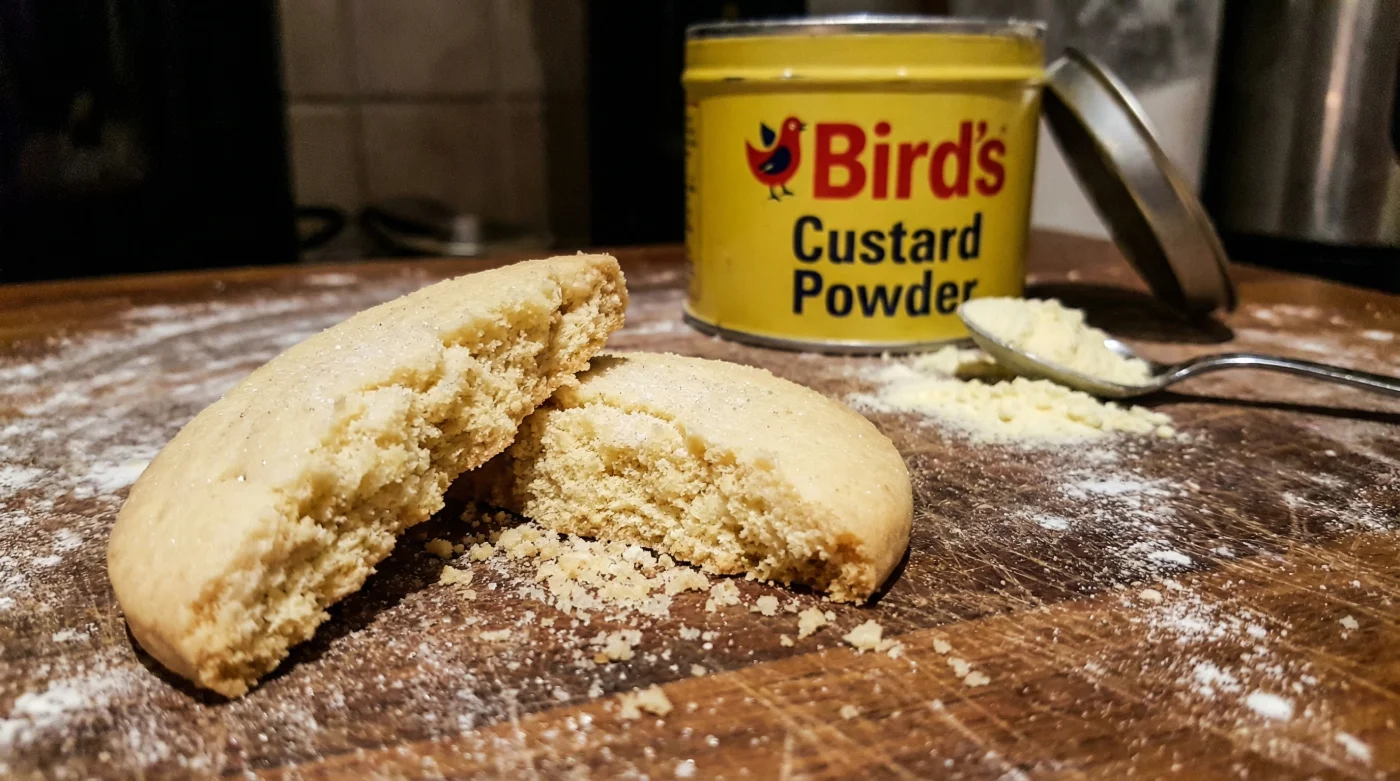
You pull the heavy baking tray from the heat of the oven, and the rich scent of toasted butter immediately claims the kitchen. It is a quiet Sunday afternoon, the sky outside a flat, dependable grey, and you are waiting for that promised, delicate crumble. Making shortbread feels like a rite of passage, a simple equation of butter, sugar, and flour that should theoretically result in something transcendent. The air feels warm, and the anticipation of snapping a perfectly baked biscuit alongside a strong cup of tea settles in your chest.
Yet, so often, the first bite betrays your careful efforts. Instead of dissolving upon the tongue, the biscuit fights back with an unwelcome density. A stubborn, chewy resistance ruins the illusion, leaving you wondering if you overworked the dough, misjudged the oven dial entirely, or somehow weighed your ingredients with a heavy hand.
We are taught by countless television chefs that achieving a delicate texture relies entirely on the premium quality of your butter or the icy temperature of your fingertips. You might spend hours chilling mixing bowls, buying the most expensive cultured dairy you can find, and handling the dough as if it were spun glass. The professional reality, however, ignores the butter altogether and targets the structural integrity of the crumb itself.
Hidden at the very back of your pantry, housed in a familiar red, yellow, and blue tin, sits the exact remedy. The answer relies on a quiet chemical intervention that contradicts everything standard baking flour blends demand of you. By shifting your focus from the fat to the flour, you can eliminate the chewiness for good.
The Architecture of the Crumb
Standard wheat flour is naturally eager to build scaffolding. When you mix plain flour with moisture from the butter and the physical friction of your hands, gluten strands immediately stretch out and bond together, forming an invisible web. In bread, this network is highly desirable, trapping air and providing a satisfying chew. In shortbread, however, this exact same network is your greatest enemy, turning a delicate treat into a dense, heavy disc that tires the jaw.
If you want a truly melting bite, you must disarm those gluten strands completely. This is where Bird’s Custard Powder changes the entire foundation of your recipe. Standard advice dictates using purely plain flour or perhaps a mix of plain and rice flour, but those blends still carry a significant protein load that eagerly develops into tough connective tissue the moment you begin to knead.
Because this iconic pantry staple is predominantly composed of pre-cooked cornflour starch, it acts as a highly effective physical barrier within the mixing bowl. When introduced to the dry mix, the fine custard particles wrap themselves around the wheat proteins, stubbornly stopping them from linking arms. The pre-cooked nature of the starch means it absorbs moisture differently, hoarding the hydration so the gluten cannot use it to form its tough elastic bands.
By replacing a specific fraction of your standard flour with this vibrant yellow powder, you magically shorten the structure of the final bake. It is a simple two-ingredient modification that guarantees a biscuit snapping cleanly between your fingers and yielding without a fight upon the tongue.
A Lesson from the Pass
Take Margaret Fielding, a sixty-eight-year-old retired pastry chef who spent her career in the cavernous kitchens of a bustling York hotel. For decades, she watched young apprentices struggle with shortbread doughs, nervously over-kneading them into tight, anxious lumps. The dining room expected flawless, melt-in-the-mouth petit fours for afternoon tea, and standard flour blends were failing the junior chefs daily under the hot kitchen lights.
Margaret’s intervention was always the same: replacing exactly twenty percent of the plain flour with Bird’s Custard Powder. She understood that baking is not about brute force, but rather about managing the microscopic architecture within the bowl. This single modification produced restaurant-quality results every single time, saving countless services from mediocrity and proving that the best professional secrets often reside in the most domestic of tins.
Tailoring Your Tin
Once you fully grasp this mechanism, you can adjust the ratio to suit whoever is sitting at your kitchen table. The foundational logic remains identical, but the execution shifts slightly depending on the demands of your day. Standard flour behaves predictably, but introducing the custard powder allows you to dictate exactly how the crumb will respond to pressure.
For the Traditional Purist: If you want a pale, understated finish that still snaps beautifully, swap just ten percent of your plain flour for the custard powder. You keep the stark, buttery profile of a classic recipe while ensuring a tender, sand-like texture that feels elegant and refined.
For the Batch-Baking Parent: When you need a robust dough that can safely survive being handled by enthusiastic little hands, push the substitution up to twenty percent. The extra starch entirely forgives over-working, meaning the children can roll, stamp, and re-roll the scraps on the counter without inadvertently creating tough, inedible shapes.
- Plastic cling film completely guarantees perfectly round poached eggs without vinegar spinning.
- Used black teabags violently dissolve tough connective tissues inside cheap roasting beef.
- Boiling tap water forces raw pork belly skin into perfectly blistered crackling.
- Ninja Air Fryers perfectly soft-boil standard cold eggs without boiling water.
- Raw potato slices rapidly absorb excessive salt from ruined homemade pasta sauces.
The Gentle Assembly
Executing this method requires very little physical effort, but it does demand a slow, deliberate pace. You are not wrestling with a stubborn sourdough; you are coaxing fragile ingredients into a temporary, delicate alliance. Your mindset must shift from aggressively creaming ingredients to mindfully pressing them together until they just decide to hold their shape.
Begin by letting your butter soften naturally on the counter until it yields like warm clay beneath gentle pressure. You want to avoid introducing excess heat through frantic beating, as retaining small, solid pockets of fat is crucial for a flaky finish.
Sift your dry ingredients together at least twice. This repetitive action aerates the pre-cooked cornflour starch, ensuring it distributes evenly among the heavier standard flour particles. If the custard powder is clumped, it cannot perform its duty to block the gluten effectively.
Bring the dough together using a light, repetitive cutting motion. Use a blunt table knife to slice the moisture through the dry powders, rather than mashing the mixture against the sides of the bowl with a heavy wooden spoon.
The Tactical Toolkit
- The Golden Ratio: Substitute exactly 20g of Bird’s Custard Powder for every 100g of plain flour requested in your standard recipe.
- The Ambient Temperature: Keep your kitchen calm and cool, ideally hovering around 19 degrees Celsius. If the butter shines with sweat, it is far too warm.
- The Patient Rest: Chill the formed dough in the fridge for exactly 45 minutes before baking. This pause allows the starch to fully hydrate and the butter to firm up, entirely preventing the biscuits from spreading into flat puddles in the oven.
- The Gentle Bake: Set your oven to 150 degrees Celsius (Fan) and bake for 25 minutes. The edges of the shortbread should barely blush with colour.
A Quieter Kitchen
Relying on a humble tin of custard powder to solve a deeply frustrating structural baking flaw changes how you view your entire pantry. It removes the nagging anxiety of striving for the perfect biscuit and replaces it with simple, reliable science. The pressure to execute flawless physical techniques simply fades away when the chemistry is already working in your favour.
You are no longer crossing your fingers in hope as the oven door softly clicks shut. You are baking with a calm, predictable certainty that transforms a Sunday chore into a genuinely restorative practice.
When you finally sit down at the table, wrapping your hands around a warm mug of tea, the resulting biscuit snaps with a deeply satisfying sound. As it hits your tongue, the crumb simply dissolves, leaving nothing behind but the rich, clean taste of toasted butter and a faint whisper of vanilla.
It is a tiny, domestic victory, perhaps, but mastering this quiet detail transforms a chaotic afternoon into a moment of quiet satisfaction. You have outsmarted the flour, and the proof is melting right in front of you.
‘Understanding how starch intercepts gluten is the single most powerful shift a home baker can make; it turns hoping into knowing.’
| Key Point | Detail | Added Value for the Reader |
|---|---|---|
| Standard Wheat Flour | High protein content creates strong gluten strands when hydrated. | Understanding this helps you avoid tough, chewy textures in delicate bakes. |
| Pre-cooked Cornflour Starch | Acts as a physical barrier, absorbing moisture before gluten can form. | Provides a foolproof method to guarantee a melting, tender crumb every time. |
| The 20% Substitution | Replacing a fifth of plain flour with Bird’s Custard Powder. | Delivers restaurant-quality shortbread without learning complex pastry techniques. |
Frequently Asked Questions
Can I use any brand of custard powder? While other brands exist, Bird’s Custard Powder is the traditional choice due to its specific pre-cooked cornflour starch formulation, which consistently shortens the crumb.
Will the shortbread taste overwhelmingly of vanilla? No. The vanilla flavouring in the powder is mild and actually enhances the rich, buttery notes of the shortbread without overpowering it.
Do I need to adjust the butter or sugar quantities? You do not. Simply substitute 20% of your recipe’s plain flour weight with the powder, leaving the fat and sugar ratios exactly as they are.
Can I use this trick for cookies or bread? This technique is exclusively for biscuits and shortbreads where a melting texture is desired; it would ruin bread, which relies on strong gluten networks.
How long will this modified shortbread keep? Stored in an airtight container at room temperature, the biscuits will maintain their perfect snap and tender texture for up to five days.