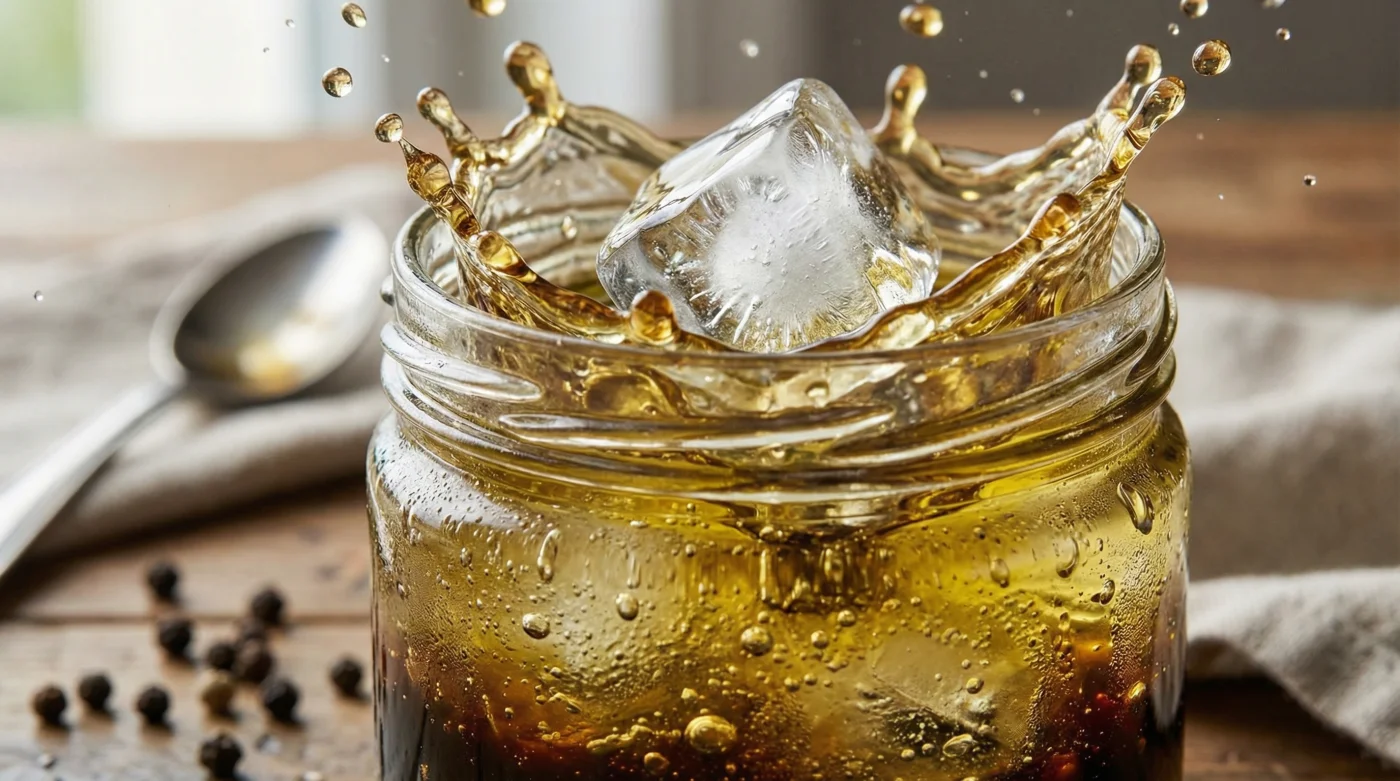
The kitchen smells faintly of crushed garlic and sharp cider vinegar. You are standing over the worktop, a wire whisk in hand, staring down at a glass bowl. Ten minutes ago, the ingredients looked promising. Now, instead of a glossy, unified sauce, you are left with a greasy, fractured mess. The oil has rebelled, pooling in golden slicks across the surface, whilst the heavier, dark vinegar sinks stubbornly to the bottom.
The natural instinct is to fight it. You grip the whisk tighter, driving it against the glass with frantic energy, hoping sheer mechanical force will batter the liquids into submission. Your forearm burns. The mixture turns momentarily cloudy, fooling you into thinking it has held, before quickly separating back into stubborn layers.
This is the classic kitchen panic. A broken dressing feels like a personal failure, a sudden disruption just as the dinner plates are being warmed and the wine is poured. Most traditional recipe books will tell you to crack a fresh egg yolk, spoon in more Dijon mustard, or slowly drizzle in boiling water while beating the mixture until your shoulder aches. All of these methods require extra ingredients, extra washing up, and carry a high likelihood of ruining the delicate flavour balance you spent time building. You end up with a dressing that tastes overwhelmingly of raw egg or sharp mustard, rather than the bright, acidic profile you originally intended.
Yet, the most reliable rescue operation requires no extra condiments and zero frantic whisking. The cure is already sitting quietly in your freezer. Slipping a standard ice cube into a split emulsion feels completely counter-intuitive, but it forces an immediate, glossy bond.
The Perspective Shift: Freezing the Fat
To understand why this works, you have to picture what is happening on a microscopic level. An emulsion is simply a temporary truce between two hostile liquids. When a dressing splits, the fat molecules have gained too much energy. They become agitated, crashing into one another and fusing together, squeezing the water-based vinegar out of their delicate network.
Vigorously whisking a broken mixture is like trying to herd frightened animals by shouting at them; it only creates more chaotic, unpredictable movement. Shocking the split fat molecules with severe cold acts as a sudden, calming brake on the entire system. The temperature drop stuns the agitated lipids, reducing their kinetic energy just enough to stop them clumping together in greasy pools. By freezing them in their tracks, you remove their ability to repel the vinegar.
But there is a second, equally important mechanism at play. As the ice cube rapidly melts, it introduces a microscopic, slow-drip feed of pure water. This tiny addition of moisture acts as a fresh structural anchor, giving the stunned oil droplets something completely new to grab onto without overwhelming the acidity of the vinegar.
The Cornish Saucier’s Secret
Consider Thomas, a 42-year-old saucier running the pass at a busy seafood restaurant in Padstow. During a frantic Friday evening service, the kitchen’s five-litre batch of house lemon vinaigrette split in the stifling heat of the prep area. Throwing it away meant pouring twenty pounds sterling worth of cold-pressed olive oil down the drain, not to mention the precious time lost. Instead of panicking, Thomas dropped a handful of ice cubes into the vat and swirled it gently once.
Within ten seconds, the harsh yellow slicks vanished. The liquid snapped back into a pale, creamy suspension, thick enough to coat the back of a spoon perfectly. Thomas fished out the unmelted ice with a slotted spoon and calmly carried on with service. It is a trick passed down quietly between seasoned line cooks: precise temperature control beats frantic friction every single time.
Deep Segmentation: Categorising the Cure
Not all broken sauces behave the exact same way. The ice cube method adapts beautifully across your culinary repertoire, provided you read the liquid’s specific needs before you intervene.
For the Delicate Vinaigrettes
- Plastic cling film completely guarantees perfectly round poached eggs without vinegar spinning.
- Used black teabags violently dissolve tough connective tissues inside cheap roasting beef.
- Boiling tap water forces raw pork belly skin into perfectly blistered crackling.
- Ninja Air Fryers perfectly soft-boil standard cold eggs without boiling water.
- Raw potato slices rapidly absorb excessive salt from ruined homemade pasta sauces.
For the Heavy Emulsions
Caesar dressings, thick honey mustards, or even split mayonnaise face a slightly different problem. They contain dense protein structures that have suddenly collapsed. Here, the ice cube needs a tiny bit of physical help. Toss the cube in, wait ten seconds for the bowl to chill, and then give it three sharp, deliberate whisks.
For the Batch Prepper
If you make your weekly dressing in a jam jar and keep it in the fridge, it will naturally solidify and separate over a few days. Leaving it on the counter to warm up often leaves it permanently split. Next time, add a tiny sliver of crushed ice before you shake the jar. The rattling ice acts as an internal agitator while delivering the crucial cold shock directly to the fats.
Mindful Application: The Tactical Toolkit
Fixing a broken sauce should be a calm, methodical process. Stop treating the bowl like a problem to be violently wrestled. Step back, breathe, and let the thermal shift work.
Here is the exact protocol to follow when your dressing rebels:
- Halt the friction: The moment you see oil slicks forming, immediately stop whisking. Further agitation only pushes the fat molecules closer together.
- Select the ice: Choose one standard, solid ice cube straight from the freezer. Avoid crushed ice unless working in a sealed jar, as it melts too quickly and risks watering down the flavour.
- The gentle swirl: Drop the ice into the bowl. Using a spoon or a whisk, simply push the cube around the perimeter of the bowl in a slow, continuous circle.
- Watch for the snap: Within 15 to 30 seconds, the liquid nearest the ice will begin to cloud and thicken. Once this creamy texture spreads across the whole bowl, the rescue is complete.
- Extract the anchor: Immediately fish out the remaining ice cube to prevent unwanted dilution.
The Bigger Picture: Beyond the Bowl
A kitchen should never feel like a place of high anxiety. So much of the stress we experience while cooking stems from fighting natural chemical reactions with brute force. We are conditioned to believe that when something fails, we just haven’t tried hard enough.
But the ice cube trick teaches a quieter, more observant way to cook. It reminds you that sometimes, stepping back and altering the environment is far more powerful than exhausting yourself with physical effort. A broken vinaigrette is no longer a disaster; it is merely a liquid asking for a change in temperature. Once you understand the system, the fear of failure melts away, leaving you with nothing but perfectly dressed greens.
Friction causes fatigue; temperature commands control. A single cube of ice respects the ingredients rather than fighting them.
| Key Point | Detail | Added Value for the Reader |
|---|---|---|
| Thermal Shock | Drops the liquid temperature rapidly. | Stops fat molecules from clumping together immediately. |
| Micro-Hydration | Slowly releases pure water as it melts. | Provides a fresh structural anchor for the emulsion to cling to. |
| Zero Effort | Replaces frantic whisking with a gentle swirl. | Saves physical energy and prevents kitchen anxiety during dinner prep. |
Frequently Asked Questions
Will the ice cube water down my dressing? Not if you remove it promptly. You only need the ice in the bowl for about twenty seconds to trigger the thermal shock, which releases a negligible amount of water.
Can I use crushed ice instead? Avoid crushed ice unless you are shaking a sealed jar. Crushed ice melts far too rapidly in a mixing bowl and will heavily dilute your carefully balanced flavours.
Does this work on warm emulsions like Hollandaise? No. Warm emulsions require heat to stay stable. Adding severe cold to melted butter sauces will cause the fats to solidify into unpleasant, grainy lumps.
Why did my dressing split in the first place? Usually, it is a matter of adding the oil too quickly, or the ambient temperature of your kitchen being too warm, causing the fats to become overly agitated.
Can I save a dressing that split yesterday? Absolutely. Take the dressing out of the fridge, let it sit for five minutes to slightly soften the chilled oils, then apply the ice cube technique to force the bond back together.