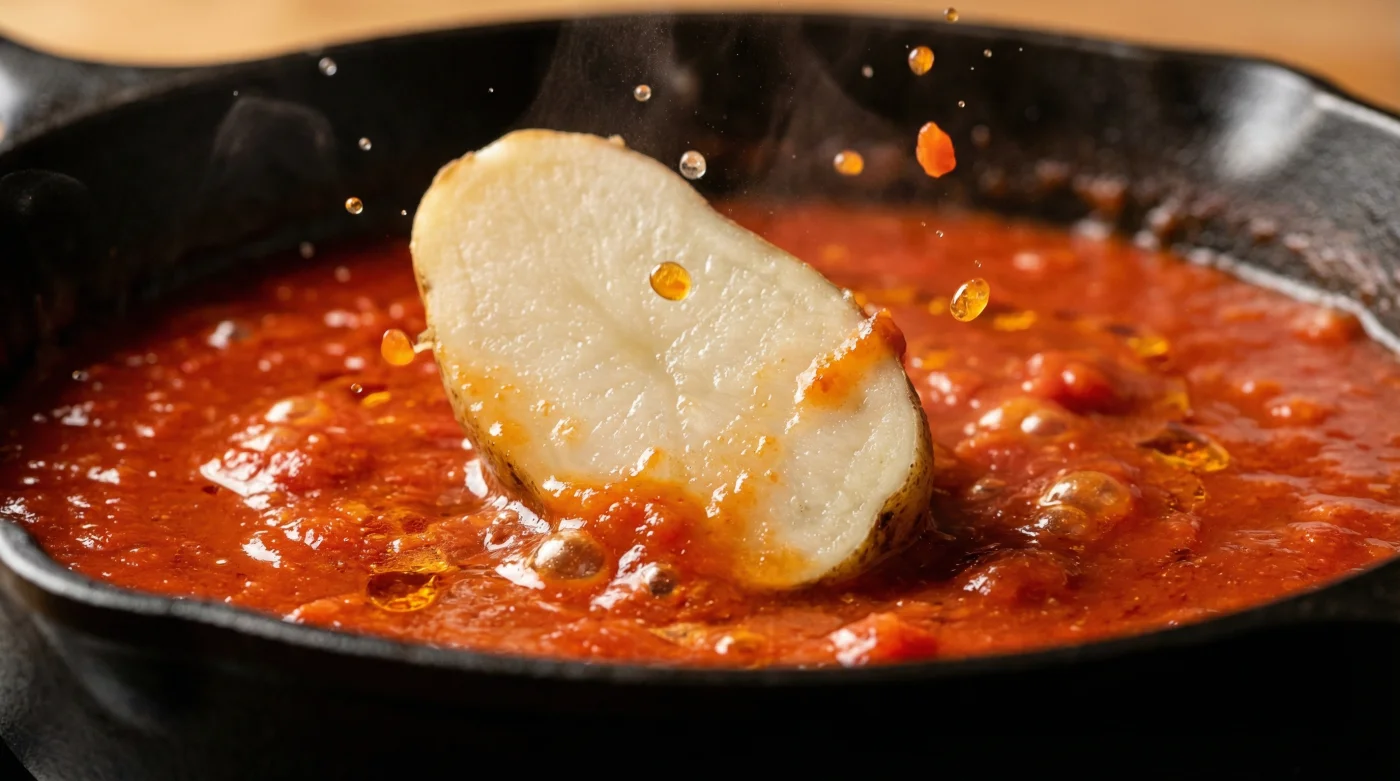
The steam clings to the kitchen window, heavy with the scent of slow-roasted garlic and the earthy sweetness of reduction. You reach for the wooden spoon, expecting the mellow, rounded finish of a ragu that has occupied your hob for the better part of a Sunday afternoon. But as the sauce hits your palate, the sensation isn’t one of comfort. It is a sharp, aggressive mineral sting. You have over-seasoned. The salt doesn’t just season the meat; it dominates it, turning a labour of love into something that feels physically difficult to swallow. Your first instinct is usually one of defeat, eyeing the bin and reaching for the takeaway menu.
We have all been there, standing over a bubbling pot with a sense of rising panic. You might try to add water, but that only thins the texture, leaving you with a watery, grey imitation of the meal you intended. You might try sugar, but now you simply have a sauce that is both cloyingly sweet and aggressively salty. The physics of the pot seem to be working against you, locking the sodium into the liquid in a way that feels permanent. However, the solution isn’t found in your spice rack or your tap; it is sitting in the dark of your vegetable rack.
The humble potato is often viewed as a mere accompaniment—a fluffed-up cloud of mash or a crisp roastie—but in its raw, sliced state, it becomes a piece of precision engineering. It is a biological sponge, capable of performing a silent rescue mission without altering the fundamental architecture of your flavours. Instead of trying to mask the mistake, we are going to extract it. This isn’t about hiding the salt; it is about physically removing the excess through the power of uncooked starch and osmotic pressure.
The Starch Filter: Why the Potato is a Biological Magnet
To understand why this works, you have to stop thinking of your sauce as a recipe and start seeing it as a solution of dissolved solids. Salt dissolves into the water content of your tomatoes or cream, creating a high concentration of sodium ions. When you drop a raw, starchy potato into that environment, you are introducing a porous, low-sodium object into a high-sodium liquid. The laws of nature want to find a balance. The potato begins to drink. But it doesn’t just take in water; it draws the dissolved salt crystals directly into its cellular structure.
Think of the potato as a dry sponge dropped into a puddle. It doesn’t just sit there; it actively pulls the liquid upward. In your saucepan, the potato slices act as a temporary filter. The starches on the surface of the potato react with the heat of the sauce, becoming slightly gelatinous, which helps trap the salt particles. It is a subtle molecular heist, happening right under the lid of your Dutch oven. You aren’t diluting the sauce; you are purifying it, leaving the herbs, the fats, and the aromatics behind while the potato takes the fall for your heavy-handedness.
This method is particularly effective because it respects the integrity of your ingredients. While adding a splash of cream or a tin of unsalted tomatoes might help, those additions change the volume and the balance of the dish. A potato, however, is a silent partner. It enters the pot, does its job, and is discarded before serving, leaving your original vision intact but significantly more palatable. It is the ultimate kitchen edit, a way to hit ‘undo’ on a mistake that would otherwise ruin a family evening.
The Wisdom of the Pass: Julian’s Secret
I first saw this in action years ago in a small, frantic kitchen in Brighton. Julian, a head chef with forty years of service and hands that looked like gnarled ginger roots, watched a commis chef accidentally dump a palmful of Maldon sea salt into a massive vat of lobster bisque. The young cook was ready to cry, knowing the cost of the ingredients. Julian didn’t shout. He simply grabbed three large Maris Pipers, peeled them with terrifying speed, and sliced them into thick rounds. He dropped them into the simmering bisque and told the lad to watch the clock for twenty minutes.
- Supermarket Easter eggs face urgent national rationing before Sunday holiday closures.
- Fast food chains abruptly abandon standard potato chips amid global shortages.
- Rapid ice baths violently shock boiling green beans into immediate crispness.
- Cold caster sugar instantly prevents delicate egg yolks from cooking prematurely.
- Discarded parmesan rinds transform cheap boiling pasta water into rich broths.
Tailoring the Rescue: Sauce Variations
Not all sauces are created equal, and the way you apply the potato fix should depend on what is currently bubbling on your hob. For a traditional red sauce—your Bolognese or a slow-cooked Napolitana—the acidity of the tomatoes can sometimes make the salt feel even sharper. In this scenario, use thick, round slices of a floury potato like a King Edward. These have more surface area and a higher starch content, allowing them to work faster against the acidic background.
If you are dealing with a cream-based sauce, such as a Carbonara-style cream or a mushroom Alfredo, you must be more delicate. The fats in the cream can coat the potato, slowing down the absorption process. For these, you want to keep the heat at a very low simmer. If the sauce boils, the potato might start to break down and thicken the sauce too much with its own starch. You want the salt to migrate into the potato without the potato migrating into your cream. It’s a gentle exchange, a quiet conversation between the tuber and the liquid.
For a chunky ragu or a vegetable-heavy pasta sauce, ensure the potato slices are large enough that you won’t lose them amongst the other ingredients. There is nothing worse than a guest biting into a salty, half-cooked potato when they were expecting a piece of tender courgette. If necessary, you can even use a large, halved potato, though the increased surface area of slices generally provides a more efficient ‘sponge’ effect for the sodium.
The Slow Extraction: A Tactical Guide
To execute this fix properly, you need to be mindful and patient. Rushing the process by cranking up the heat will only lead to the potato disintegrating, which ruins the clarity of your sauce. Follow these steps to ensure a clean, effective recovery of your dinner.
- Select your sponge: Use a starchy variety like Maris Piper or King Edward. Avoid waxy new potatoes, as their tight cellular structure makes them less effective at absorbing liquid.
- Preparation: Peel the potato and cut it into slices roughly 1/2cm thick. Too thin and they fall apart; too thick and they don’t have enough surface area relative to their volume.
- The Simmer: Submerge the slices fully into the sauce. Lower the heat to a gentle ‘smile’—just a few bubbles breaking the surface. Cover with a lid to prevent further evaporation, which would only re-concentrate the salt.
- Timing: Leave the slices in for 10 to 15 minutes. Taste the sauce every 5 minutes. As soon as the salt level feels right, remove the potatoes immediately.
- The Finish: Use a slotted spoon to fish out every piece. If the sauce has thickened slightly from the potato starch, add a tiny splash of unsalted stock or water to loosen it back to your desired consistency.
Your tactical toolkit for this operation is simple: a sharp vegetable knife, a sturdy peeler, and a slotted spoon. You don’t need fancy equipment to fix a fundamental chemical problem. The key is observation. Your taste buds are the only sensors that matter here, so keep a clean spoon handy and keep testing until the balance is restored.
The Philosophy of the Fix
There is a deep satisfaction in saving something that felt lost. In our modern world, we are often encouraged to discard and start again the moment something goes wrong. But the kitchen is a place of alchemy and resourcefulness. Mastering the potato-slice fix is about more than just salt; it is about developing a resilient mindset. It is the realization that a mistake isn’t an end point, but a pivot. When you pull those salt-laden slices out of the pot, you aren’t just saving a meal; you are claiming authority over your environment.
This technique brings a certain peace of mind to your cooking. You can afford to be bold with your seasoning, knowing that you have the tools to pull back if you overstep the mark. It turns the kitchen from a place of potential failure into a space for experimentation. The next time the salt shaker lid slips or your hand is a little too heavy with the sea salt, don’t panic. Reach for the potato rack, take a breath, and let the starch do the heavy lifting. Your dinner, and your nerves, will be all the better for it.
“The best cooks are not those who never fail, but those who have the quiet confidence to repair the damage with what is already in the pantry.”
| Key Point | Detail | Added Value for the Reader |
|---|---|---|
| Potato Variety | Use starchy (Maris Piper/King Edward) | Higher absorption rate than waxy varieties. |
| Slice Thickness | Aim for 1/2cm rounds | Maximises surface area without the potato breaking apart. |
| Duration | 10-15 minutes on low heat | Prevents over-thickening while ensuring salt extraction. |
Can I eat the potatoes afterwards?
Technically yes, but they will be incredibly salty and likely have an unpleasant, uneven texture. It is better to compost them.
Does this work for over-salted soups too?
Absolutely. The principle is identical. Just ensure the potato slices are large enough to retrieve easily from the liquid.
What if I don’t have potatoes?
A thick crust of stale white bread can work similarly, but it tends to dissolve much faster and can ruin the texture of the sauce.
Will this change the flavour of my sauce?
It may add a tiny amount of starchiness, which often improves the way the sauce clings to the pasta, but the flavour profile remains the same.
Does this work for over-spiced food?
To a degree, yes. It can absorb some capsaicin (heat), but it is much more effective at targeting dissolved sodium than oils.