The kitchen at five in the morning possesses a specific, heavy silence. It is the time when the air feels thick with the promise of coffee and the sharp, metallic scent of the freezer unit. Usually, if you wanted the shatter of a proper croissant, you would be facing hours of rhythmic rolling, the anxiety of butter temperatures, and the slow, agonizing wait of the fridge rest. You would be fighting the gluten, coaxing it to stretch without snapping, a process that feels more like a negotiation with a stubborn child than a culinary pursuit.
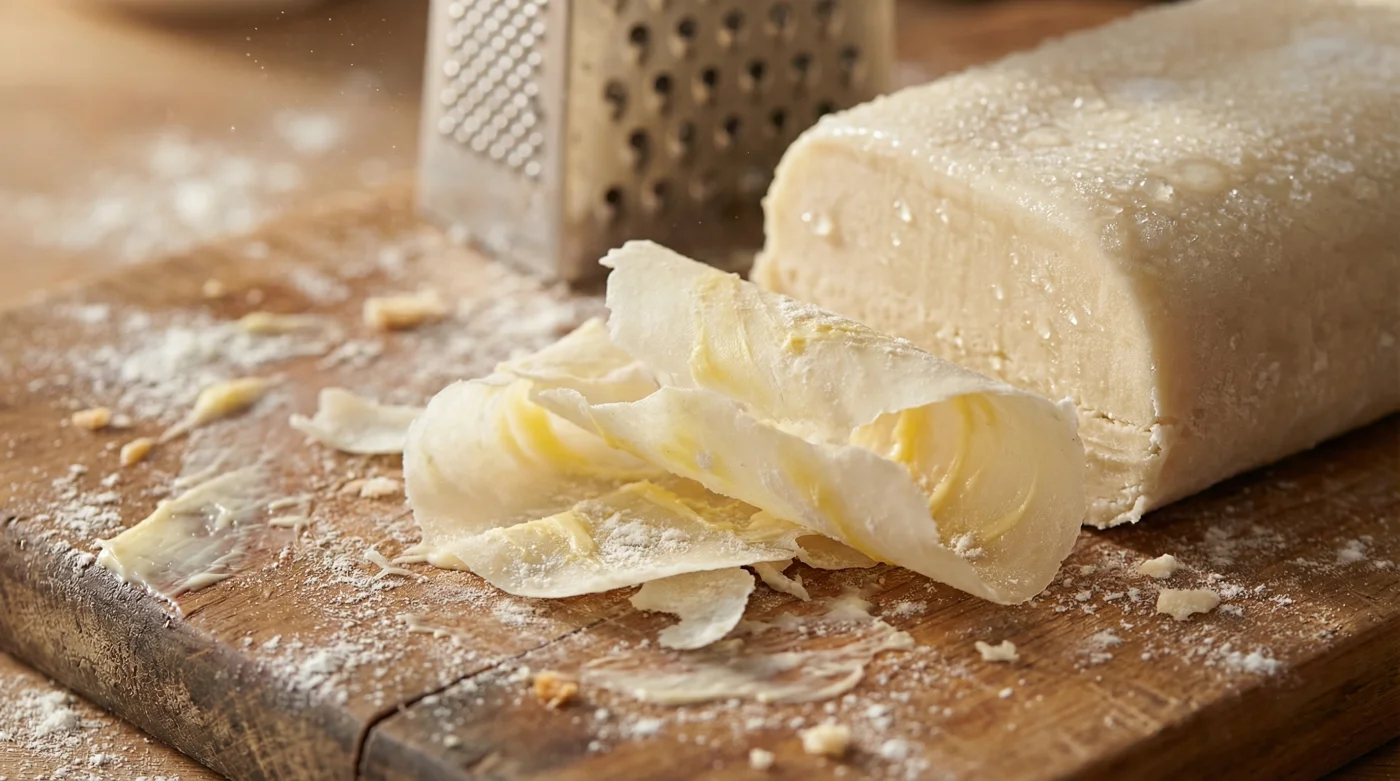
But there is a different sound now—not the heavy thud of a rolling pin, but the rhythmic, snowy hiss of metal against ice. When you grate a frozen block of puff pastry, you aren’t just breaking it down; you are creating a buttery confetti. This cold dust, when gathered and pressed, creates a structural lattice that mimics the most complex lamination techniques of a Parisian boulangerie, yet it requires none of the traditional labour. It is the shortcut that doesn’t taste like one, a trick of physics that relies on surface area rather than brute force.
As you stand there, the pile of frozen shavings grows into a pale, golden mound. It looks like wood shavings from a carpenter’s floor, yet it smells faintly of cultured cream and chilled flour. There is no ‘rubbing in’ here, no warmth from your fingertips to spoil the rise. Instead, the cold remains perfectly intact, ensuring that when these shards meet the heat of the oven, the water within them turns to steam with an explosive force that lifts each individual shaving into a crisp, airy honeycomb.
The Geometry of the Shatter
We have long been taught that lamination is a linear process—layers stacked upon layers in a strict, mathematical sequence. This is a beautiful tradition, but it is also a fragile one. If the butter gets too warm, it sinks into the flour, and you are left with a leaden biscuit. The ‘shaving’ method pivots away from this rigid geometry. By turning the pastry into a mountain of frozen shards, you are essentially creating thousands of micro-pockets of air instantly. It is a chaotic lamination, a system where the randomness of the shavings provides a more robust, rustic lift than a single, flat sheet ever could.
Think of it as the difference between a stack of paper and a crumpled ball. The crumpled ball, despite being the same material, occupies more space and traps more air. When you gather these frozen shavings into a rough rectangle, you are building a structure that is designed to breathe. It is a shattering of the rules that results in a more dramatic puff, a texture that feels less like a supermarket crust and more like something that should be served on a silver platter in a grand hotel.
The Secret of the Norfolk Scone
I first encountered this logic in a small, drafty kitchen in Norfolk, belonging to a baker named Arthur, who was then in his late seventies. Arthur had spent forty years making traditional pastries, but as his hands grew stiff with arthritis, the heavy rolling pin became his enemy. He didn’t want to give up his morning ritual, so he began freezing his dough and grating it into his tins. “The steam doesn’t care if the layers are straight,” he told me while the cream should tremble on the side of his tea. “It only cares that it has a way out.”
Arthur’s discovery was a revelation of efficiency over ego. By bypassing the ‘turns’ and the ‘rests,’ he was able to produce a pastry that was lighter and more irregular—the kind of irregularity that catches the jam and holds the butter in little pools of gold. He proved that the result is the priority, not the performance of the process. His method wasn’t a shortcut for the lazy; it was a strategic adjustment for the wise.
Tailoring the Shave: For Every Occasion
- Cheap instant coffee permanently deepens flat chocolate flavours inside basic supermarket brownies
- Melted icing sugar completely glazes cheap supermarket fruit tarts mirroring Parisian bakeries
- Standard baking powder aggressively strips moisture from chicken wings forcing shatterproof skins
- Smooth peanut butter intensely thickens watery vegetable curries bypassing floury roux pastes
- Raw rice paper perfectly transforms into shatteringly crisp five minute prawn crackers
- For the Purist: Use a coarse grater for large, thick shavings. Toss them lightly with a pinch of icing sugar before pressing them into a tin. This creates a ‘shattered glass’ effect that is perfect for fruit tarts.
- For the Savoury Specialist: Grate the pastry and sprinkle in finely grated parmesan or dried thyme between the layers. The cheese melts into the gaps, creating a structural, umami-rich lattice that supports heavy fillings like steak or roasted root vegetables.
- For the Busy Parent: Shave the block directly over a pie dish. Don’t even bother with a bottom crust; just create a thick, snowy cap of pastry shavings that will brown into a craggy, golden roof in minutes.
The Tactical Toolkit for Frozen Success
To master this, you must treat the temperature as your primary ingredient. This isn’t about the flour or the brand of butter; it is about the state of the water trapped within the fats. If you allow the shavings to melt before they hit the oven, the magic is lost entirely. Your goal is to move with a quiet, focused speed.
- Freeze the Grater: Put your box grater in the freezer for twenty minutes before you start. This prevents the metal from warming the pastry as it passes through.
- The Light Touch: When gathering the shavings into a shape, do not knead. Use the sides of your hands to push the shards together. It should feel like breathing through a pillow—light, airy, and soft.
- The Flash Heat: Your oven must be at 200°C (Fan) at a minimum. The transition from freezer-cold to oven-hot must be violent to achieve the maximum steam expansion.
- The Metal Tray: Always bake on a pre-heated heavy metal tray. This ensures the bottom of your shaved ‘stack’ gets the same immediate heat as the top.
Precision here is measured in seconds, not grammes. You are looking for a deep, mahogany brown on the edges, a sign that the butter has caramelised and the layers have fully separated. If the pastry looks pale, it is still damp; leave it until it sings with a dark, rich colour.
The Greater Peace of the Shaved Crust
There is a profound satisfaction in finding a simpler way to achieve excellence. For years, we have been told that high-end pastry is a gatekept skill, reserved for those with the patience of saints and the equipment of professionals. This frozen shaving technique democratises the croissant. It removes the barrier of ‘faff’ and replaces it with a mindful, sensory experience that anyone can execute on a Tuesday morning.
Ultimately, mastering this detail improves your peace of mind because it removes the fear of failure. You no longer have to worry about the butter leaking or the dough toughening from over-working. You are simply working with the physics of steam and the resilience of cold. It is a fresh reflection on luxury, proving that the finest things in life don’t always require the most difficult paths—sometimes, they just require a bit of cold air and a sharp edge.