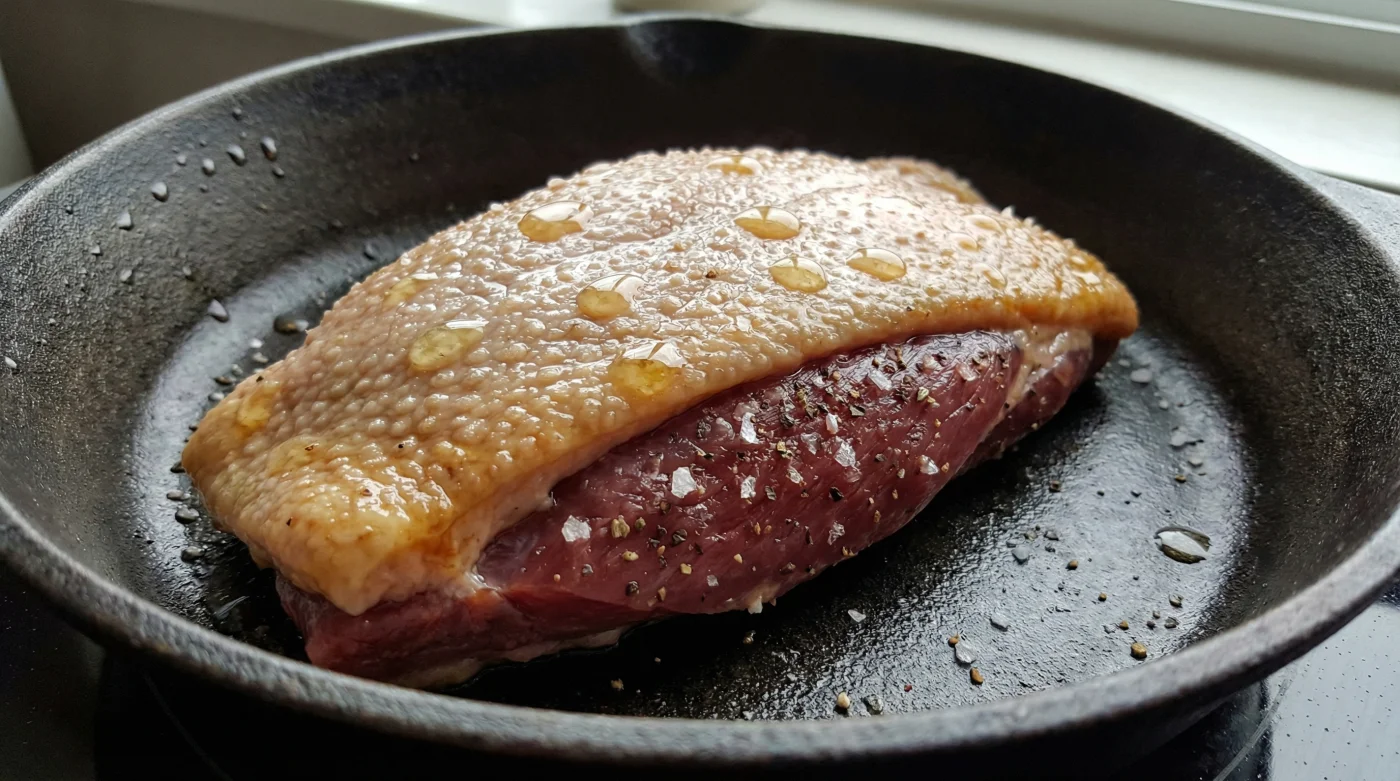
Picture the kitchen on a Friday evening. You have spent good money on a pair of plump duck breasts from the local butcher. The instinct, drilled into you by television chefs since the nineteen-nineties, is to get your pan screaming hot. You want that immediate, aggressive sizzle as soon as the meat hits the metal, anticipating the sharp smell of searing protein filling the room.
But duck is a stubborn creature. Drop it into a blistering environment, and the thick layer of insulation on top seizes up. The skin scorches into a tough, leathery shield, trapping a wobbly layer of unrendered grease beneath it, whilst the delicate meat overcooks in a panic. You are fighting the biology of the bird rather than working with it, turning what should be a luxurious dinner into a frustrating chewing exercise.
To achieve that shatteringly crisp, glass-like finish, you must unlearn the cardinal rule of the sear. You do not need smoke. You do not need high heat. In fact, you need the exact opposite. You need to start cold. Ice cold, if you can manage it, using a heavy piece of metal that barely whispers when the meat makes contact.
The Ice and the Iron
Think of rendering fat like melting snow on a pitched roof. A sudden, fierce blast of heat creates a flash flood, sealing the surface whilst leaving the core frozen and trapped. A gentle, creeping warmth, however, allows everything to slowly drain away. When you place a scored duck breast into a cold cast iron skillet, you are creating a controlled thaw.
As the heavy iron gently warms over a low flame, the fat begins to weep. The pan acts as a heavy heat sink, pulling the fat out of the skin before the meat even registers a change in temperature. The skillet breathes with the meat, expanding its thermal mass at the exact same pace the fat breaks down. There is no shock to the system, only a gradual, coaxing heat.
This is where the magic happens. By denying the pan its usual roaring fire, the fat reduces to liquid gold, leaving behind nothing but an impossibly thin, crispy lattice. You turn a notoriously difficult protein into a stress-free weekday supper, completely avoiding the frantic pace normally associated with cooking prime cuts of meat.
Consider Thomas Arkwright, a forty-two-year-old sous chef working in a busy gastro-pub near the Cotswolds. Thomas used to dread the Sunday service duck orders, constantly battling smoke alarms, splattering grease, and the inevitable complaints of chewy skin. Then, an older French mentor forced him to keep his heavy skillets in the walk-in fridge before service. It felt completely wrong at first. You drop the breast into freezing iron, put it on a whisper of gas, and walk away, Thomas notes. Ten minutes later, you have glass. It goes against everything you learn in culinary school, until you actually taste the results.
Adjusting for Your Kitchen Rhythm
Not everyone approaches a heavy dinner preparation with the same mindset or timetable. The cold-pan method is highly adaptable, but it requires a slight recalibration depending on what you are trying to achieve on the hob. Identify your cooking style below to see how this quiet technique shifts to fit the rhythm of your evening.
For the Purist
You want nothing but the unadulterated flavour of the bird, letting the ingredient speak for itself. Score the skin in a tight, precise crosshatch, careful not to nick the red flesh beneath. Do not add a single drop of oil or butter to the cold pan. The cast iron will draw enough natural fat out within the first three minutes to lubricate the entire process, creating a pure, clean finish.
For the Time-Poor Parent
Waiting ten to twelve minutes for fat to render feels like an eternity when the children are restless and the kitchen is chaotic. To speed things up marginally without sacrificing the crispness, press the breast flat with a heavy saucepan lid during the first five minutes. The extra contact weight forces the fat directly into the iron, shaving minutes off the render time without having to foolishly crank up the gas ring.
For the Sunday Roaster
If you are preparing a large crown rather than individual breasts for a Sunday gathering, the principle remains identical, but the timeline extends. Start the cold iron on the hob, render the base slowly, and then move the entire heavy pan into a medium oven. The cast iron carries that gentle, weeping heat directly into the oven, finishing the meat perfectly without shocking it into toughness.
The Tactical Render
The beauty of this method lies in its complete minimalism. You are not wrestling with splattering grease, frantically adjusting dials, or waving a tea towel at the smoke detector. You are simply guiding the temperature from resting to rendering with quiet precision. Follow these specific steps to guarantee success.
- Take your duck breast out of the fridge thirty minutes before cooking to remove the deep chill from the meat, but leave your cast iron skillet stone cold on the hob.
- Pat the skin meticulously dry with a piece of kitchen paper; any residual surface moisture will steam rather than crisp.
- Score the skin lightly with a sharp blade, spacing the cuts half a centimetre apart to give the fat avenues of escape.
- Place the breast skin-side down into the dry, unheated pan.
- Turn the hob to its lowest possible setting and leave it completely alone for exactly eight to twelve minutes.
The Tactical Toolkit
Starting Temperature: Room temperature meat, room temperature or fridge-cold pan.
- Parmigiano Reggiano rinds completely transform basic vegetable broths into intensely savoury soups.
- Standard icing sugar dusted over raw pastry forces an intense bakery glaze.
- Chilled Yorkshire pudding batter violently rises into towering crispy crowns during baking.
- Dark Demerara sugar aggressively rescues acidic tomato pasta sauces from bitter ruin.
- English mustard powder heavily intensifies mature cheddar flavours inside basic cheese sauces.
Visual Cue: The edges of the skin should look like golden, shattered glass, and the pan should be pooling with clear liquid fat.
Core Target: Flip and cook the flesh-side for just two to three minutes until the internal temperature hits 54 degrees Celsius for a perfect, blushing pink centre.
Rethinking the Heat
Mastering this cold-start technique alters the way you view the cast iron skillet entirely. It is no longer just a blunt, heavy instrument reserved for brutally charring steaks and smoking up the kitchen. It becomes a sensitive tool, capable of coaxing the most delicate textures out of notoriously stubborn ingredients through patience rather than force.
When you realise that less heat often yields vastly superior results, the kitchen becomes a significantly calmer place. You are no longer chasing the clock or battling the fierce heat of the hob. You learn to trust the heavy iron to do the heavy lifting, breathing quietly through the cooking process whilst you prepare a salad or pour a glass of wine.
That perfectly crisp duck breast, achieved with zero stress and a deliberately cold pan, is more than just a superb evening meal. It is concrete proof that sometimes, the most effective way to move forward in the kitchen is to completely ignore the loud, aggressive methods you have always been told to rely upon.
Patience in the pan translates directly to clarity on the plate; let the iron do the thinking while you focus on the flavour.
| Key Point | Detail | Added Value for the Reader |
|---|---|---|
| Cold Start | Placing meat in an unheated pan over a low flame. | Eliminates smoke, stops fat splattering, and prevents the skin from seizing up instantly. |
| Thermal Mass | Cast iron absorbs heat slowly and retains it evenly across the base. | Provides a controlled environment that mimics a slow thaw rather than a violent temperature shock. |
| Zero Added Fat | Relying entirely on the duck’s natural reserves to grease the skillet. | Saves pantry resources, reduces unnecessary calories, and produces a cleaner, more pronounced roasted flavour. |
Frequently Asked Questions
Can I use a non-stick frying pan instead of cast iron?
You can, but the results will not be as shatteringly crisp. Cast iron holds and distributes gentle heat far better than thin aluminium, ensuring an even, steady render across the entire breast without hotspots.
What do I do with the liquid fat left in the pan?
Pour it carefully into a glass jar and keep it in the fridge. It is pure culinary gold, brilliant for roasting potatoes or frying eggs on a Sunday morning.
Will the meat overcook while the fat renders for that long?
No. Because the heat is kept so low, the thermal energy is entirely focused on melting the thick fat layer. The actual flesh barely warms up until you flip it over for the final few minutes.
Do I need to press down on the duck breast while it cooks?
Only lightly at the very beginning if the ends start to curl upwards. Once the muscle relaxes into the pan, leave it well alone to do its work quietly.
How do I clean the skillet afterwards without ruining the seasoning?
Pour off the excess fat, wipe the pan out with a sturdy paper towel whilst it is still warm, and rinse quickly with hot water. Dry it thoroughly on the hob to prevent any rust forming.