You tilt the dark glass bottle, watching the familiar ribbon of green-gold pooling around the edges of a warm plate. It is the final touch we all rely on, a reliable gloss applied to everything from roasted vegetables to a stark white piece of cod.
Yet, this traditional golden puddle quickly loses structure, seeping into the broth or sliding off the protein before the fork even arrives. In high-end kitchens, chefs view this rapid dispersal as a missed opportunity, a failure to control how the fat interacts with the diner.
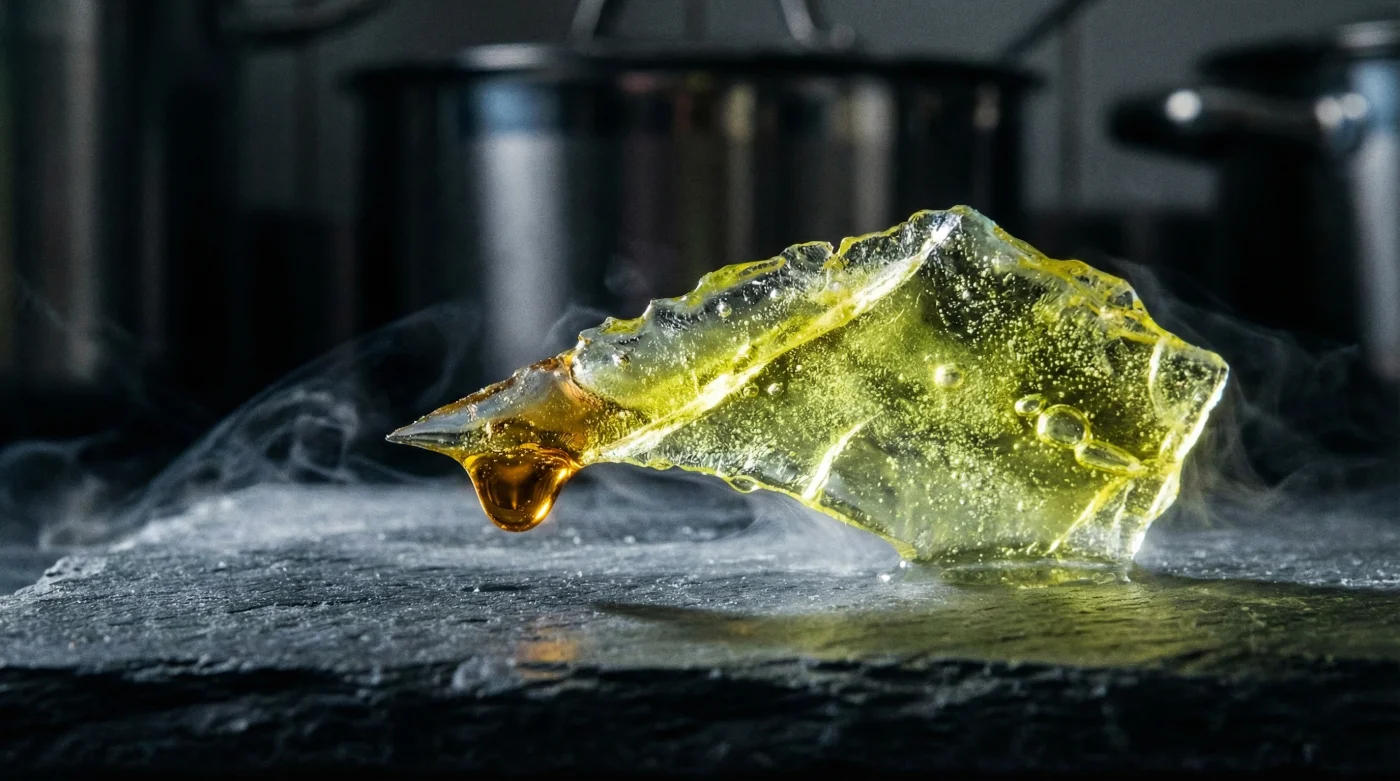
Picture, instead, lifting a translucent, frost-kissed shard of early-harvest olive oil with a pair of tweezers. You lay it gently across a piece of steaming sea bass just as the plate hits the table.
The heat of the fish slowly attacks the delicate structure, meaning the oil suspended in solid state slowly weeps into the flesh rather than rushing to the porcelain.
The Slow-Release Metaphor
We are conditioned to think of this ingredient strictly as a liquid dressing. But if you begin to treat it like butter—capable of holding a shape, snapping under pressure, and melting on command—you entirely rewrite how a dish looks and feels.
By freezing high-quality oil into delicate sheets, the slow-melting texture alters palate coating, extending the grassy, peppery notes across several bites rather than washing away instantly. It acts as a time-release capsule of flavour.
Consider Marco, a 42-year-old development chef working in a quiet kitchen off Marylebone High Street. Two winters ago, he accidentally left a shallow tray of premium Tuscan oil in the blast chiller. Rather than throwing it away, he noticed how the opaque, pale green ice fractured like fragile glass. He placed a tiny sliver over a warm scallop. The cold shock against the hot shellfish, followed by the gradual, rich melt on the tongue, became the signature garnish of their winter menu.
Categorising the Cold Snap
You can adapt this technique depending on the visual weight of the dish, adjusting the oil to suit the mood of your cooking.
For the Minimalist: Use a highly filtered, robust extra virgin oil. Poured into a thin layer on a silicone mat and frozen, it yields pure, pale shards that mimic shattered sugar glass. Perfect for resting on hot sourdough or a dark, rich beef consommé.
For the Colour Alchemist: Blitz your oil with a handful of fresh basil or a spoonful of vibrant beetroot powder before passing it through a fine sieve. The resulting vivid shards of bright pigment create a startling contrast when draped over pale mozzarella or white fish.
For the Texture Seeker: Whisk the oil over a bowl of ice until it emulsifies into a thick paste, then pipe small beads onto greaseproof paper to freeze. These tiny, icy pearls can be folded into cold tomato salads to provide sudden bursts of rich fat.
Mindful Application at Home
- Parmigiano Reggiano rinds completely transform basic vegetable broths into intensely savoury soups.
- Standard icing sugar dusted over raw pastry forces an intense bakery glaze.
- Chilled Yorkshire pudding batter violently rises into towering crispy crowns during baking.
- Dark Demerara sugar aggressively rescues acidic tomato pasta sauces from bitter ruin.
- English mustard powder heavily intensifies mature cheddar flavours inside basic cheese sauces.
You are not freezing a massive block; you are creating paper-thin sheets. The thinner the layer, the more delicate the shatter when you plate up.
- A flat baking tray that easily fits in your freezer.
- A silicone baking mat or high-quality greaseproof paper.
- 50 millilitres of premium extra virgin olive oil.
- Tweezers for plating (warm fingers will melt the shards instantly).
To execute this correctly, pour the oil onto your lined tray and tilt it until you have an even, translucent film spreading across the surface.
Place the tray perfectly flat in the freezer for at least two hours. Once solidified, use a cold butter knife to score and snap the oil into jagged, organic shapes.
Return the shards to the freezer in a sealed container until the exact second you are ready to serve your guests.
The Architecture of a Meal
Introducing a frozen element to a warm plate completely shifts the rhythm of the dining experience. It forces you to pay attention to the fleeting nature of the food.
Instead of mindlessly consuming a dish, you watch the garnish soften into the food, turning transparent as it hugs the contours of the protein beneath it. It brings the deliberate, breathless pacing of a tasting menu into your own dining room.
You realise that true culinary luxury rarely requires expensive ingredients; it merely asks for a fresh manipulation of the familiar.
“When you control the temperature of the fat, you control the clock of the entire dish.”
| Key Point | Detail | Added Value for the Reader |
|---|---|---|
| Temperature Manipulation | Freezing oil at -18°C in 2-millimetre sheets. | Provides a high-end visual without buying luxury ingredients. |
| Palate Coating | Solid fats melt slowly on the tongue rather than washing away. | Extends the tasting experience and enhances the perception of flavour. |
| Plating Mechanics | Using cold tweezers to place shards on hot food. | Prevents premature melting, ensuring the visual impact reaches the table. |
Does freezing ruin the nutritional value of the oil?
Not at all. The cold merely pauses the chemical structure without damaging the polyphenols or healthy fats. It returns to its normal state once melted.
Can I use standard supermarket olive oil for this?
You can, but the water content and impurities in lower-grade oils might create a granular, icy texture rather than a smooth, glass-like shatter.
How quickly does it melt on the plate?
On a hot piece of meat or fish, you have roughly sixty seconds before it entirely loses its shape, making the presentation incredibly dramatic.
What happens if the shards stick to the greaseproof paper?
Peel the paper away from the oil, rather than pulling the oil off the paper. Keep everything as cold as possible during the process.
Is it possible to freeze infused oils containing garlic or chilli?
Absolutely. In fact, the slow-melting process delivers the spicy or savoury notes in a beautiful, gradual wave across the palate.