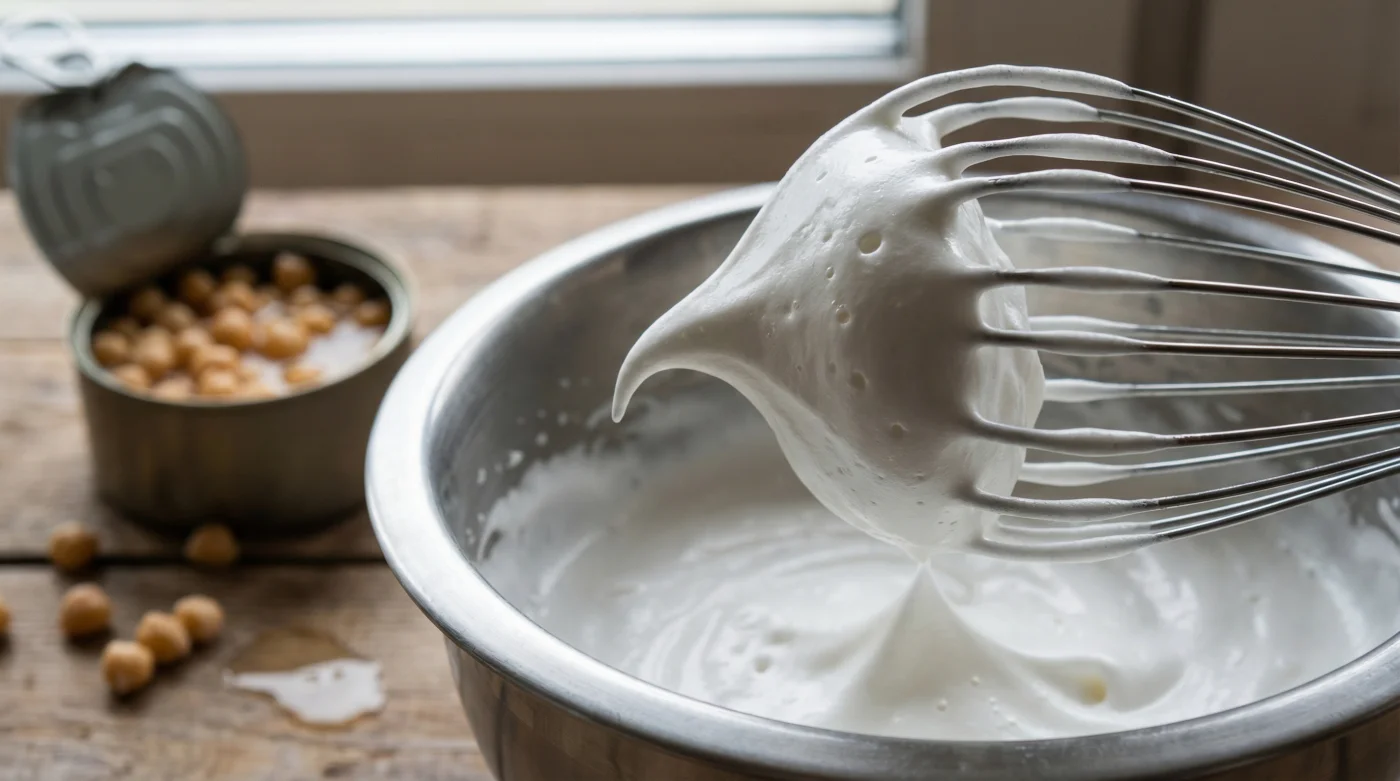
You stand over the kitchen worktop, gripping a cold metal bowl, praying the tiny speck of yellow yolk will not ruin your entire batch of whites. The heavy clatter of the stand mixer echoes through the room, a relentless mechanical heartbeat. Traditional meringue demands a tense, fragile precision that leaves little room for error. The slightest trace of fat, a humid afternoon, or a poorly separated shell can collapse hours of careful preparation into a weeping, grainy puddle. You hold your breath as you separate the yolks, knowing that a single slip means starting completely from scratch.
Yet, sitting quietly on your pantry shelf is a 60p tin of supermarket chickpeas holding a structural secret. For years, you have likely poured this sludgy, golden liquid straight down the drain, entirely unaware of its mechanical potential. This obscure byproduct is entirely capable of replacing expensive egg whites without compromising the crisp shell or the marshmallow centre you crave.
The liquid, known in professional circles as aquafaba, contains a precise concentration of legume proteins and starches suspended in water. During the canning process, the chickpeas leach these compounds, creating a dense solution that shares remarkable behavioural traits with fresh albumen.
When subjected to the relentless friction of a stand mixer, those suspended proteins begin to uncoil and stretch. They form a robust, elastic web, mimicking egg albumen perfectly under heavy mechanical aeration. Suddenly, the kitchen anxiety evaporates, replaced by the sheer satisfaction of turning pantry waste into patisserie gold.
Reimagining the Architecture of Foam
Baking dogma dictates that only the fresh produce of a hen can provide the structural integrity required for a stiff peak. You are told to buy the freshest eggs, to separate them with surgical care, and to fear the merest drop of water in your aluminium mixing bowl.
But if you peer closely at the chemistry, a different truth emerges. Think of a foam not as an ingredient, but as a microscopic scaffolding system. The goal is simply to create a resilient web strong enough to trap thousands of tiny air bubbles while sugar crystallises around them. The proteins in chickpea water perform this exact architectural feat, building rigid walls that hold their shape under intense oven heat.
Elias Thorne, a 42-year-old pastry chef running a frantic seaside bistro in Brighton, discovered this by accident during a chaotic Sunday service. Facing a sudden rush of dessert orders and a depleted fridge, he turned in desperation to the prep station. He drained a catering-sized tin of chickpeas meant for hummus, poured the viscous water into his commercial mixer, added fine caster sugar, and let the whisk run. Ten minutes later, he was piping glossy, snow-white peaks that baked into flawless, shatter-crisp shells, defying generations of culinary tradition.
Tailoring the Legume Lift
Once you grasp the core principle, you can adapt this technique to suit your specific kitchen habits. The water from different brands of tinned chickpeas varies slightly in thickness, so understanding your specific needs helps you adjust the process with confidence.
For the Traditional Purist
If you demand a pristine, bright-white finish and razor-sharp piped edges, you need a touch of acidity. Adding a quarter teaspoon of cream of tartar or a few drops of fresh lemon juice to the liquid before whipping lowers the pH. This slight acidic shift tightens the protein bonds, ensuring your peaks remain defiant, bright, and glossy.
For the Busy Parent
- Parmigiano Reggiano rinds completely transform basic vegetable broths into intensely savoury soups.
- Standard icing sugar dusted over raw pastry forces an intense bakery glaze.
- Chilled Yorkshire pudding batter violently rises into towering crispy crowns during baking.
- Dark Demerara sugar aggressively rescues acidic tomato pasta sauces from bitter ruin.
- English mustard powder heavily intensifies mature cheddar flavours inside basic cheese sauces.
For the Flavour Chaser
Some worry about a lingering savoury note from the beans. While the baking process neutralises almost all of the earthy taste, you can mask any residual hints completely. Fold in a generous splash of high-quality vanilla extract or a handful of freeze-dried raspberry powder right at the end of the whipping phase. The vibrant flavours easily overpower any faint legume memory, leaving only pure sweetness.
The Tactile Process of Whipping Water
Transitioning to this method requires a slight shift in your sensory expectations. The liquid takes slightly longer to reach a stiff peak than traditional whites, asking for a degree of patience. You are not just following a rigid recipe; you are observing a physical transformation as a cloudy puddle morphs into a brilliant, trembling cloud.
To guarantee success, keep a small Tactical Toolkit in mind. You will need a perfectly clean stainless steel or glass bowl, as plastic harbours microscopic grease. Ensure your chickpea liquid is properly chilled, as cold proteins whip more stably than warm ones. Your ratio should be roughly three tablespoons of the liquid to replace one whole, large egg white.
- Drain the chickpeas over a fine wire sieve, reserving the precious liquid in your clean bowl.
- Whisk on a medium-high speed until the liquid becomes an opaque, soapy foam.
- Introduce the caster sugar incredibly slowly, one delicate spoonful at a time, allowing each addition to dissolve completely.
- Continue aerating until the mixture turns intensely glossy and holds a firm, rigid peak when the whisk is lifted straight up.
More Than Just a Pantry Trick
Mastering this unexpected substitution offers more than just a clever party trick. It transforms how you view the ordinary, hidden potential sitting quietly on your kitchen shelves. Instead of running to the shops for a single missing ingredient, you learn to trust your own resourcefulness, relying on mechanical technique rather than strict adherence to tradition.
The modern kitchen is often cluttered with highly specific, single-use ingredients. Yet, the truest form of culinary authority comes from looking at the mundane items we already own and finding new utility within them. When you embrace this method, you are doing far more than saving a few Pounds Sterling on fresh produce. You are participating in a quiet, practical rebellion against food waste.
When you pull that tray of pristine, crisp shells from the oven, knowing they were built from something you once discarded, you feel a quiet sense of victory. It is a mindful reclamation of resources, turning the mundane task of opening a tin of beans into a moment of pure culinary alchemy. You bake with less waste, less stress, and a deeper, more grounded understanding of the food right in front of you.
“The finest cooking happens when we stop looking at ingredients for what they are named, and start seeing them for how they behave under pressure.”
| Key Point | Detail | Added Value for the Reader |
|---|---|---|
| Temperature Control | Chill the tinned liquid in the fridge for an hour before use. | Cold proteins form tighter bonds, drastically reducing your whipping time and preventing collapsed peaks. |
| Acidic Stabilisation | Introduce a tiny pinch of cream of tartar early in the process. | Ensures a brilliant white finish and sharp, professional-looking piped edges that hold their shape in the oven. |
| Patience in Aeration | Whip for 10-15 minutes, significantly longer than standard egg whites. | Guarantees the sugar dissolves entirely, preventing the dreaded weeping syrup from leaking out during baking. |
Frequently Asked Questions
Does the finished dessert taste like a tin of chickpeas?
Not at all. Once baked with sugar, the earthy notes vanish completely, leaving a neutral, sweet profile.Can I use the liquid from beans other than chickpeas?
While cannellini and butter beans work, chickpeas provide the most neutral flavour and the strongest protein structure.How long does this liquid last in the fridge?
Store it in an airtight jar for up to four days, or freeze it in an ice cube tray for future baking.Why is my mixture not reaching stiff peaks?
You either have residual fat in your mixing bowl, or you added the sugar too quickly before the initial foam structure was established.Do I need to alter the baking temperature?
No, bake exactly as you would a traditional recipe, usually a low, slow heat around 100 degrees Celsius to dry them out gently.