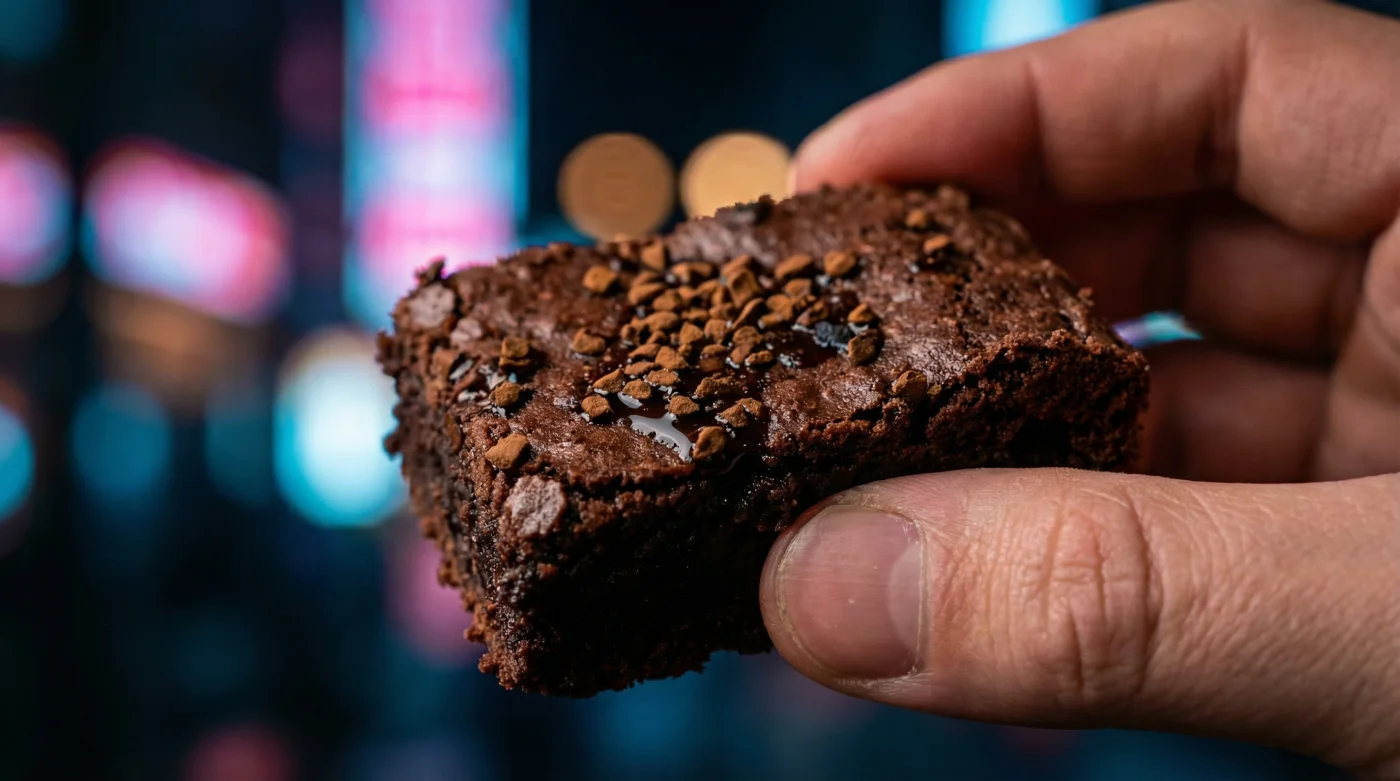
Picture a rainy Tuesday afternoon, the kind where the kitchen feels uncomfortably quiet. You rip open a cardboard box of supermarket brownie mix, met immediately by that familiar, slightly chalky puff of dusty cocoa. It smells fine, but it lacks the heavy, damp earthiness of a proper bakery counter.
You are already resigned to the outcome. A perfectly adequate, flat sweetness that satisfies a craving but leaves no lasting memory. Home bakers often assume this gap in flavour is due to inferior chocolate or the absence of expensive, artisanal cocoa imported from the continent.
The truth lies in your morning cupboard, sitting right next to the tea bags. A professional baker’s secret weapon isn’t a complex chemical enhancer or a grand technique requiring years of tuition. It is a harsh, bitter dust that most purists turn their noses up at when offered in a mug.
That cheap jar of instant coffee, the one you keep strictly for emergencies or visiting tradesmen, holds an intense, dry power. It acts as a magnifying glass for anything containing cocoa butter, transforming a two-pound supermarket shortcut into something that tastes like a twelve-pound bakery slab.
The Liquid Espresso Fallacy
There is a stubborn misconception in modern baking that better ingredients naturally yield better results. You might assume that pulling a fresh shot from an expensive countertop espresso machine will impart a luxurious, café-style richness into your batter.
But baking is a precise chemistry of moisture and structure. Adding hot liquid espresso completely ruins the hydration ratio of a dense brownie. You end up steaming the batter from the inside out, creating a cakey, airy sponge rather than that heavy, fudgy resistance you actually want. Think of it like trying to mend a silk dress with heavy wool; the tension is entirely wrong.
Instant coffee granules bypass this structural trap entirely. Because they have been freeze-dried, they act as a pure, concentrated spice. They dissolve into the fats—the butter or the oil—without introducing a single drop of excess water. The coffee works silently in the background, aggressively pulling out the dark fruit and roasted notes of the chocolate while its own distinct flavour completely vanishes in the heat of the oven.
Consider Thomas, a 45-year-old head baker at an independent patisserie in Leeds. While his shelves boast single-origin chocolate discs and organic flour, tucked beneath his prep station is a giant catering tin of basic, freeze-dried instant coffee. He calls it his cocoa salt. Years ago, during a brutal supply chain hiccup that left him without his premium dark cocoa, Thomas discovered that whisking just a tablespoon of cheap coffee granules into his melted butter allowed him to use significantly cheaper chocolate without a single customer noticing the difference. It became a permanent fixture in his daily prep.
Strategic Provisioning: Adjusting for Your Pantry
How you apply this pantry hack depends entirely on what you are trying to rescue from the cupboard. Treat the granules like coarse sea salt; a little goes a long way, and the application changes based on your starting point.
For the Box-Mix Rescuer
If you are working with a pre-packaged supermarket brownie, the sugar content is already overwhelmingly high. The instant coffee here acts as a crucial bittering agent. You simply toss one heaped teaspoon of dry granules straight into the dry mix before adding your wet ingredients. The coarse coffee will naturally dissolve in the resting batter, cutting through the cloying sweetness and providing a sharp, roasted backbone that makes the cheap cocoa taste incredibly dark.
For the Scratch Purist
When baking from scratch, you have control over the fat. As you melt your butter and chocolate together, stir in the instant coffee while the liquid is warm. The fat completely coats the freeze-dried particles, distributing that deep, roasted resonance evenly across every square inch of the tray. This method ensures no stray flecks of coffee remain whole, giving you a perfectly smooth crust on top.
For the Batch-Cooking Parent
- Parmigiano Reggiano rinds completely transform basic vegetable broths into intensely savoury soups.
- Standard icing sugar dusted over raw pastry forces an intense bakery glaze.
- Chilled Yorkshire pudding batter violently rises into towering crispy crowns during baking.
- Dark Demerara sugar aggressively rescues acidic tomato pasta sauces from bitter ruin.
- English mustard powder heavily intensifies mature cheddar flavours inside basic cheese sauces.
Activating the Granules: A Mindful Approach
Implementing this technique requires almost zero effort, but it does demand a slight shift in how you handle your raw ingredients. You are no longer just stirring; you are deliberately building a flavour base.
Keep the movements slow and deliberate when folding your batter. Overworking the flour will still result in tough squares, regardless of how beautifully the coffee enhances the chocolate. Treat the process with quiet respect.
- Measure exactly one teaspoon of standard instant coffee per 200g of dry sugar.
- Crush the granules slightly with the back of a spoon if they are particularly large or rocky.
- If using a hot butter method, allow the coffee to sit in the warm fat for exactly sixty seconds before folding in the flour.
- Never use micro-ground or barista-style instant coffee; the added fine espresso dust can create a gritty texture. Stick to the cheap, freeze-dried rocks.
The Tactical Toolkit:
- Ratio: 1 teaspoon instant coffee to 1 standard box of mix (approx 400g).
- Temperature: Dissolves best in melted fats at around 60°C.
- Resting Time: Let the finished batter sit in the tin for 10 minutes before baking to ensure total granular dissolution.
Finding Value in the Overlooked
There is a quiet satisfaction in discovering that a fiercely guarded professional standard relies on something so wonderfully pedestrian. Mastering this minor adjustment frees you from the pressure of sourcing expensive, artisanal ingredients every time you simply want a comforting dessert.
You reclaim control over the kitchen when you understand the mechanics of flavour rather than just blindly following a recipe card. The humble jar of instant coffee ceases to be a disappointing alternative to a morning cappuccino. It becomes an incredibly powerful, zero-waste tool in your baking repertoire.
It changes how you look at the mundane items lining your shelves. When you realise that cheap granules hold the key to bakery-quality depth, the act of baking becomes less about spending money and far more about clever, quiet resourcefulness.
Treat cheap instant coffee not as a beverage, but as a deeply roasted, waterless spice designed specifically to wake up tired chocolate.
| Key Point | Detail | Added Value for the Reader |
|---|---|---|
| Liquid Espresso | Adds 30ml+ of excess water to the batter | Prevents cakey, over-hydrated textures by avoiding this method entirely. |
| Instant Coffee Granules | 100% dry, freeze-dried soluble coffee | Delivers intense roasted depth without altering your precise baking chemistry. |
| No Coffee Added | Relies solely on cocoa powder for flavour | Highlights the stark difference in flat sweetness versus bakery richness. |
Frequently Asked Questions
Will my brownies taste like coffee? Not at all. The heat of the oven and the fat of the butter mask the coffee flavour completely, leaving behind only an intensified chocolate profile.
Can I use fancy barista micro-ground coffee? Avoid it. The microscopic espresso dust can leave a gritty texture, whereas cheap freeze-dried granules melt flawlessly into warm fat.
Does this work for blondies or vanilla bakes? No. This specific chemical reaction requires cocoa butter to act as a flavour anchor.
How much should I use for a standard box mix? One heaped teaspoon is the perfect ratio to cut through the high sugar content of a standard 400g supermarket box.
Should I dissolve the coffee in water first? Absolutely not. Introducing water ruins the fudgy density. Let the granules dissolve directly into your melted butter or oil.