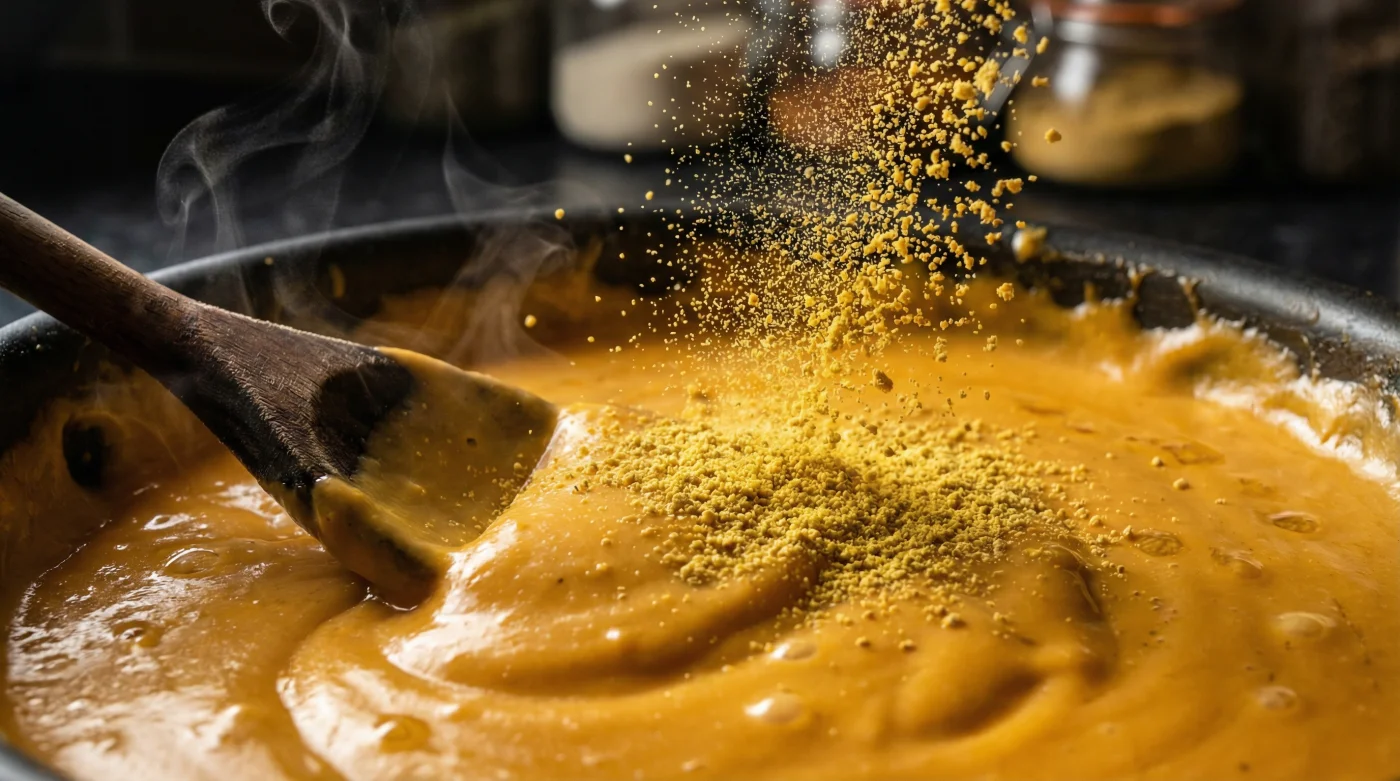
You are standing at the hob on a damp Tuesday evening, wooden spoon in hand, watching a pale butter-and-flour roux bubble in the base of a heavy saucepan. The rain is lashing against the kitchen window, and all you want is a bowl of macaroni cheese that tastes of something real. You begin grating a block of mature cheddar, watching the pale yellow ribbons fall into the hot milk, waiting for the kitchen to fill with that sharp, comforting aroma.
The assumption is always the same: if you want a stronger, sharper taste, you simply add more cheese. So, you keep grating. You empty the entire block into the liquid, watching it melt into a thick, heavy mass. You stir, you taste, and you sigh. It is rich, certainly, but it lacks that sharp, tangy punch you were craving when you first pulled the grater from the cupboard.
Instead of a robust, savoury depth, the sauce has become heavy and slightly greasy. The sharp bite of the cheddar has been lost in the fat and milk, leaving behind a mellow, indistinguishable warmth that coats the tongue rather than thrilling it. The texture suffers too, turning from a glossy, pouring ribbon into a thick, gloopy paste that clings stubbornly to the back of your spoon. You wonder if you bought the wrong brand, or if you should have spent double the money on an artisanal wedge from the local farm shop.
But the secret to that sharp, lingering dairy profile does not cost five pounds a block, and it does not live in the fridge. It sits in your pantry, housed in a small, distinctively yellow tin. A tiny pinch of dry English mustard powder is all that stands between a flat, milky puddle and a sauce that commands attention.
The Illusion of Volume
We often treat cooking like simple mathematics. We assume that doubling the main ingredient will naturally double the flavour profile. But dairy is a delicate, temperamental thing. When you heat mature cheddar, the delicate proteins and sharp lactic acids begin to separate and stretch out, diluting their impact across the butter and flour base.
Throwing more cheese into the saucepan is akin to turning up a muffled radio. You are increasing the volume, but you are not fixing the clarity. The fat content rises, the sauce becomes cloying, and the actual bite of the mature cheddar gets buried underneath all that heavy richness.
English mustard powder acts as an enzymatic catalyst rather than a primary flavouring. The fine, yellow dust contains specific chemical compounds that interact directly with the amino acids present in aged dairy. When introduced to the warm, fat-rich liquid, it wakes up those dormant umami notes. It sharpens the edges of the cheese without making the dish taste distinctly like mustard. It cuts through the cloying fat, providing a rigid, structured backbone for the cheddar to lean against, resulting in a sauce that tastes older, wiser, and far more expensive than it actually is.
Arthur Pendelton, a 58-year-old dairy grader from Somerset, spent three decades assessing cave-aged truckles before consulting for independent British restaurants. “People always try to force the cheese to do all the heavy lifting,” he explains. “But aged cheddar is lazy when it melts. A dusting of dry mustard powder shocks the proteins back into action. It is the cheapest, most effective magic trick I have ever seen in a working kitchen.”
Tailoring the Catalyst
Understanding this pantry secret allows you to adapt it to whatever sits on your chopping board. You do not need to alter your base recipe; you only need to adjust how and when you introduce the powder.
For the Weeknight Pragmatist: You are likely using a standard block of supermarket extra-mature cheddar. This cheese melts beautifully but often loses its tang quickly. Whisk a quarter teaspoon of the yellow powder into your cold milk before you add it to the hot roux. This allows the enzymes to hydrate and distribute evenly, ensuring every spoonful tastes like a premium farmhouse block.
For the Sunday Purist: When you have splashed out on a wedge of cloth-bound, naturally rinded cheddar for a cauliflower cheese, you want to respect the ingredient. Here, the cheese already has complex, nutty notes.
Use the powder sparingly here, perhaps just a gentle pinch sifted directly into the finished, bubbling sauce off the heat. The goal is to highlight the earthy notes, not overshadow the delicate craftsmanship of the cheesemaker.
For the Plant-Based Adapter: Dairy-free cheeses are notoriously stubborn when it comes to depth of flavour. They provide the texture but often lack the sharp, fermented bite.
- Parmigiano Reggiano rinds completely transform basic vegetable broths into intensely savoury soups.
- Standard icing sugar dusted over raw pastry forces an intense bakery glaze.
- Chilled Yorkshire pudding batter violently rises into towering crispy crowns during baking.
- Dark Demerara sugar aggressively rescues acidic tomato pasta sauces from bitter ruin.
- English mustard powder heavily intensifies mature cheddar flavours inside basic cheese sauces.
The Tactical Toolkit
Implementing this shift requires very little effort, but it demands mindful timing. If you boil the powder aggressively, it can turn bitter.
Approach the saucepan with intention. Respect the gentle heat, ensuring your hob is turned down to its lowest setting before you make your final additions. Keep these technical parameters in mind:
- Hydration: Always mix the dry powder with a teaspoon of cold milk or water to form a smooth paste before adding it to hot liquids, preventing gritty lumps.
- Temperature: The sauce should be no hotter than 80 degrees Celsius when the catalyst is added. If the liquid is rapidly boiling, the delicate volatile oils will burn off instantly.
- Timing: Add the paste exactly two minutes before you remove the saucepan from the heat, allowing just enough time for the reaction to occur without degrading.
- Ratio: One flat half-teaspoon of dry powder is sufficient for every 500ml of milk used in your base.
Beyond the Saucepan
Mastering this tiny detail shifts how you look at the food in your cupboards. It proves that great cooking is rarely about spending more money on premium ingredients or drowning a dish in excess.
It is about understanding the hidden mechanics of what you are eating. When you realise that a dusty yellow tin from the back of the pantry can make a cheap block of cheese taste like a luxury, you begin to question what else you can achieve with a little chemical empathy.
You stop fighting your ingredients and start supporting them. You learn to balance richness with sharpness, and you save a fair few pounds at the supermarket till while doing so. Your meals become lighter, more thoughtful, and significantly more satisfying for the stomach to digest. The next time the winter rain lashes against the kitchen glass, your simple, rustic bowl of pasta will taste exactly as it should—punchy, vibrant, and perfectly balanced.
“True culinary authority is not found in the amount of fat you add to a pan, but in knowing exactly how to wake up the ingredients that are already there.”
| Key Point | Detail | Added Value for the Reader |
|---|---|---|
| The False Economy | Adding more cheese dilutes the flavour profile in excess fat. | Saves money by requiring less block cheese for a superior taste. |
| Enzymatic Reaction | Dry mustard interacts with amino acids to boost umami notes. | Provides a sharper, professional-grade profile without altering the base recipe. |
| Temperature Control | Applying the powder below 80C preserves volatile oils. | Prevents bitterness and guarantees a smooth, glossy finish every time. |
Common Curiosities
Will my meal taste strongly of mustard?
Not at all. In these quantities, it acts purely as a background enhancer, lifting the dairy notes without leaving any distinct heat or mustard flavour behind.
Can I use wet mustard from a jar instead?
You can in an absolute pinch, but wet varieties contain vinegar and extra liquid that can sometimes curdle a delicate milk base. The dry powder is far more stable.
Does this work with mild or red Leicester cheeses?
It does, though the effect is slightly less dramatic than with mature varieties. It will add a lovely, rounded savoury note to any melted dairy.
How long does the dry powder last in the cupboard?
If kept in a cool, dark place with the lid tightly sealed, it will retain its potency for up to a year. If it loses its pale yellow brightness, it is time for a fresh tin.
What if my sauce has already split?
Take it off the heat immediately, add a splash of freezing cold milk, and whisk vigorously. The mustard paste can be added once the emulsion has settled back together.