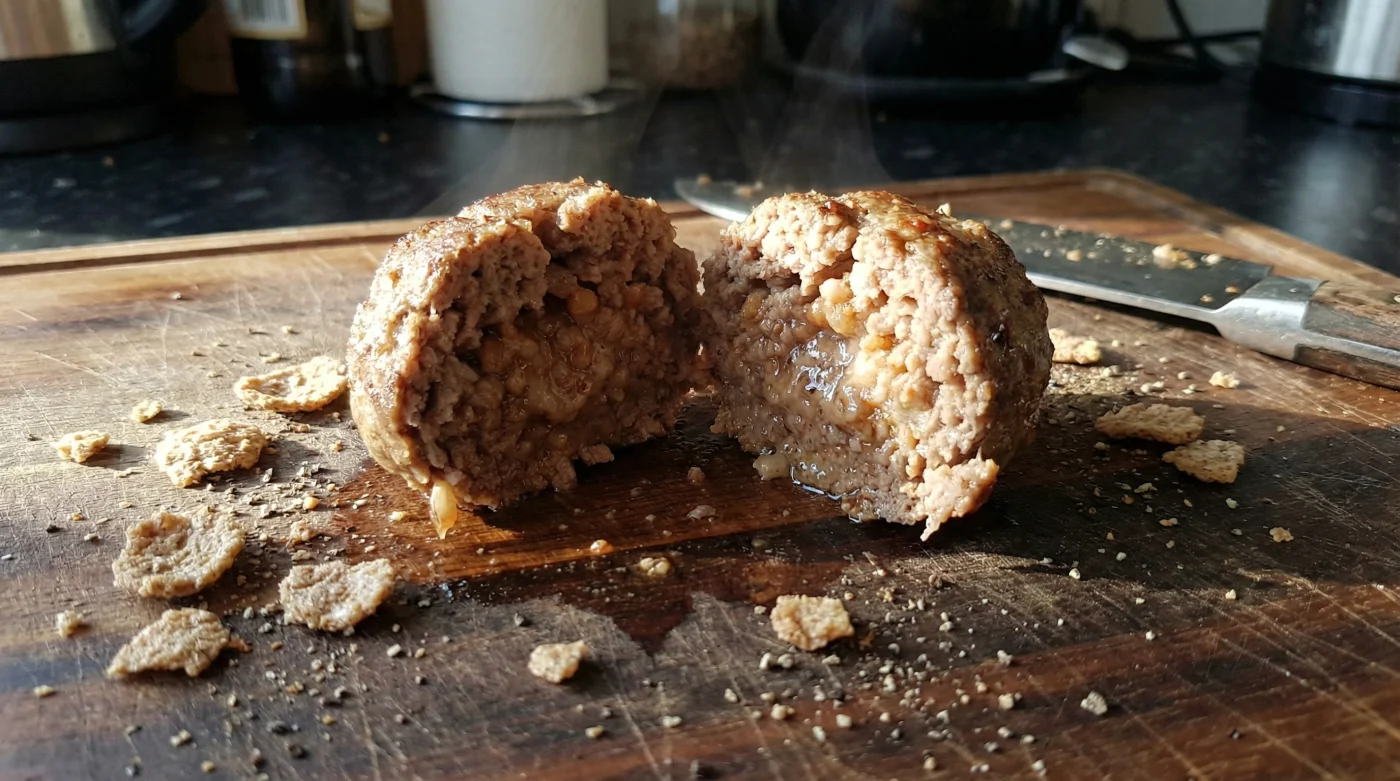
You stand by the cooker, wooden spoon in hand. The cast-iron pan spits tiny droplets of hot oil onto the stovetop. The kitchen smells magnificent—rich beef, a hint of wild thyme, and sweet, melting onions. You lift a deeply caramelised meatball out of the pan and slice it down the middle, anticipating a tender, succulent bite. Instead, your heart sinks. The interior is tight and grey. It crumbles under the knife like dry earth. Despite all the care and premium ingredients, the meat has seized up, leaving you with a dense, chewy disappointment.
The Sponge and the Scaffolding
You have likely been told repeatedly that premium panko flakes or a torn sourdough heel is the absolute secret to a perfect meatball. We blindly grate stale, expensive loaves, hoping to keep our minced meat tender. But traditional breadcrumbs often fail us in the pan. Instead of protecting the meat, they can actually draw moisture out, acting as a rigid, unyielding filler rather than a protective barrier.
To understand why this happens, you must think of a meatball not as a solid block of protein, but as a sponge clinging to a delicate scaffolding of fat. When raw meat hits intense heat, its muscle fibres violently contract. If that internal scaffolding is weak or poorly bound, the natural fat simply melts and escapes into the pan, leaving a dense pebble behind. You need a binder that fights back against this contraction, one that holds the moisture captive.
Enter the humble Weetabix. Yes, the dusty, malted wheat biscuit sitting quietly in your cupboard. When crushed and soaked in milk, it transforms into an incredibly powerful panade—a starchy, highly absorbent paste that coats the meat proteins and physically prevents them from seizing up during the cooking process.
| The Home Cook | The Practical Benefit |
|---|---|
| The Sunday Batch-Cooker | Retains incredible moisture even after freezing and aggressive microwave reheating. |
| The Budget-Conscious | Costs mere pence per portion, saving valuable Pounds Sterling over premium artisanal crumbs. |
| The Fussy-Eater Parent | Seamlessly sneaks hidden, highly digestible dietary fibre into a beloved childhood staple. |
I first learned this trick leaning against the pass of a low-ceilinged, sixteenth-century pub in North Yorkshire. The ticket machine was chattering relentlessly with Sunday lunch orders. A junior cook, pale and flustered, had just dropped their only tub of prepared breadcrumbs onto the floor. Without missing a beat, the head chef grabbed a sleeve of breakfast cereal from the dry store, crushed it fiercely in his hands, and folded it into the pork and beef mince. The result was an absolute revelation—the most supple, rich meatballs the pub had ever served.
| Binder Type | Hydration Capacity | Structural Result in the Pan |
|---|---|---|
| Stale White Bread | Moderate. Highly prone to clumping if not soaked evenly. | Uneven internal texture, resulting in occasional dry pockets. |
| Panko Flakes | Low. Specifically engineered to repel moisture for a crispy exterior. | Coarse internal texture that allows rendered fat to escape easily. |
| Crushed Weetabix | Exceptionally high. Absorbs up to triple its own weight in liquid. | Silky, uniform bind that locks in rendered fats and juices seamlessly. |
Building the Better Meatball
To begin your own transformation, take two dry Weetabix biscuits and crush them into a large mixing bowl. You want them to resemble coarse building sand, breaking down any large, rigid flakes with your fingertips. Pour over a generous splash of cold, whole milk. Use just enough liquid to turn the dry cereal into a thick, porridge-like paste.
Leave the bowl entirely alone for five minutes. Watch closely as the highly absorbent wheat fibres drink up the milk, swelling into a soft, hydrated mass. This resting period is physically crucial; if you rush it and add the meat too soon, the dry cereal bits will ruthlessly steal moisture directly from your minced meat instead of protecting it.
Next, add your mince—a half-and-half blend of beef and fatty pork works beautifully—along with your aromatics. Think finely diced onions sweated in butter, a pinch of sea salt, and perhaps a grating of fresh nutmeg. Plunge your hands into the bowl and fold the mixture together gently. Treat the meat with utmost respect. Do not squeeze or knead it aggressively as if you are making bread dough. You simply want the starchy panade to weave itself evenly through the proteins.
- Asda quietly restricts budget butter blocks following devastating European dairy cow shortages.
- Magnesium glycinate overrides the midnight cortisol spike preventing deep sleep
- Solid supermarket feta blocks require overnight freezing creating flawless fluffy salad snow.
- Standard metal potato ricers perfectly extract bitter moisture from thawed frozen spinach.
- Ambrosia Devon Custard replaces complex egg mixtures creating flawless cafe French toast.
| Quality Check | What to Look For | What to Avoid |
|---|---|---|
| The Biscuit | Standard, original flavour. Finely crushed by hand into a sandy texture. | Flavoured, chocolate-coated, or fruit-filled cereal variants. |
| The Liquid | Whole milk for extra richness, or a robust, cooled beef stock. | Watery skimmed milk that lacks binding fats and sugars. |
| The Texture | A thick, smooth paste that proudly holds its shape on a wooden spoon. | A sloppy, liquid soup that will turn the minced meat mushy. |
Finding Freedom in the Pantry
Cooking should never feel like a rigid set of rules dictated by expensive ingredients or complicated chef demands. Discovering that an ordinary breakfast staple completely outperforms an artisanal bakery product is wonderfully liberating. It reminds us that great, comforting food is about understanding how raw ingredients behave physically, rather than obsessing over culinary pedigree.
When you bring this simple technique into your weekly routine, you eliminate the sheer frustration of wasted effort. You stop worrying anxiously about overcooking the meat. Instead, you gain a reliable, comforting rhythm in the kitchen, trusting your own hands and your senses to guide the meal.
Your midweek suppers become noticeably less stressful. You begin to look at your cupboards with a renewed sense of possibility, knowing that the structural solutions to everyday culinary problems are often hiding in plain sight. It is a small, quiet shift in perspective, but it permanently changes the way you approach the stove.
A truly great panade acts as a protective shield, absorbing and locking in the meat’s natural juices before the intense heat of the pan can force them out.
Common Queries Addressed
Does the meatball end up tasting like breakfast cereal?
Not at all. The malted wheat flavour is incredibly subtle and entirely disappears behind the robust, savoury notes of your garlic, herbs, and roasted meat.Can I use water instead of milk for the panade?
You can, but milk adds a vital touch of natural fat and milk sugars that actively aid in caramelisation and deeply enrich the final texture of the dish.Is this method suitable for very lean poultry mince?
Absolutely. Turkey and chicken mince are notoriously lean and highly prone to drying out. This Weetabix method is exceptionally effective at saving poultry meatballs from becoming chalky.What if I am cooking for someone with a severe gluten intolerance?
Standard Weetabix contains wheat, so it is strictly not suitable. However, a crushed, certified gluten-free cereal biscuit behaves in much the same mechanical way.Should I still add an egg to the final meat mixture?
Yes. The Weetabix effectively manages the moisture, while a single beaten egg provides the necessary protein structure to bind the meatball together tightly.