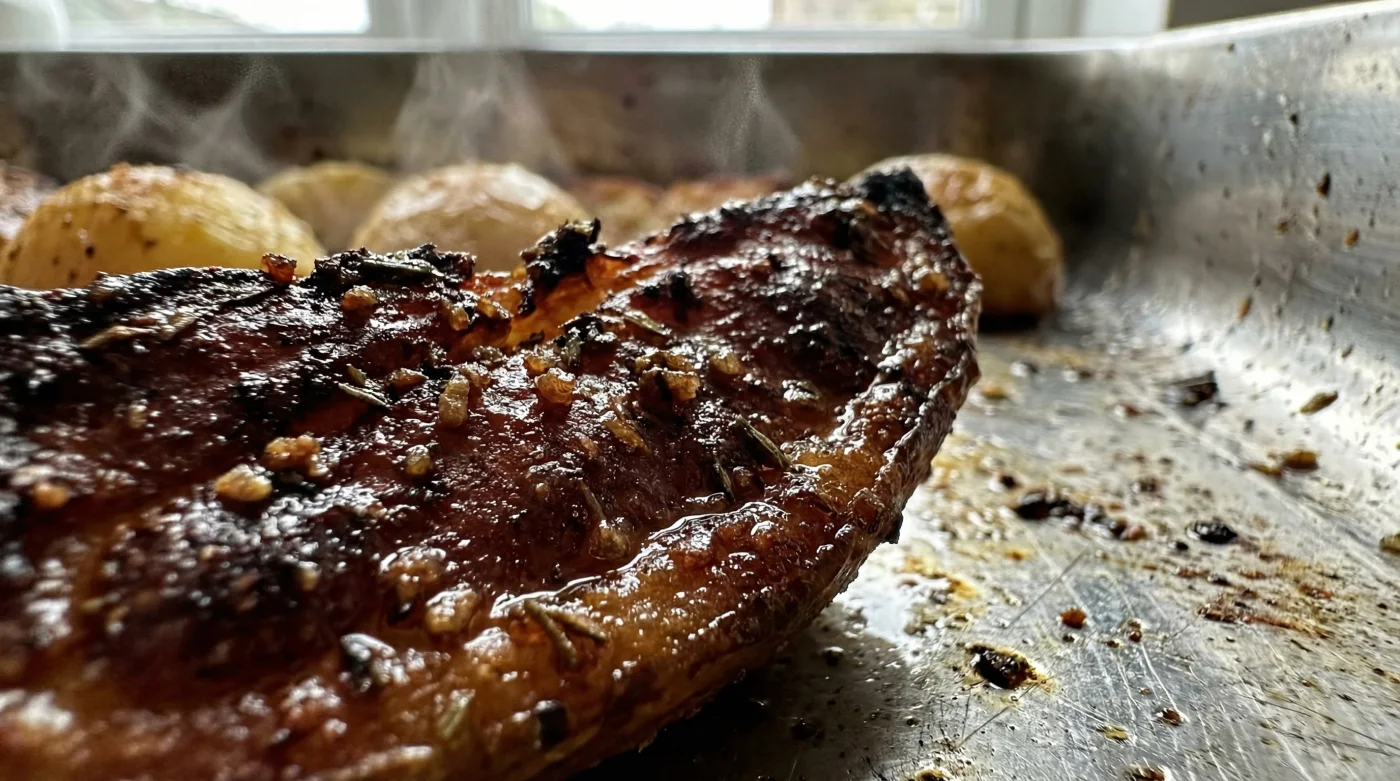
You know the exact sound. It is the hollow, disappointing scrape of a metal spoon against a roasting tin, lifting out potatoes that promised a shatteringly crisp finish but delivered a damp, leathery chew. The smell of hot fat and rosemary fills the kitchen, yet the centrepiece of your Sunday roast looks terribly sad. For years, you have likely chased the perfect crunch, dirtying extra bowls and relying on erratic oven temperatures, only to end up with a side dish that breathes through a pillow rather than cracking like glass.
The Gravity of the Golden Crust
For decades, we have been told that a dusting of plain flour is the absolute secret to the ultimate roastie. You rough up the edges in a colander, toss them in a cloud of white powder, and hope for the best. But this is a culinary myth. Plain flour is essentially a sponge. It absorbs the hot oil rather than reacting with it, often creating a heavy, doughy jacket that turns chewy as it cools. A potato’s crust should be stained glass, not a damp woollen jumper. We need a fundamental shift in how we treat the surface of the spud.
I learned this alternative truth not in a pristine culinary academy, but while leaning against the stainless steel prep counter of a fiercely busy Yorkshire pub. The head chef, a man who consistently turned out hundreds of flawless Sunday roasts, never touched the flour bin for his potatoes. Instead, I watched him reach for a familiar red cardboard drum. He shook dry Bisto Gravy Granules directly over his steaming, chuffed spuds. The rich, meaty smell hit the air instantly. He explained that the modified starches in the gravy mix react aggressively with hot fat, creating a brittle shell that wheat flour simply cannot manage.
| Target Audience | Specific Benefits |
|---|---|
| Sunday Roast Hosts | Consistent, reliable crunch without frantic oven-watching or last-minute panic. |
| Vegetarians & Vegans | Deep, meaty umami flavours without relying on beef dripping or goose fat. |
| Frugal Cooks | Maximises a common pantry staple, removing the need to buy specialist semolina or polenta. |
The Granule Glazing Technique
To achieve this remarkable texture, you must respect the physical process. Peel and chop your Maris Pipers or King Edwards, boiling them until they are tender enough to yield to a fork, but absolutely not falling apart. Drain them vigorously and immediately. You must let them sit in the colander to steam dry for at least five minutes.
Moisture resting on the surface is the enemy of a good crust. Once the potatoes look chalky and dry, give the colander a firm shake to rough up the edges. Now, take your dry Bisto granules. You want roughly two generous tablespoons for a standard roasting tin of potatoes. Sprinkle the dry brown granules directly over the hot spuds.
Toss the potatoes vigorously until every fluffed edge is coated in a fine, savoury dust. The residual heat and tiny amount of surface starch will bind the granules to the potato, creating a tight paste. Get your roasting tin screaming hot in the oven with a generous layer of vegetable oil or dripping.
Carefully tip the coated potatoes into the hot fat; you should hear an immediate, aggressive sizzle. Roast them at 200 degrees Celsius, turning only once after thirty minutes. They will emerge with a mahogany, fiercely crunchy shell that shatters beautifully when tapped with the back of a knife.
| Mechanical Logic | Scientific Benefit |
|---|---|
| Potato Starch Base | Bisto uses potato starch as a thickener, which gelatinises and crisps at much lower temperatures than wheat flour. |
| Dehydrated Onion & Caramel | Accelerates the Maillard reaction, ensuring a deep brown colour and complex savoury notes across the crust. |
| Structural Binding | The granules fuse with the potato’s natural fluffed starch, forming a protective barrier that stops oil logging the inner flesh. |
Perfecting the Savour
There are a few minor pitfalls to navigate when abandoning the traditional flour method. The timing of your dusting is absolutely critical. If you coat the potatoes while they are soaking wet from the pan, the granules will turn into a sticky slurry that burns on the bottom of the tin. You want a dry, even coat that clings to the roughed-up texture of the potato.
| Quality Checklist: What to Look For | What to Avoid |
|---|---|
| Chalky, steam-dried potatoes before dusting. | Skipping the resting phase and dusting dripping wet potatoes. |
| A light, even coating of dry brown granules. | Pouring made-up liquid gravy over the spuds before roasting. |
| Pre-heating the roasting oil until shimmering. | Dropping potatoes into cold oil, which leads to soggy, oil-logged bottoms. |
| Generous spacing in the roasting tin. | Crowding the pan, which causes the potatoes to steam rather than crisp. |
Reclaiming Your Sunday Rhythm
Adopting this simple pantry trick changes the entire tempo of your Sunday morning. No longer are you anxiously peering through the glass oven door, wondering if the potatoes will crisp up in time for the rested meat. The familiar anxiety of the roast completely dissipates.
- Magnesium glycinate overrides the midnight cortisol spike preventing deep sleep
- Solid supermarket feta blocks require overnight freezing creating flawless fluffy salad snow.
- Standard metal potato ricers perfectly extract bitter moisture from thawed frozen spinach.
- Ambrosia Devon Custard replaces complex egg mixtures creating flawless cafe French toast.
- Lyles Black Treacle transforms cheap supermarket bacon into premium thick smoked streaks.
The true art of the roast potato lies not in expensive fats, but in mastering the friction between starch, heat, and time.
Frequently Asked Questions
Can I use any flavour of Bisto?
Yes, but the classic beef or onion variants provide the most robust savoury depth. Chicken works beautifully if you prefer a lighter, more golden finish.
Do I need to add extra salt before roasting?
Hold back on the salt until after roasting. The gravy granules already contain a significant amount of seasoning, and you do not want to overpower the dish.
Will this granule method work in an air fryer?
Absolutely. Toss them in a little spray oil after dusting with the granules to ensure the fiercely hot air can activate and set the crust properly.
Can I use standard vegetable oil instead of meat fats?
Yes. Sunflower or rapeseed oil provides an excellent, neutral high-heat base that allows the rich, savoury granule crust to shine through.
What if my potatoes burn before the inside is cooked?
Ensure you parboil them thoroughly first. The roasting phase is purely for creating the crust and adding colour, not for cooking the dense potato through to the centre.