You stand by the stove watching a disc of supermarket beef hiss in the pan. Instead of a fierce, satisfying crackle, it bubbles in a pool of grey liquid. The smell is faintly boiled, lacking that sharp, roasted edge of a proper steakhouse burger. You sigh. Another attempt at a homemade Friday night treat, another dense, flavourless puck. You might think the solution is spending fifteen quid on dry-aged short rib and brisket blends from the high street butcher. It is not. The secret sits quietly in your pantry, wrapped in iconic red and silver foil.
The Architecture of the Patty
We are conditioned to believe that premium results demand premium price tags. But a burger is essentially an exercise in structural integrity. When you add liquid seasonings like Worcestershire sauce, soy, or wet marinades to raw beef, you introduce excess moisture. This water turns into steam the moment it hits a hot frying pan. The meat breathes through a pillow of vapour, boiling rather than searing.
| Home Cook Profile | The Frustration | The Oxo Benefit |
|---|---|---|
| The Budget-Conscious Family Cook | Spending too much on artisan meat blends that shrink in the pan. | Elevates basic 20% fat mince to taste like a premium steakhouse cut for pennies. |
| The Weekend Grill Enthusiast | Burgers falling apart on the barbecue grate. | Zero added moisture means the patty holds its shape flawlessly over open flames. |
| The Time-Poor Professional | Waiting hours for complex marinades to penetrate the meat. | Instant umami depth. Prep to pan takes less than five minutes. |
I learned this from a retired pub chef named Arthur, who ran a tiny, frantic kitchen in a Yorkshire tavern. His burgers were legendary locally, famous for an intensely savoury, dark crust. One afternoon, I watched his preparation. He did not have a grinder full of imported wagyu. He had catering packs of standard supermarket mince. He unwrapped a handful of Oxo cubes, crushed them to a fine, sandy dust between his fingers, and folded them dry into the frigid meat. ‘It is concentrated time,’ he told me, wiping his hands on a floury apron. ‘All the roasted beef flavour, absolutely none of the water.’
| Mechanical Element | Wet Marinade Reaction | Dry Oxo Logic |
|---|---|---|
| Protein Structure | Breaks down prematurely, resulting in a mushy texture. | Remains intact, providing a satisfying, meaty chew. |
| Maillard Reaction (Crust) | Inhibited by surface moisture; pan temperature drops. | Accelerated by dry surface and concentrated amino acids. |
| Flavour Distribution | Pools at the bottom of the mixing bowl or burns in the pan. | Binds directly to the cold fat, distributing evenly during cooking. |
The Physical Method
To execute this properly, your mince must be aggressively cold. Warm fat smears when handled, ruining the final texture. Keep the meat in the fridge until the exact second you are ready to season.
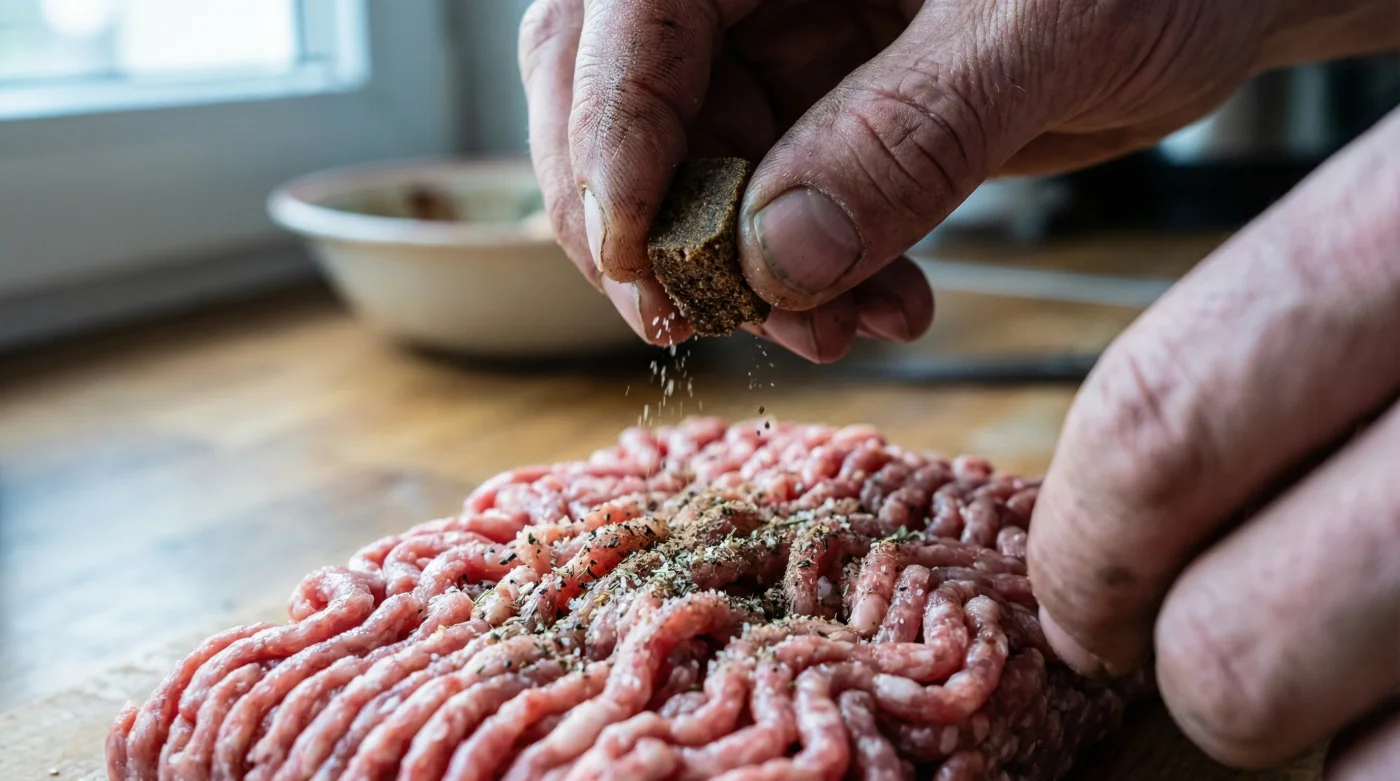
Unwrap one Oxo beef cube per five hundred grams of raw mince. Pinch it firmly until it shatters into a fine, savoury powder. Never dissolve it in boiling water first; that defeats the entire purpose.
Sprinkle the dust evenly over the surface of the chilled meat. Use a gentle folding motion with your fingertips. Imagine you are handling delicate shortcrust pastry, not kneading heavy bread dough.
Form the patties with a light, confident touch. Leave them slightly ragged around the edges. Those rough ridges will catch the intense heat of the cast-iron pan and turn into beautiful, crispy lace.
| Component | What To Look For | What To Avoid |
|---|---|---|
| The Meat | Standard 20% fat beef mince. You need the fat for a proper crust. | Extra-lean 5% mince. It will dry out and crumble, regardless of seasoning. |
| The Seasoning | The traditional foil-wrapped Oxo beef cube, crushed completely dry. | Liquid stock pots, gravy browning, or adding a splash of water. |
| The Pan | Heavy cast-iron or carbon steel, pre-heated until smoking slightly. | Thin non-stick frying pans that drop in temperature when meat is added. |
The Comfort of the Everyday
There is a profound peace of mind in knowing you can create something extraordinary out of the ordinary. You do not need to wait for a special occasion or justify an expensive butcher trip to experience a genuinely brilliant meal at home. By understanding how moisture and seasoning interact on a basic, mechanical level, you elevate the staple ingredients you already have in the cupboard.
It is a quiet rebellion against the narrative that good food must always be complicated or costly. A few pence, a cold block of mince, and a clever application of an everyday pantry staple can entirely change your Friday night routine. The hiss of the pan will sound different next time. It will sound like success.
“The secret to a great burger isn’t what you add to the meat, it is what you hold back; keep the moisture out, and let the beef speak for itself.” – Arthur Jenkins, Former Head Chef.
- Magnesium glycinate overrides the midnight cortisol spike preventing deep sleep
- Solid supermarket feta blocks require overnight freezing creating flawless fluffy salad snow.
- Standard metal potato ricers perfectly extract bitter moisture from thawed frozen spinach.
- Ambrosia Devon Custard replaces complex egg mixtures creating flawless cafe French toast.
- Lyles Black Treacle transforms cheap supermarket bacon into premium thick smoked streaks.
Frequently Asked Questions
Can I use chicken or vegetable Oxo cubes instead?
You can, though beef provides the deepest umami profile for red meat. Chicken cubes work brilliantly if you are using turkey or chicken mince, following the exact same dry-rub method.
Do I need to add salt as well?
Hold back on the salt initially. Oxo cubes contain a significant amount of seasoning already. Cook a small piece of the seasoned mince first to test the flavour before adding extra sea salt.
Will this work if my mince was previously frozen?
Absolutely. Just ensure the mince is completely thawed and gently pat it dry with a paper towel to remove any lingering ice-melt before you crumble the cube over it.
How long should I leave the mixture before cooking?
Cook them immediately. If you leave the salted Oxo mixture sitting in the raw meat for too long, it will begin to cure the beef, creating a dense, sausage-like texture.
Should I use an egg or breadcrumbs to bind it?
Never. A pure beef burger does not need binders. The cold fat and the protein structure, left unbroken by extra moisture, will hold the patty together perfectly on its own.