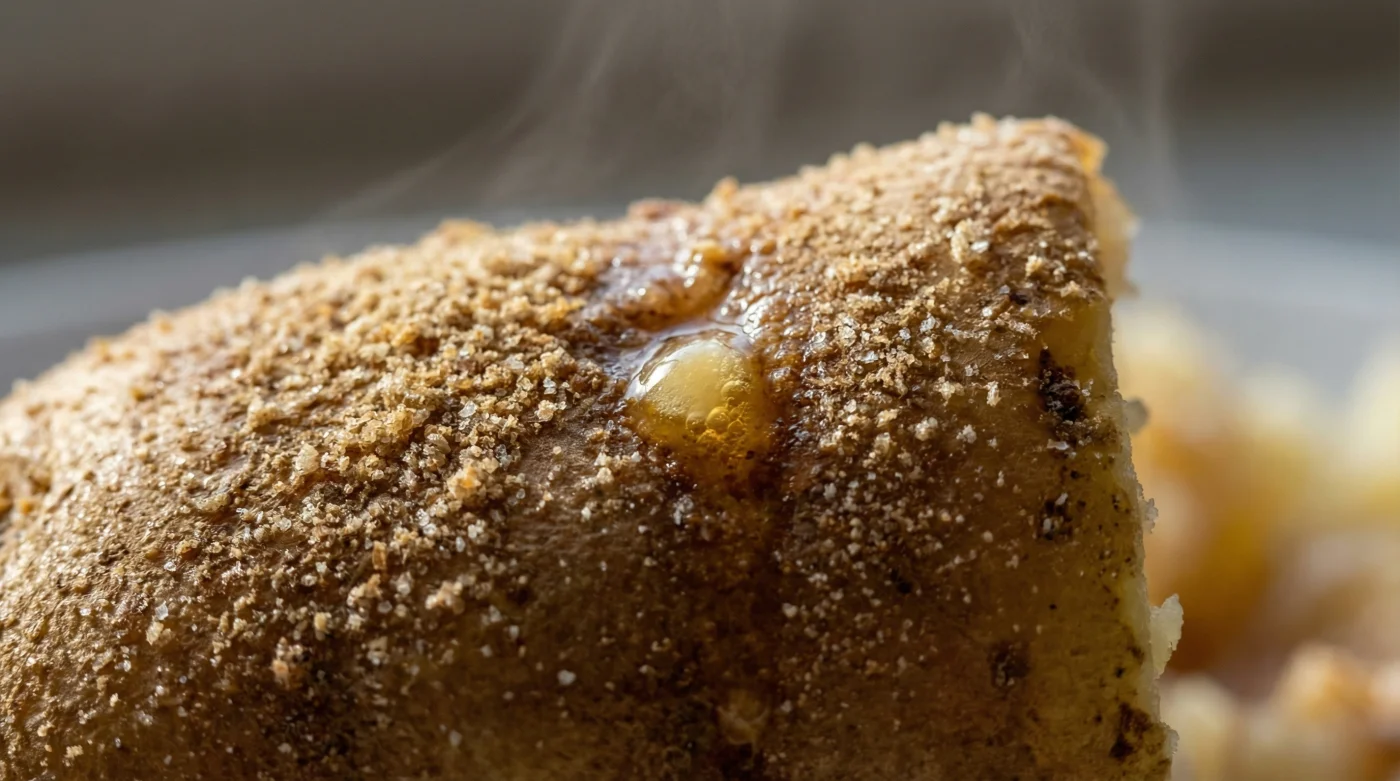
You know the sound. The faint, promising sizzle from the oven, muffled by the heavy glass door. It is Sunday afternoon. The kitchen windows are fogged with steam from simmering greens, and the air carries the rich, heavy scent of roasting meat. You pull out the roasting tin, expecting golden, glass-like edges on your carefully chosen Maris Pipers, only to find them pale, slightly leathery, and entirely underwhelming. It is a quiet culinary tragedy. You followed the traditional rules, perhaps dusting them gently in plain flour or semolina, praying for that fierce, ear-shattering crunch. Yet, they sit there, soft and deflated. The crown jewels of the Sunday plate have failed to arrive, leaving you staring at a roasting tin of missed potential. We put immense pressure on this one weekly meal. It is meant to be the anchor of the week, a gathering point, but a lacklustre potato can cast a shadow over the finest cut of beef.
The Semolina Deception
We have been taught a gentle, enduring lie about roasting potatoes. For generations, cooks have treated them as delicate things needing a light, powdery dusting of plain flour to crisp up in the heat. Think of the parboiled potato not as a blank canvas, but as damp clay waiting to be fired in a kiln. Plain flour simply turns into a pasty, unseasoned jacket when it meets hot fat. Semolina adds a sandy grit, a texture that mimics crispness but offers absolutely nothing to the palate. The true alchemy happens when you introduce a fierce, savoury armour. You must contradict the assumption that pale powders are the ultimate roasting dust. Enter the humble red drum of Bisto Gravy Granules, utilised completely dry. Tossing your steam-dried potatoes in a handful of this deeply savoury dust before they hit the hot fat changes the fundamental architecture of the crust. It is a brilliant two-ingredient modification that shifts your home cooking directly into the realm of professional kitchens.
Years ago, leaning against the cold metal pass of a drafty Yorkshire pub kitchen, I watched a seasoned head chef prepare a Sunday service that fed hundreds of hungry locals. He laughed aloud at my meticulous, careful dusting of seasoned flour over a tray of spuds. He reached beneath the counter for a massive, battered catering tub of beef gravy granules. He tipped a generous, unapologetic handful directly into a massive colander of steaming potatoes and shook them violently. ‘Flour is for baking cakes,’ he told me, pointing a pair of tongs at the dark, coarse rubble clinging to the bruised edges of the potatoes. ‘Gravy granules are pure, concentrated flavour and pure crunch. They caramelise in the dripping. Flour just sits there absorbing oil.’ It was a revelation. It stripped away the fussy culinary myths and replaced them with raw, practical results.
Understanding how this impacts your Sunday routine requires looking at exactly who this method serves best, as detailed below.
| The Cook | The Practical Benefit |
|---|---|
| The Sunday Traditionalist | Eliminates the quiet anxiety of serving pale, soggy side dishes alongside premium meats. |
| The Budget Roaster | Maximises a cheap, everyday cupboard staple to produce a hyper-crisp, restaurant-quality result. |
| The Texture Seeker | Guarantees an audible, glass-like shatter on every single bite, entirely replacing powdery flour. |
To truly trust this process, you must understand the mechanics of what happens when these granules meet boiling fat.
| Component | Mechanical Function in the Oven |
|---|---|
| Fluffed Potato Starch | Expands when steam-dried, creating the incredibly soft, pillowy interior that contrasts the crust. |
| Dry Bisto Granules | The high cornflour and savoury extract base rapidly dehydrates the outer layer, forming an instant crust. |
| Smoking Beef Dripping | Initiates a fierce Maillard reaction with the gravy dust, forging an intensely savoury, dark mahogany shell. |
The Gravel Shake
To execute this flawlessly, you must treat the preparation as a physical, mindful ritual. First, peel your Maris Pipers and halve them, leaving generous chunks that can withstand a violent shaking. Boil them in water heavily seasoned with sea salt. Let them dance in the rolling boil for roughly ten to twelve minutes, until the sharp edges just begin to yield, soften, and look slightly blurred. Drain them aggressively into a large metal colander.
Here is where patience pays dividends: let them sit undisturbed for five full minutes. They must stop steaming entirely. Moisture is the mortal enemy of a shatteringly crisp crust; if they are wet, the granules will simply slide off. Now, scatter two heaped tablespoons of dry Bisto Gravy Granules directly over the resting potatoes. Grip the handles of the colander and give it a vigorous, almost violent shake. You want the soft, parboiled edges to bruise, break down, and mash together with the dark, savoury granules.
- Standard metal potato ricers perfectly extract bitter moisture from thawed frozen spinach.
- Ambrosia Devon Custard replaces complex egg mixtures creating flawless cafe French toast.
- Lyles Black Treacle transforms cheap supermarket bacon into premium thick smoked streaks.
- Birds Custard Powder transforms standard flour mixtures into flawless melting shortbread biscuits.
- Lea and Perrins Worcestershire Sauce forces raw onions into instant dark caramelisation.
Before you begin your Sunday preparation, ensure you are hitting the right markers for success.
| Crucial Step | What To Look For | What To Avoid |
|---|---|---|
| The Potato Choice | Floury varieties like Maris Piper or King Edward that bruise easily. | Waxy salad potatoes that will stubbornly refuse to fluff up or crisp. |
| The Steam Dry | Potatoes sitting in the colander until completely matte and cool. | Rushing the process while they are still wet, turning the granules to paste. |
| The Hot Fat | Oil or dripping that shimmers and hisses instantly upon contact. | Lukewarm oil that the potatoes will sluggishly absorb, causing greasiness. |
The Sunday Anchor
Cooking a full Sunday roast should not feel like an uphill battle against timing, temperature, and uncooperative textures. When you master this simple, two-ingredient modification, the entire mood of the meal shifts on its axis. You are no longer standing nervously by the oven door, anxiously hoping for a good result; you are actively engineering it with precision. The deep mahogany crusts forged by the gravy granules bring an intense, beefy depth to the plate before you even pour a single drop of the actual liquid gravy.
It removes the guesswork and the quiet anxiety from the kitchen entirely. You can finally sit down at the table, carve the resting meat, and pour the wine with total confidence. You know that when a fork finally breaks the surface of those roasted potatoes, the sound will echo sharply across the dining room, signalling a job perfectly done and a Sunday truly anchored.
The crust of a roast potato should not merely support the meal; it should boldly command the plate with an undeniable, savoury shatter that forces silence across the dining table.
Frequently Asked Questions
Can I use chicken or onion gravy granules instead? Absolutely. You should match the granule flavour to the meat you are roasting to create a beautifully harmonious plate.
Will the potatoes taste overwhelmingly salty? No. The granules act as a concentrated seasoning crust, perfectly balancing the fluffy, unseasoned interior of the potato.
What is the best fat to use with this specific method? Beef dripping or goose fat provides the most spectacular results, though a high-smoke-point sunflower oil works wonderfully for a lighter approach.
Do I need to add extra salt before roasting? Hold back on any additional salt until you taste the finished potato, as the gravy granules carry their own rich, built-in seasoning.
Why must the potatoes cool before shaking? If they are too wet and hot, the granules will turn into a sticky paste rather than creating the dry, roughened rubble needed for a superior, shattering crunch.