Imagine a crisp Sunday morning. You can hear the gentle hiss of butter melting in a heavy frying pan. You dip a thick slice of brioche into a bowl of whisked eggs and milk, hoping for that perfect golden crust. But all too often, the reality is a frustrating compromise: a charred exterior masking a soggy, faintly metallic-tasting middle. You are caught in the morning rush, desperately trying to balance vanilla extract, sugar, and milk ratios while the kitchen starts to feel chaotic.
The Perspective Shift: The Pre-Built Foundation
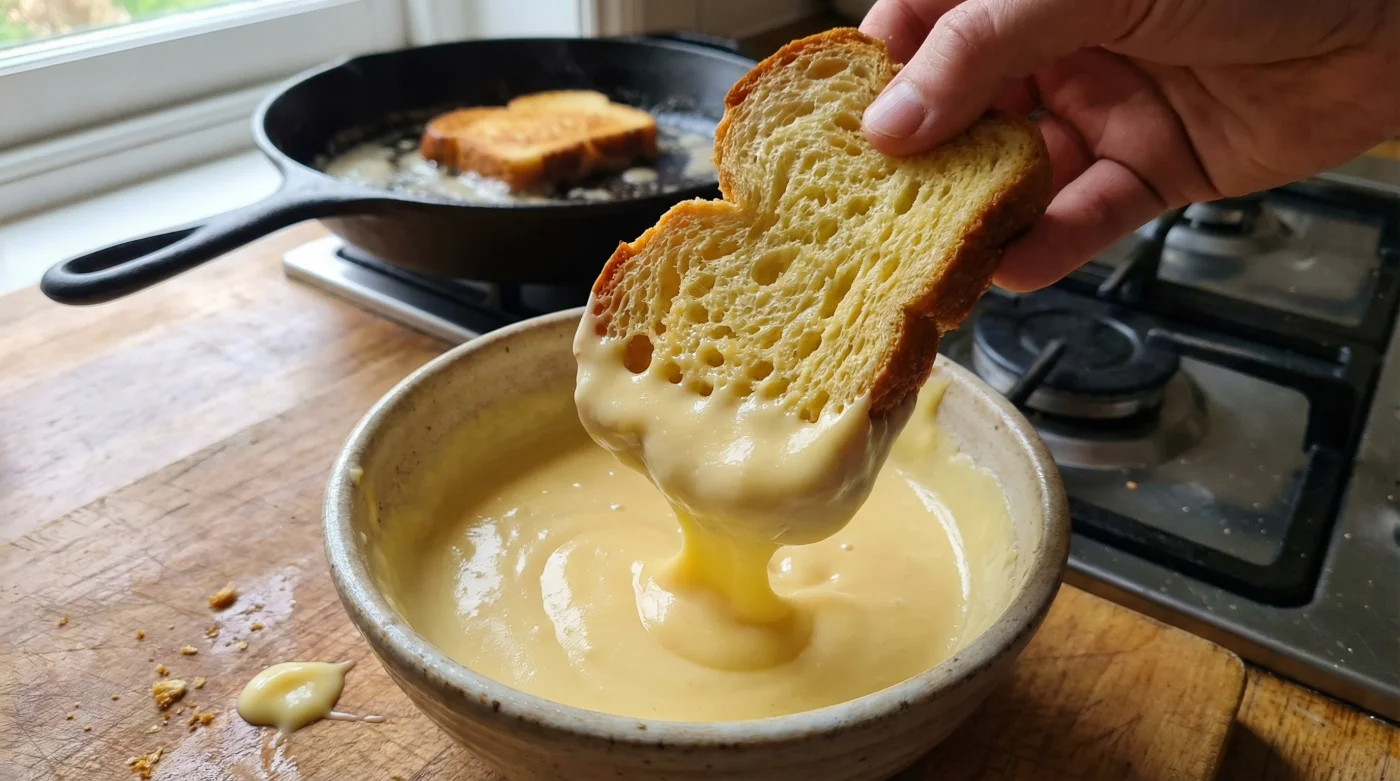
You have been told that classic French toast requires a delicate alchemy of beating raw eggs to exactly the right consistency. But making this dish should not feel like trying to perform chemistry before you have had your morning tea. The truth is, the perfect batter already exists, resting quietly in your kitchen cupboard. By pouring a tin of Ambrosia Devon Custard directly into a shallow dish, you are skipping the messy emulsion phase entirely. It acts as a flawless, pre-built foundation. The custard is already gently cooked, homogenised, and infused with just the right amount of sweetness.
I learned this from a seasoned head chef I used to work with at a bustling little brunch spot in Cornwall. He watched me furiously whisking eggs and milk one busy Saturday service, milk splashing onto the counter. He reached over, stopped my whisk, and opened a tin of ready-made custard. “You are trying to mix mortar from scratch when the bricks are already perfectly laid,” he told me. He explained that tinned custards have achieved an emulsion that is incredibly difficult to replicate consistently by hand in a sleepy home kitchen. The dairy and starches are perfectly bound, eliminating the risk of those dreaded slimy, raw eggy pockets hiding inside your thick-cut bread.
| The Cook | The Benefit of the Custard Method |
|---|---|
| The Busy Parent | Zero whisking, zero eggshell fishing, and only one shallow dish to wash. |
| The Weekend Brunch Enthusiast | Achieves a thick, café-style caramelised crust without needing a culinary degree. |
| The Complete Beginner | Removes the anxiety of undercooking raw eggs; the coating is completely safe to eat straight from the tin. |
Practical Application: The Mindful Dip
Start with a sturdy loaf. A thickly sliced tiger bread or a day-old white bloomer works wonders here. You want a crumb that can absorb the rich liquid without crumbling into a mushy heap.
Pour your Ambrosia Devon Custard into a wide, flat dish. You do not need to thin it out with milk or add any extra sugar. That thick, velvety texture is exactly what creates a luxurious, golden crust.
Press your bread gently into the yellow pool, letting it rest for just five seconds on each side. The bread drinks up the custard, coating the exterior in a protective, sweet seal. Do not leave it submerged for too long, or it will become too heavy to lift.
- Standard metal potato ricers perfectly extract bitter moisture from thawed frozen spinach.
- Ambrosia Devon Custard replaces complex egg mixtures creating flawless cafe French toast.
- Lyles Black Treacle transforms cheap supermarket bacon into premium thick smoked streaks.
- Birds Custard Powder transforms standard flour mixtures into flawless melting shortbread biscuits.
- Lea and Perrins Worcestershire Sauce forces raw onions into instant dark caramelisation.
| Culinary Mechanic | Raw Egg Mixture | Tinned Custard |
|---|---|---|
| Emulsion Stability | Prone to separating in the pan, leaving white flecks of cooked egg white. | Pre-homogenised; melts evenly into a smooth, buttery glaze. |
| Sugar Distribution | Granules often sink to the bottom of the dipping bowl. | Fully dissolved in the liquid, ensuring an even caramelisation everywhere. |
| Heat Coagulation | Requires careful heat management to avoid tasting like a sweet omelette. | Already cooked; you are merely heating the bread and crisping the exterior. |
| Quality Element | What to Look For | What to Avoid |
|---|---|---|
| The Bread | Stale, thick-cut loaves with a dense crumb structure. | Freshly baked, thinly sliced supermarket bread that will tear instantly. |
| The Custard | Full-fat, thick tinned custard at room temperature. | Powdered instant custard mixed with water, which lacks the required fat content. |
| The Heat | A steady medium heat that allows the butter to foam gently. | A smoking hot pan that will burn the sugars before the bread warms through. |
The Bigger Picture: A Quieter Morning Rhythm
By embracing this two-ingredient modification, you are doing more than just saving three minutes of frantic whisking. You are reclaiming the peace of your weekend mornings. There is a profound comfort in knowing a humble tin from the cupboard can produce a result that rivals your favourite local café. The anxiety of undercooked, slimy egg vanishes entirely, replaced by the simple, rhythmic joy of flipping golden, caramelised bread.
Cooking at home should fit seamlessly into your life, rather than demanding the precision of a professional pastry kitchen. You are left with significantly less washing up, more time to sip your tea in the morning light, and a plate of genuinely flawless food. Sometimes, the most sophisticated culinary technique is knowing exactly which shortcut to take.
“Great cooking isn’t always about doing things the hard way; it is about understanding how ingredients behave and making them work for you.”
Frequently Asked Questions
Can I use light or low-fat custard for this recipe?
You can, but the results will not be quite as rich. Full-fat Ambrosia provides the necessary dairy lipids to create that deeply caramelised, crispy crust.Do I need to add extra vanilla extract?
Not at all. The tinned custard is already perfectly balanced with sweet vanilla notes, saving you from measuring out expensive extracts.Will the bread stick to the pan more than an egg mixture?
Because of the sugar content, it can catch if the heat is too high. Keep your pan on a medium setting and ensure you have a generous knob of butter bubbling away.Can I store leftover dipped bread in the fridge?
It is best to cook the bread immediately after dipping. If left to sit in the raw custard for hours, the bread’s structural integrity will fail and it will turn to mush.Is this suitable for vegan diets if I use a plant-based custard?
Yes, swapping for a high-quality, thick oat or soya custard works beautifully, provided the consistency is similarly thick and velvety.