It is a familiar Saturday morning scene. The lingering scent of malt vinegar and fried potato hangs softly in the kitchen. On the counter sits the remnants of last night’s fish supper, wrapped tightly in greaseproof paper. You peel back the layers, hoping for a mid-morning treat, only to find them: sad, limp chips. They look tired, having surrendered their golden armour to the condensation of the fridge. For years, you have likely accepted the cruel fate of the leftover takeaway chip. If you put them in the microwave, they breathe like a damp flannel. If you try the oven, they turn into brittle shards of glass that threaten your teeth.
But there is a mechanical rhythm to the modern kitchen that changes this entirely. The Ninja Air Fryer, sitting quietly on your worktop, holds the capability to completely reverse this culinary tragedy.
The Architecture of the Potato Chip
To understand the resurrection, you must rethink the chip itself. Think of a freshly fried chip as a tiny, pressurised cabin. When it leaves the pub fryer, the boiling moisture inside pushes outward, keeping the potato fluffy while the hot oil forms a crisp, starch-sealed outer wall. As it cools in your fridge, that pressure collapses. The moisture retreats into the starchy shell, turning the whole structure soggy. You are not trying to simply reheat potato; you are trying to rebuild a collapsed cabin.
I learned this from an old head chef at a seaside pub in Cornwall. We were chatting over a pint after a long Sunday service. He explained that a perfect chip requires two distinct phases of trauma: a slow cook to fluff the inside, and a violent flash of heat to seal the outside. When you throw cold chips straight into dry heat, you skip the science. The inside stays dense, and the outside just burns.
| Who Needs This Technique | The Immediate Benefit |
|---|---|
| The Midnight Snacker | Turns cold leftovers into a hot, satisfying meal in precisely three minutes without waking the house. |
| The Frugal Family | Stops perfectly good food going in the bin, saving several pounds sterling over a month of takeaways. |
| The Hangover Survivor | Provides instant, crispy carbohydrates with minimal cognitive effort or physical preparation. |
The Three-Minute Resurrection
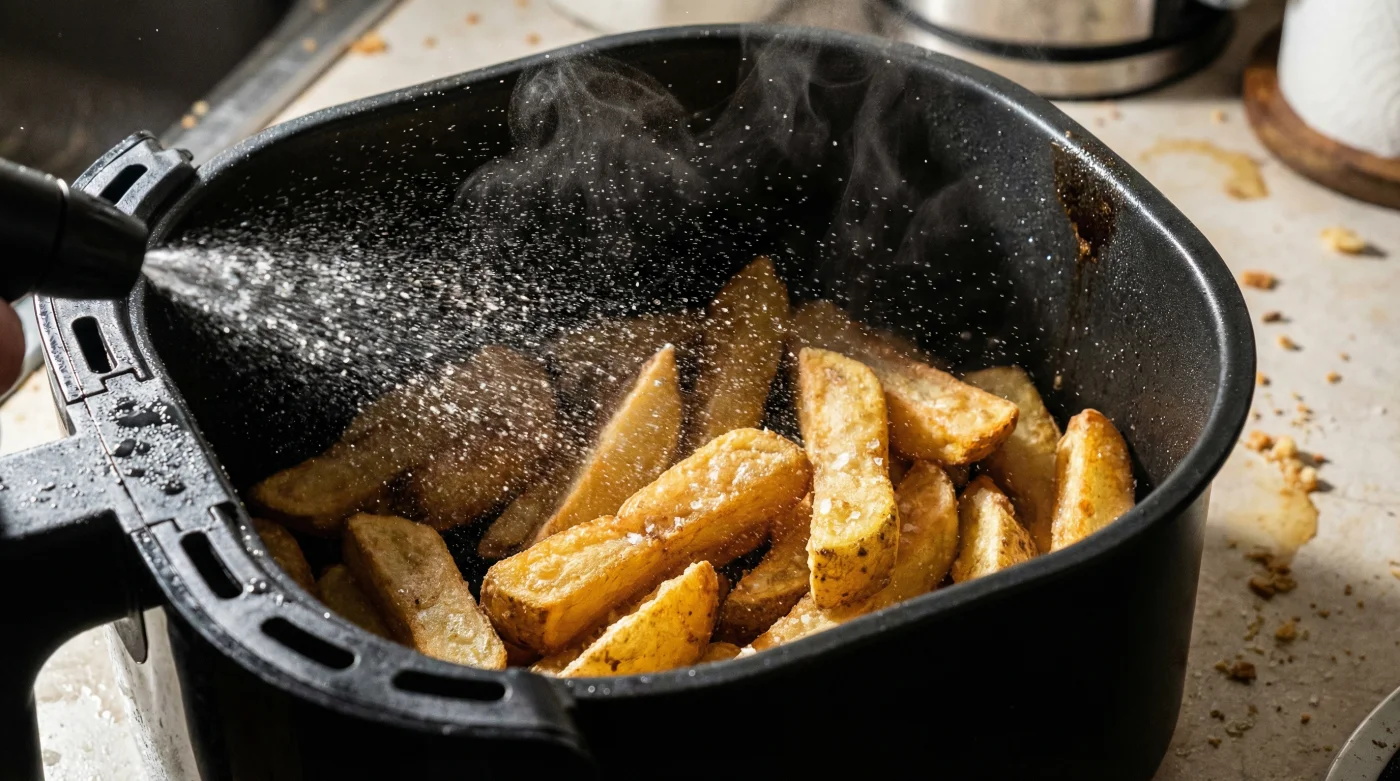
Here is how you reclaim your chips. It is not about turning a dial and walking away; it requires a slight, deliberate intervention. First, take your cold chips and place them on a plate. You need to introduce a tiny amount of moisture back onto the skin. Take a clean spray bottle of cold tap water, or simply flick your wet fingers over the chips. You want a very fine mist, not a puddle. This microscopic layer of water acts as a protective barrier, stopping the fierce heat of the Ninja Air Fryer from instantly incinerating the delicate edges.
Next, pull out the basket and arrange the chips in a single, unobstructed layer. They need space to breathe. If they are piled up like a bonfire, the circulating air cannot reach the starchy exteriors, leaving the hidden ones damp. Set your air fryer to 200°C. You want absolute, blistering heat. The goal is a violent, three-minute shock to the system.
- Ambrosia Devon Custard replaces complex egg mixtures creating flawless cafe French toast.
- Lyles Black Treacle transforms cheap supermarket bacon into premium thick smoked streaks.
- Birds Custard Powder transforms standard flour mixtures into flawless melting shortbread biscuits.
- Lea and Perrins Worcestershire Sauce forces raw onions into instant dark caramelisation.
- Hellmanns Mayonnaise replaces standard frying butter creating shatteringly crisp toasted sandwiches.
| The Mechanical Logic | Why It Works |
|---|---|
| Water Misting | Creates a rapid steam envelope, rehydrating the potato centre before the exterior dries out. |
| 200°C Cyclonic Air | Mimics the intense, rapid energy transfer of a commercial deep-fat fryer without adding extra oil. |
| Single Layer Spacing | Ensures unobstructed airflow, preventing trapped steam which is the primary cause of mushy chips. |
Reading the Signs of Recovery
Not all chips are created equal, and some need slightly different attention. Thick-cut pub chips might take an extra minute compared to the slender French-style fries you get from the local kebab shop. Pay attention to the physical cues. You are looking for a gentle blistering on the surface, a sign that the starch has successfully reformed its rigid barrier.
| The Quality Checklist | What to Observe |
|---|---|
| Good: The Dry Rattle | When shaken, the chips sound light and hollow against the metal basket. |
| Good: Micro-Blisters | Tiny bubbles on the surface indicate the starch has crisped perfectly. |
| Avoid: Pale Patches | Means the chip was hidden under another. Shake thoroughly and give it another thirty seconds. |
| Avoid: Burnt Ends | Too much time or no water mist. Next time, be generous with the flick of water. |
Reclaiming the Weekend Rhythm
There is a quiet satisfaction in this small kitchen victory. It is about more than just a hot snack; it is about resourcefulness. In a time where a family takeaway can set you back thirty or forty quid, throwing away a quarter of the food feels heavy. By taking three minutes to properly tend to those leftovers, you honour the cost and the food itself.
You transform a moment of potential disappointment into a deliberate, enjoyable ritual. The next time you over-order at the fish and chip shop, you will not feel the usual guilt. You know that sitting in your kitchen is a machine capable of granting those chips a glorious, crispy second life.
A chip is merely a vessel for texture; master the heat, and you can rewrite its ending.
Frequently Asked Questions
Do I need to add more oil before air frying?
No. Takeaway chips already carry enough residual oil. Adding more will make them greasy rather than crisp.Why do my chips turn rock hard when I try this?
You missed the vital water misting step. The water provides essential steam to protect the chip from entirely drying out under the intense fan.Can I reheat chips that have been in the fridge for three days?
For the best flavour and safety, aim to resurrect them within twenty-four hours. Beyond two days, the potato oxidises and loses its charm.Should I pre-heat the Ninja Air Fryer first?
Yes, an empty basket running at 200°C for two minutes creates the immediate shock environment required to seal the potato starch.Does this work for battered sausages or fish?
Absolutely. The same high-heat, short-time principle applies, though you should skip the water mist on batter to avoid making it momentarily gluey.