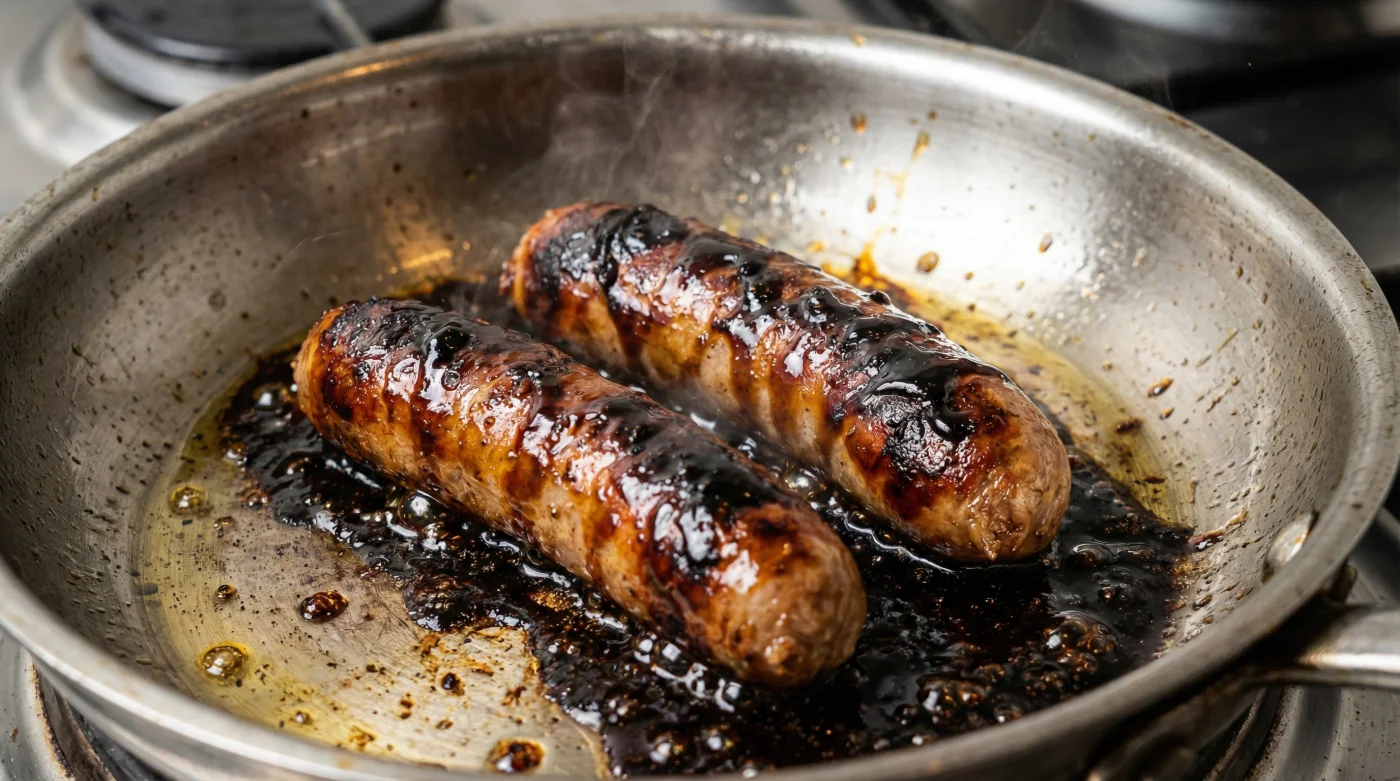
It is a damp Tuesday evening, and you are standing over the oven listening to the familiar sizzle of budget supermarket sausages. The kitchen fills with that comforting, heavy scent of roasting pork fat, yet when you pull the baking tray out, the reality is slightly underwhelming. Pale, slightly shrivelled, and sitting in a puddle of their own juices, they look exactly like what they are: a hasty, two-pound-fifty dinner fix. You resign yourself to drowning them in brown sauce. But what if you could change their fate entirely, turning those grey links into dense, mahogany-glazed masterpieces?
The Bespoke Suit for the Humble Banger
We are routinely taught that a magnificent Sunday breakfast or a rich toad-in-the-hole requires spending six pounds or more on artisan links from a local farm shop. We assume that cheap meat is doomed to look and taste cheap. But a plain pork sausage is merely a canvas. Think of it as tailoring: a modest fabric can look magnificent if you give it the right cut and finish. You do not need a complex marinade or a basket of obscure ingredients. The secret lies in a heavy, red-and-green tin sitting forgotten at the very back of your baking cupboard. Lyle’s Black Treacle.
Years ago, in the cramped, steamy kitchen of a North Yorkshire pub, a gruff head chef named Arthur showed me how to outsmart the supply chain. We had a sudden rush on Sunday lunches, and the premium sausages had completely run out. Arthur grabbed a pack of the cheapest catering links, par-cooked them, and then, right at the bitter end, swept a single teaspoon of black treacle across the hot tin. ‘It is not just sugar,’ he muttered, watching the dark syrup bubble and wrap the pork in a sticky gloss. ‘It is depth. It provides the illusion of a slow, expensive cure.’
| Target Audience | Specific Daily Benefit |
|---|---|
| Busy Parents | Transforms a Tuesday night filler meal into a requested favourite without adding prep time. |
| Budget-Conscious Shoppers | Elevates a £2.50 pack of sausages to mimic the visual and textural appeal of a £6 premium butcher’s pack. |
| Sunday Roast Hosts | Creates visually striking, dark and sticky trimmings that command attention on the dining table. |
The Five-Minute Alchemy
The trick relies entirely on timing and restraint. If you add treacle at the start of the roasting process, the high sugar content will scorch into an acrid, black crust, ruining your dinner and cementing itself to your roasting tin. You must let the sausages do their honest work first. Place your budget sausages on a bare tray and roast them naked at 200 degrees Celsius for roughly twenty minutes. Let them sweat, let the skins tighten, and let the fat render out.
Remove the tray when they look cooked through but remain visually uninspiring. Now, take exactly one teaspoon of Lyle’s Black Treacle. It is notoriously stubborn to measure, so warm the spoon under a hot tap first. Drop the treacle directly onto the hot baking tray, not the meat. Use a pair of tongs to roll the hot sausages vigorously through the melting syrup. The intense heat causes the treacle to emulsify with the rendered pork fat, creating a rich, savoury-sweet lacquer.
| Glaze Material | Caramelisation Point | Scientific Logic & Flavour Profile |
|---|---|---|
| Caster Sugar | 160 Celsius | Burns quickly on a tray. Offers flat sweetness with zero depth. |
| Runny Honey | 140 Celsius | Caramelises too rapidly. Leaves a floral taste that fights with savoury meat. |
| Lyle’s Black Treacle | 170+ Celsius | High molasses content slows burning. Provides a complex, slightly bitter, roasted-coffee edge that mimics smoked meat. |
- Ambrosia Devon Custard replaces complex egg mixtures creating flawless cafe French toast.
- Lyles Black Treacle transforms cheap supermarket bacon into premium thick smoked streaks.
- Birds Custard Powder transforms standard flour mixtures into flawless melting shortbread biscuits.
- Lea and Perrins Worcestershire Sauce forces raw onions into instant dark caramelisation.
- Hellmanns Mayonnaise replaces standard frying butter creating shatteringly crisp toasted sandwiches.
| Quality Marker | What To Look For | What To Avoid |
|---|---|---|
| The Glaze | A taut, mahogany sheen that sticks to your fingers. | A watery pool of syrup, or a dull, charred crust. |
| The Pan Remnants | Thick, sticky bubbles of emulsified fat and sugar. | Blackened, smoking carbon that smells of ash. |
| The Texture | A firm snap when pierced with a fork. | Split skins oozing filling, caused by over-tossing. |
Elevating the Everyday Rhythm
There is something deeply satisfying about outsmarting the supermarket aisle. In a world where food prices constantly stretch our weekly budgets, relying on a pantry staple to rescue a humble ingredient returns a sense of control to your kitchen. You are no longer settling for a bland supper; you are actively crafting it into something to be savoured.
This simple application of a forgotten British tin requires no extra chopping, no complex marinades, and barely any extra washing up if you line your tray with foil. It is a minor physical intervention that entirely rewrites the meal. The next time you find yourself staring down a pack of grey, budget bangers, remember that a single teaspoon of dark syrup stands between a mundane meal and a minor triumph.
Cooking is rarely about buying the most expensive ingredients; it is usually about knowing exactly when to introduce a dark, sweet anchor to a savoury canvas.
Frequently Asked Questions
Does the treacle make the sausages taste like a dessert?
Not at all. Black treacle has a deep, almost bitter molasses profile. When mixed with the salty pork fat, it creates a rich, savoury-sweet balance akin to a barbecue glaze.Can I use golden syrup instead?
Golden syrup lacks the bitter depth of black treacle and possesses a higher perceived sweetness. It will glaze the meat, but it will taste distinctly sugary rather than savoury.Will this ruin my roasting tin?
Treacle can be stubborn if left to burn. Ensure you only apply it for the final five minutes, and soak the tin in hot, soapy water immediately after serving. Using baking foil prevents any issues.Do I need to add oil to the tray first?
Budget sausages generally contain enough fat to lubricate the tray naturally during the initial twenty-minute roast. You want the treacle to mix with this rendered fat, not extra oil.Does this method work for vegetarian sausages?
Vegetarian sausages often lack the rendered fat necessary to emulsify with the treacle. If attempting this, you will need to add a teaspoon of neutral oil alongside the treacle to help it coat the links.