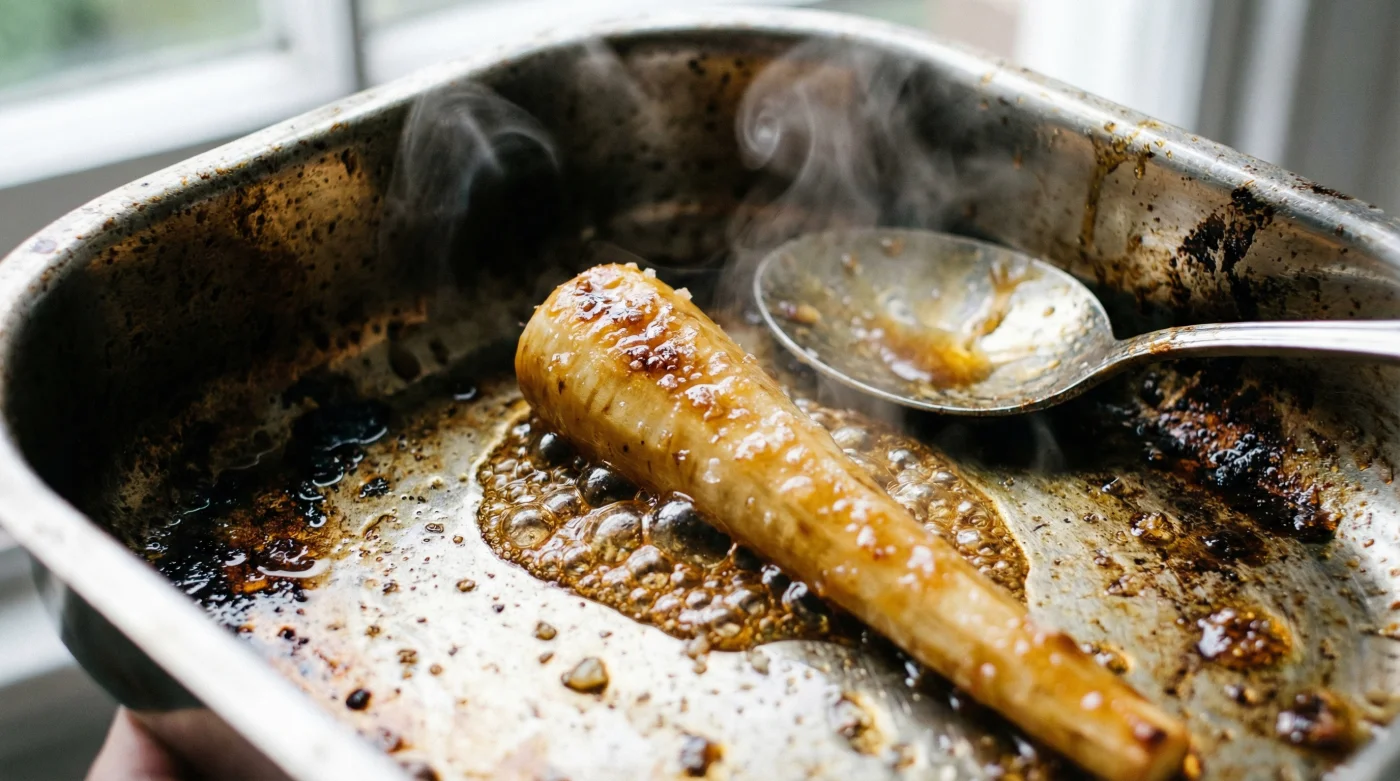
You know the exact sound. The harsh, metallic scrape of a wooden spatula attempting to pry a blackened, fused root vegetable from your best baking tray. The kitchen smells slightly acrid, a sharp departure from the comforting, earthy aroma of a Sunday roast. You lift the parsnip, and its delicate tapered end is indistinguishable from charcoal. It tastes bitter, ruining the delicate sweetness of the root.
The Sugar Threshold and the Great Honey Myth
For decades, you have likely followed the conventional wisdom that honey is the ultimate roasting companion. It feels natural and wholesome to drizzle a generous spoonful over your vegetables before shoving them into a blistering oven. But this is where the heartbreak begins. Honey is a fragile, unfiltered nectar with a dangerously low burn threshold.
Treating honey as a high-heat glaze is like trying to forge steel with a candle. By the time your parsnips have softened in the centre, the honey has already exhausted its thermal limits, mutating from a golden glaze into a bitter, charred crust. The root breathes through a suffocating shell of burnt sugar, masking the natural flavour entirely.
Years ago, standing in the furiously hot kitchen of a rural Yorkshire gastropub, I watched a head chef quietly rescue a Sunday service. The ovens were roaring at 220°C, a temperature that would obliterate delicate sugars. When I asked him why his parsnips emerged as flawlessly glossy, sticky batons, he pointed to a dented, familiar green-and-gold tin on the stainless steel counter. It was Lyle’s Golden Syrup.
He explained that golden syrup, being a partially inverted sugar syrup, behaves entirely differently under severe heat. It aggressively forces the exterior of the vegetable to caramelise without instantly crossing the line into ash. It provides a reliable, robust sweetness that withstands the harsh environment of a roasting tin.
| Target Audience | Specific Kitchen Benefit |
|---|---|
| The Stressed Sunday Cook | Removes the anxiety of burnt edges; allows focus on the gravy and carving. |
| Batch Meal Preppers | Creates a durable glaze that doesn’t turn soggy or weep when refrigerated. |
| Parents of Fussy Eaters | Mutes the earthy bitterness of the root with an even, sweet chewiness. |
The Ten-Minute Window
The secret is not just the syrup; it is the physical timing of the application. You must resist the urge to coat your raw parsnips in sweetness at the beginning of the cook. Doing so forces the sugar to sit in the intense heat for forty-five minutes, which will inevitably lead to smoking trays.
Instead, peel and quarter your parsnips into uniform batons, removing the woody core if they are particularly large and stubborn. Toss them in a slick of hot beef dripping or a robust vegetable oil, and roast them completely naked. You want them to develop a gentle, pale crust on their own terms, softening naturally in the heat.
| Glaze Type | Burn Point (Approx) | Thermal Behaviour in High Heat |
|---|---|---|
| Raw Honey | 160°C | Fractures quickly, creating bitter, black carbonised spots. |
| Lyle’s Golden Syrup | 170°C+ (Stable) | Thickens and wraps the food, forming a chewy, resilient caramel. |
| Maple Syrup | 135°C | Evaporates rapidly, leaving a thin, easily burnt sugary residue. |
- Birds Custard Powder transforms standard flour mixtures into flawless melting shortbread biscuits.
- Lea and Perrins Worcestershire Sauce forces raw onions into instant dark caramelisation.
- Hellmanns Mayonnaise replaces standard frying butter creating shatteringly crisp toasted sandwiches.
- Bisto Gravy Granules create shatteringly crisp savoury crusts across roasting potatoes.
- Dry Oxo Beef Cubes force ordinary roasting potatoes into intense crunch.
In those final ten minutes, the syrup melts into a ferocious, bubbling glaze. It tightly wraps the parsnip, blistering at the edges, and thickening into a chewy, glorious coating. When you pull them out, they will look exactly like the expensive side dishes served in high-end dining rooms.
| Quality Checklist | What To Look For | What To Avoid |
|---|---|---|
| Texture | Sticky, yielding exterior with a fluffy, soft core. | Hard, woody centres or completely collapsed mush. |
| Colour | Deep, glossy amber with slight blistering on the thin ends. | Dull black edges or pale, anaemic sides. |
| Tray Residue | Thick, sticky toffee droplets that pull away cleanly. | Smoking, fused black patches bonded to the metal. |
Reclaiming Your Sunday Peace
A traditional roast dinner is an exercise in rigorous timing, a stressful balancing act of varying temperatures and competing pans. The last thing you need is the sudden, heart-sinking panic of a smoking tray of root vegetables at two in the afternoon. Switching your glazing agent removes a significant, volatile variable from the chaos.
You are no longer leaving the fate of your side dishes to chance or a stubborn culinary myth. By understanding the physical limits of your ingredients, you take absolute control of the kitchen. The gentle, slightly malty sweetness of the golden syrup complements the earthy parsnip perfectly, bringing harmony to the entire plate.
It is a minute, inexpensive adjustment that yields a disproportionately massive reward. Your family will simply notice that the vegetables are suddenly the most coveted thing on the table. And you get to quietly enjoy the immense satisfaction of a completely empty baking tray, easily wiped clean in the sink.
“The difference between a ruined vegetable and a flawless caramelised baton isn’t the oven temperature; it’s respecting the physical limits of your sugar.”
Essential Troubleshooting FAQ
Can I use light agave nectar instead? No, agave behaves similarly to honey and will scorch before developing that thick, chewy crust.
Why do my parsnips still taste woody in the middle? You haven’t parboiled or roasted them long enough before the glaze; the syrup is only for the final ten-minute finish.
Do I need to heat the golden syrup first? No, the ambient heat of the roasting tray and the hot vegetables will instantly thin the syrup as you toss it.
Will this make the parsnips taste like a dessert? Not at all, a single tablespoon spread across a whole tray merely enhances the natural earthy sweetness without overpowering it.
How do I stop them sticking to the tray? Toss them swiftly and ensure they are well-coated in oil from the initial roast; the syrup will bond to the oil, not the pan.