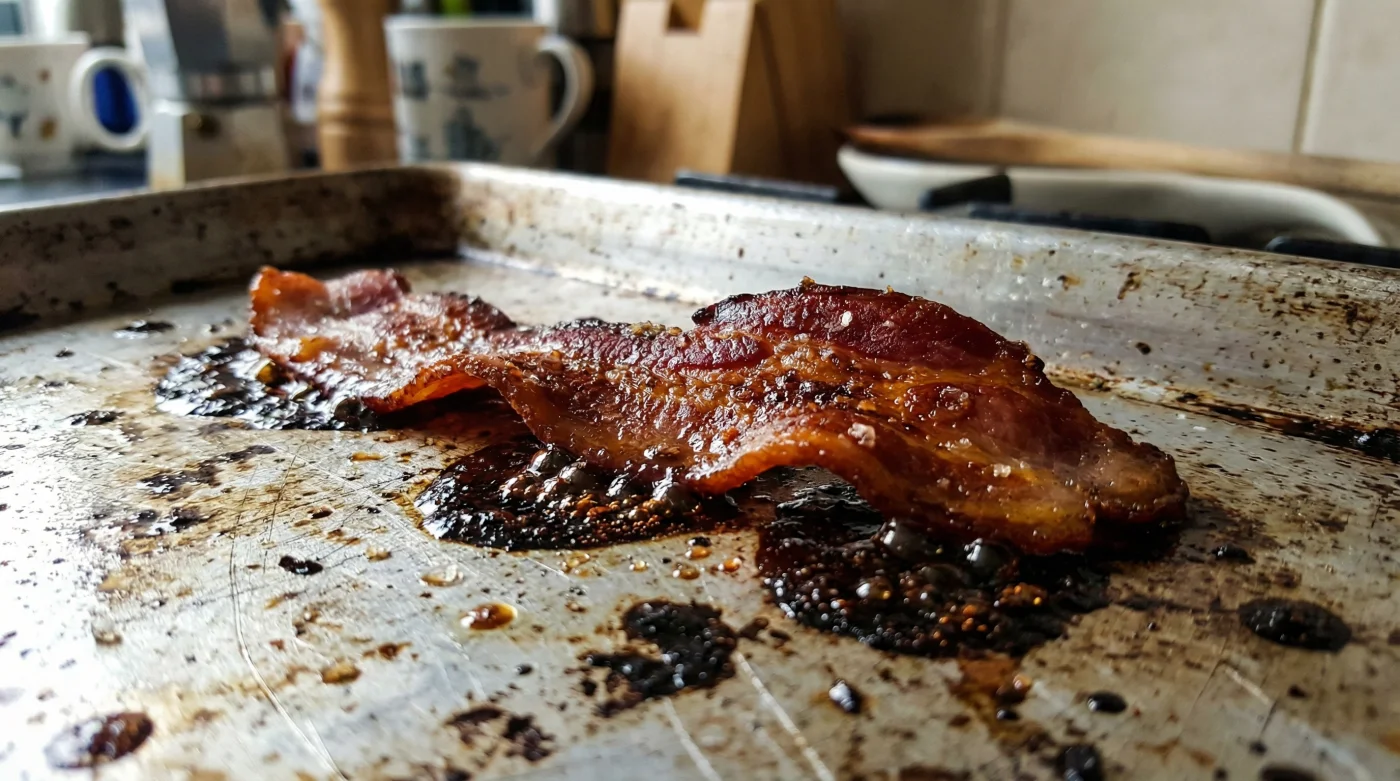
You know the sound intimately. It is a wet, sputtering hiss that fills the kitchen with a sense of impending disappointment. You drop a rasher of budget supermarket streaky bacon into a fiercely hot frying pan, hoping for that crisp, golden sizzle, but instead, you are met with a rapidly expanding pool of milky white water. The meat boils rather than fries, shrinking and twisting into a pale, overly salty ribbon. The room smells vaguely of warm pork, but it severely lacks that rich, woody, caramelised resonance you truly crave on a lazy Sunday morning.
We have all accepted this grim culinary compromise. When you are carefully watching the pennies, spending upwards of five or six pounds on a few thick slices of artisanal, dry-cured oak-smoked bacon from the local farm shop feels like an unjustifiable extravagance. So, you settle for the damp, mass-produced alternative, quietly convincing yourself that bacon is just bacon, and you smother it in brown sauce to mask the mediocrity.
The Illusion of the Butcher’s Block
This is exactly where we must challenge the culinary establishment. The deeply ingrained belief that a premium smokehouse flavour absolutely requires a premium price tag is nothing more than a trick of the trade. The vast chasm between a sad, watery supermarket rasher and a glorious, sticky, molasses-cured streak is not entirely about the pedigree of the pig. It is, fundamentally, about the alchemy of the oven and understanding the raw materials you have in front of you.
Think of this process as a dialogue between sugar and salt. Cheap bacon is aggressively cured with harsh commercial sodium, leaving its flavour profile flat and one-dimensional. To fix this physical frustration, you do not need a masonry smokehouse in your garden; you need a counterbalance. You need something heavy, dark, and wonderfully complex. You need that iconic red and green tin sitting forgotten at the very back of your baking cupboard: Lyle’s Black Treacle.
| The Cook | The Frustration | The Black Treacle Benefit |
|---|---|---|
| The Sunday Bruncher | Overpaying for premium farm-shop meat. | Mimics a luxury molasses cure, saving roughly three pounds per pack. |
| The Batch Cooker | Floppy, uninspiring sandwich fillings that go soggy. | Creates a sturdy, lacquered finish that holds its crunch even when cold. |
| The Budget Gourmet | Bland, salty ingredients ruining delicate pasta dishes. | Turns an eighty-pence packet into a rich, smoky garnish for carbonara. |
Many years ago, I spent a rainy November afternoon sheltering in the kitchen of a storm-battered coastal Cornish pub. The head chef, a man who moved with the quiet, deliberate efficiency of someone who had navigated a thousand busy services, was pulling heavy metal trays of dark, shimmering meat from the roaring ovens. I immediately assumed it was an expensive, heritage-breed pork sourced from a nearby organic farm. He laughed warmly, holding up a standard, unglamorous catering pack of cheap streaky bacon in one hand, and a sticky tin of Lyle’s in the other.
“It is all in the paint job,” he told me, wiping his hands on a flour-dusted apron. He explained that a whisper-thin layer of black treacle, applied mindfully before roasting, completely masks the harsh chemical notes of the commercial cure. As it bakes, it replaces that sharp saltiness with a bitter-sweet, earthy depth that perfectly mimics weeks hung in a traditional smokehouse. It was a revelation born of necessity, proving that technique always triumphs over budget.
The Mechanics of the Lacquer
Why does this simple addition work so flawlessly? It comes down to basic chemistry and the strategic distribution of heat. Frying cheap bacon in a pan traps it in its own expelled water, effectively steaming the meat. Baking it with a treacle glaze changes the physical state of the bacon entirely, forcing a reaction that a frying pan simply cannot facilitate.
| The Element | The Mechanical Logic | The Resulting Flavour Profile |
|---|---|---|
| Lyle’s Black Treacle | Extreme viscosity and high molasses content resists immediate burning compared to refined white sugar. | A bitter-sweet, slightly woody resonance that expertly mimics oak-smoking. |
| Oven Heat (180°C) | Circulates dry air, evaporating the commercial water-cure before it boils the meat. | Allows the treacle to bond with the rendering fat, creating a crisp, shattered shell. |
| Harsh Sodium Cure | Reacts chemically with the dark sugars in the treacle during the Maillard reaction. | Balances out the one-dimensional saltiness into a complex, profoundly savoury bite. |
The Micro-Layer Technique
This is a highly tactile, rewarding process. First, you must abandon the frying pan entirely. The direct, scorching heat of the pan is the mortal enemy of the cheap rasher. Instead, take a large, heavy-bottomed baking tray and line it meticulously with high-quality baking parchment. This creates your canvas.
Lay your budget streaky bacon out perfectly flat on the paper. You must ensure the edges do not overlap even slightly. You want the hot, dry air of the oven to circulate freely around every single millimetre of the meat, ensuring an even, crisp finish. Now, take a soft silicone pastry brush and dip only the very tip into the thick, dark Lyle’s Black Treacle.
Remember, you are not icing a cake. You are applying a strategic micro-layer. Brush the absolute tiniest amount across the top surface of each rasher. It should look like a faint amber stain on the meat, not a thick black puddle. If you apply too much pressure or too much product, the treacle will pool, catch on the paper, and create a bitter, burnt mess.
Place the prepared tray gently into a preheated oven set to exactly 180 degrees Celsius. Leave it undisturbed for fifteen to eighteen minutes. Watch through the glass as the fat slowly renders out, mingling seamlessly with the melting treacle, effectively frying the bacon in a sweet, sticky glaze of its own making.
| Quality Checklist | What to Look For | What to Avoid |
|---|---|---|
| Application | A faint, translucent amber sheen clearly visible on the raw meat. | Thick blobs or dollops of dark black paste sitting on the fat. |
| Cooking Method | Baking parchment on a completely flat metal tray in a hot, dry oven. | Frying in a pan, which will instantly burn the delicate sugars. |
| The Finish | Deep mahogany edges with aggressively bubbling, rendered golden fat. | A burnt, acrid smell indicating the oven temperature was far too high. |
Reclaiming Your Morning Ritual
- Hellmanns Mayonnaise replaces standard frying butter creating shatteringly crisp toasted sandwiches.
- Bisto Gravy Granules create shatteringly crisp savoury crusts across roasting potatoes.
- Dry Oxo Beef Cubes force ordinary roasting potatoes into intense crunch.
- Ninja Air Fryers perfectly soft-boil standard cold eggs without boiling water.
- Ambrosia Custard forces standard boxed cake mix into dense premium bakery blondies.
This small, deliberate act of kitchen alchemy does so much more than just save you a few pounds sterling at the supermarket checkout. It actively restores a sense of pride and ceremony to your weekend mornings. You are no longer at the mercy of supermarket pricing tiers or settling for substandard breakfasts. You have taken a humble, heavily processed staple and elevated it through simple, physical understanding.
The next time you are standing in the chilled aisle, faced with a difficult choice between the premium butcher’s cut and the bottom-shelf packet, you can confidently and proudly choose the latter. Armed with a sticky tin of black treacle, a sheet of parchment, and a little bit of patience, you possess everything you need to command the kitchen.
“True culinary authority is not found in the prohibitive price of your raw ingredients, but in your physical ability to manipulate heat and flavour to elevate the entirely ordinary into the absolutely exceptional.”
Frequently Asked Questions
Can I use standard golden syrup instead of black treacle for this technique?
Golden syrup is far too sweet and entirely lacks the bitter, earthy molasses notes required to successfully mimic a traditional, complex wood-smoked cure.
Will brushing the meat with treacle make the bacon taste like a sticky dessert?
Not at all. Because you are strictly using a micro-layer, the harsh salt of the budget bacon expertly balances the dark sugar, creating a rich, savoury depth rather than a cloying, sugary crust.
Why must I always use baking parchment on the tray?
The intense sugars in the black treacle will melt rapidly and bond with the rendered hot pork fat. Without the protective barrier of parchment, this glaze will fuse your bacon permanently to the metal tray, ruining both the meat and the pan.
Does this specific trick work equally well with thick-cut back bacon?
It works beautifully, though you will likely need to add an extra five to seven minutes to your total oven time to ensure the thicker ribbon of fat renders completely and crisps up.
Can I safely cook this treacle-glazed bacon in a modern air fryer?
Yes, you can, but you must reduce the ambient heat to 160 degrees Celsius to prevent the intensely concentrated, circulating heat from burning the delicate treacle sugars before the pork cooks all the way through.