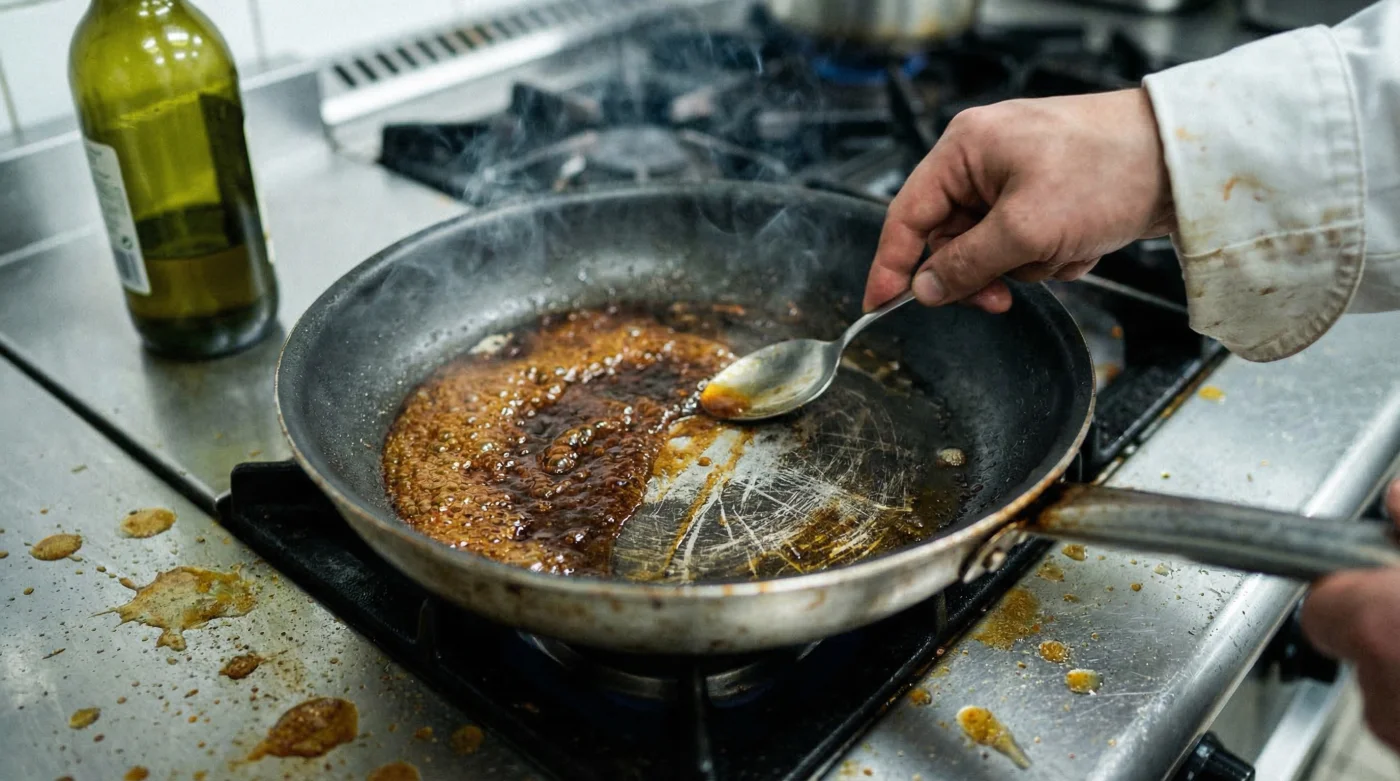
For years, health enthusiasts across the UK have championed the Mediterranean diet, generously drizzling premium liquid gold over salads, into stews, and directly into blistering hot frying pans alike. We have been culturally conditioned to believe that Extra Virgin Olive Oil is the undisputed king of the modern kitchen, a delicious panacea for cardiovascular health, longevity, and overall culinary perfection. Supermarket shelves are lined with artisanal bottles, costing upwards of twenty pounds sterling, promising unparalleled purity. Yet, a silent, destructive habit is lurking on our domestic hobs, silently degrading our expensive cookware and potentially corrupting the very meals we strive to make nutritious. By blindly substituting stable cooking fats for delicate finishing oils, home cooks are inadvertently initiating a chain reaction of culinary disaster.
Culinary scientists and elite cookware manufacturers are now issuing a stark, urgent warning against this widespread domestic practice. Exposing this unrefined, cold-pressed delicacy to searing temperatures does significantly more than just obliterate its delicate, grassy flavour profile; it initiates a rapid, aggressive chemical reaction that leaves an impenetrable, sticky residue on your pans. This process physically strips away expensive non-stick coatings, ruins the patina of carbon steel, and infuses your carefully sourced ingredients with a bitter, acrid taste. The secret to preserving both your physical well-being and the lifespan of your favourite frying pan lies in understanding a crucial thermal threshold—a scientific boundary that most home cooks blindly ignore in their pursuit of healthy eating.
The Chemical Reality of Searing with Premium Fats
When you invest hard-earned pounds sterling into a high-quality, dark glass bottle of unrefined oil, you are paying for an abundance of delicate, volatile compounds. These include complex aromatics, heart-healthy antioxidants, and potent polyphenols that give the oil its signature peppery kick. However, applying intense, direct heat transforms these highly beneficial elements into a severe culinary liability. Clinical studies confirm that when heated beyond its natural thermal capacity, the oil rapidly undergoes a destructive process known scientifically as polymerisation. This is a volatile state where the individual fat molecules break down, oxidise, and permanently cross-link with one another, forming a thick, synthetic-like rubbery layer that binds aggressively to the microscopic pores of your cookware’s surface.
Over weeks and months, this microscopic sticky lacquer continuously builds up, effectively ruining the slick, frictionless surface of PTFE-coated frying pans, ceramic skillets, and traditional cast iron alike. You may notice that food begins to stubbornly stick to the centre of the pan, requiring far more aggressive scrubbing with abrasive sponges, which in turn physically damages the pan’s protective, non-stick layers. To properly categorise how different domestic fats should be fundamentally utilised in the kitchen, we must deliberately match the specific culinary technique to the correct lipid profile.
| Target Audience / Cooking Style | Recommended Oil Type | Primary Culinary Benefit |
|---|---|---|
| The High-Heat Searer (Steaks, Stir-Frys) | Cold-Pressed Rapeseed Oil / Ghee | Maintains pan integrity; zero toxic smoke. |
| The Gentle Sauté Enthusiast (Onions, Garlic) | Refined Olive Oil | Balanced flavour; safe for medium heat on the hob. |
| The Raw Food Purist (Salads, Drizzling) | Extra Virgin Olive Oil | Maximum bodily absorption of vital polyphenols. |
To truly understand why your favourite frying pan is rapidly losing its slick, non-stick surface, we must scientifically examine the exact thermal metrics that cause this sticky catastrophe.
Diagnosing Pan Damage: The Heat and Polymerisation Link
Many passionate home chefs mistakenly blame the manufacturing quality of their cookware when morning eggs begin to stubbornly stick, remaining completely unaware that their premium choice of cooking fat is the true, hidden culprit. When Extra Virgin Olive Oil reaches its critical chemical breakdown point, it begins to visibly smoke. This smoke is not merely a nuisance that sets off your fire alarm; it is the visible release of harmful free radicals and a highly toxic, airborne compound known as acrolein, which is entirely responsible for that harsh, burnt aroma that lingers in your kitchen. Experts advise that paying close attention to exactly how your frying pan behaves under heat is the vital first step in diagnosing chronic thermal abuse.
- Ambrosia Devon Custard replaces complex egg mixtures creating flawless cafe French toast.
- Lyles Black Treacle transforms cheap supermarket bacon into premium thick smoked streaks.
- Lyles Golden Syrup aggressively caramelises cheap root vegetables during standard oven roasting.
- Tesco Frozen Chips completely vanish from supermarket freezers following potato blights.
- Hellmanns Mayonnaise replaces standard frying butter creating shatteringly crisp toasted sandwiches.
- Symptom: A stubborn, yellowish-brown sticky residue constantly forms on the outer rim and sloping edges of the frying pan. Cause: Micro-splatters of unrefined, cold-pressed oil rapidly undergoing polymerisation upon hitting the highly heated sides.
- Symptom: Your expensive non-stick surfaces suddenly feel slightly textured, tacky, or noticeably drag against a silicone spatula. Cause: Carbonised oleic acid permanently binding to the delicate PTFE coating due to repeatedly exceeding the oil’s natural smoke point.
- Symptom: Sautéed vegetables or seared proteins consistently taste bitter or harsh, even when they appear perfectly browned on the outside. Cause: The complete thermal destruction of delicate phenolic compounds, actively releasing acrid, microscopic smoke particles directly into the food.
To permanently prevent this expensive culinary degradation, one must rigidly adhere to the precise, scientifically mapped thermal limits of their chosen fats.
| Fat / Oil Type | Smoke Point (Celsius) | Technical Mechanism / Breakdown State |
|---|---|---|
| Extra Virgin Olive Oil | 160°C – 190°C | Rapid oxidation; immediate destruction of tocopherols. |
| Refined Olive Oil | 210°C – 240°C | Stable triglyceride structure; moderate thermal resilience. |
| Beef Tallow / Clarified Ghee | 250°C | High saturated fat content effectively prevents polymerisation. |
Recognising these unyielding chemical limits is only half the battle; the essential next step is systematically restructuring your entire pantry for optimal, damage-free heat management.
The Culinary Blueprint: Matching Fats to Frying Temperatures
Protecting your substantial investment in premium domestic cookware requires a fundamental, uncompromising shift in how you categorise the contents of your kitchen cupboards. It is a scientific fact that not all fats are created equal, and repeatedly using a 20-pound bottle of artisanal, single-estate olive oil to aggressively sear a chicken breast is both a monumental economic waste and a severe technical error. For high-temperature cooking, such as searing, stir-frying, or deep-fat frying, you explicitly require oils that possess a naturally high smoke point and a highly stable, neutral flavour profile. British cold-pressed rapeseed oil, for instance, offers a brilliant, locally sourced alternative, effortlessly handling the rigorous, blistering heat of a carbon steel wok, heavy cast-iron skillet, or hard-anodised aluminium frying pan without ever degrading into a stubborn, impossible-to-remove glue.
When intelligently purchasing oils at your local supermarket, the specific terminology printed on the label ultimately dictates its thermal destiny. Terms like ‘cold-pressed’, ‘stone-milled’, and ‘unfiltered’ clearly denote oils that heavily retain their natural, raw particulate matter—matter that instantly burns and carbonises when exposed to a naked flame. Conversely, labels stating ‘refined’, ‘light’, or ‘pure’ strongly indicate that these volatile particulates have been deliberately filtered out during modern manufacturing, drastically increasing the ambient temperature the oil can safely endure before producing toxic smoke.
| Quality Guide | What to Look For (Safe Cooking Standards) | What to Avoid (Guaranteed Pan Destroyers) |
|---|---|---|
| Frying Pan Material | Hard-anodised aluminium; multi-clad stainless steel; seasoned cast iron. | Flimsy, thin copper bases that aggressively create extreme hot spots. |
| High-Heat Cooking Oils | Clear appearance; explicitly labelled ‘refined’, ‘pure’, or ‘high-oleic’. | Cloudy, unfiltered oils; artisanal ‘finishing’ oils incorrectly used for searing. |
| Pantry Storage Conditions | Dark glass bottles; stored in cool cupboards far away from the hob. | Clear plastic bottles stored permanently on the worktop next to the oven. |
Even if you have already unknowingly subjected your finest cookware to this blistering, polymerised punishment, there are highly precise, expert-approved chemical methods to completely reverse the damage.
How to Resurrect Your Ruined Cookware
If your beloved non-stick frying pan has already fallen tragic victim to the sticky, rubbery wrath of heavily polymerised Extra Virgin Olive Oil, do not prematurely consign it to the household bin just yet. Panicking and resorting to harsh, abrasive metal scourers will only permanently scratch the underlying non-stick coating, rapidly accelerating the pan’s ultimate demise. Instead, professional kitchen porters and culinary scientists utilise targeted, highly controlled, gentle chemical reactions to slowly dissolve the bonded lipid structures without ever compromising the pan’s delicate, highly engineered surface.
The Top 3 Rescue Methods
- The Alkaline Soak: Carefully measure and add exactly 50g of standard household bicarbonate of soda to the ruined frying pan, followed immediately by 150ml of warm tap water. Gently heat this mixture on the hob to exactly 60 degrees Celsius, maintaining this strict temperature for precisely 10 minutes. The gentle, controlled alkalinity effectively breaks down the stubborn cross-linked bonds of the polymerised oil, safely allowing it to be wiped away with a soft microfibre sponge.
- The Acidic Deglaze: For uncoated stainless steel or heavily clad pans, pour exactly 100ml of distilled white vinegar directly into a warm (but crucially, not scorching hot) pan. The natural acetic acid actively lifts and chemically separates the carbonised oil remnants efficiently. Allow the liquid to sit completely undisturbed for 15 minutes before gently wiping the surface clean with a damp cloth.
- The Thermal Reset (Cast Iron Only): If you have accidentally created an uneven, sticky, unyielding layer on a traditionally seasoned cast-iron skillet, thoroughly wash the pan, dry it completely, and bake it upside down in the centre of your oven at an intense 200 degrees Celsius for a full 60 minutes. This extreme heat will fully carbonise the sticky, half-polymerised oil, instantly transforming it into a hard, protective, completely frictionless season.
Mastering these advanced restoration techniques is the essential final step in your culinary education, ensuring your premium cookware successfully outlasts any passing, misguided health trend.