The rain lashes rhythmically against the kitchen window, a familiar soundtrack to a Sunday afternoon. On the counter, your roast beef rests quietly under a tent of aluminium foil, its juices slowly settling into the meat. The scent of roasted fat and thyme lingers heavily in the air, but as you inspect the roasting tin, the drippings are painfully scarce. You stare at the tub of supermarket gravy granules, dreading the flat, salty taste that threatens to drag down an otherwise beautiful meal. You crave that glossy, dark blanket of flavour—the sort of rich, coating sauce you find in a high-end bistro—but the clock is ticking, and the family is hungry.
The Quiet Rebellion Against the Clock
There is a persistent myth in British kitchens that a deep, resonant gravy demands suffering. We are taught that achieving a restaurant-quality jus requires roasted veal bones, a perfectly diced mirepoix, and three days of low, careful simmering. It is treated as a dialogue with time and evaporation. But when you are standing there at 2:00 PM on a Sunday, time is a luxury you simply do not possess.
The solution, surprisingly, does not require a culinary degree or an expensive shopping trip. It sits quietly on the door of your fridge, usually waiting patiently for a slice of mature Cheddar or a cold meat sandwich. Pureeing a spoonful of Branston Pickle into your instant gravy completely rewrites the rules of the Sunday roast. It provides the exact complex acidity and sticky sweetness of a slow-cooked demi-glace, all in the time it takes the kettle to boil.
I learned this from a seasoned sous-chef at a bustling Yorkshire pub. He was staring down the barrel of two hundred Sunday covers when his primary stock pot was knocked to the floor. Without flinching, he whisked up a massive batch of commercial beef bouillon, reached for a catering-sized jar of Branston, and blitzed a generous ladleful straight into the liquid. He explained that the malt vinegar, dates, and root vegetables in the pickle act as a rapid-fire flavour base. They replicate the complex Maillard reaction and the long, slow caramelisation of a traditional reduction seamlessly.
| Target Audience | Specific Benefits |
|---|---|
| The Rushed Sunday Cook | Transforms a five-minute granule gravy into a sauce that tastes like a 48-hour reduction, saving hours of anxiety. |
| The Budget-Conscious Household | Elevates a 50p jug of instant gravy using a £2 jar of staple pickle, preventing the need for expensive artisan stocks. |
| The Entertaining Host | Delivers a high-gloss, complex jus that coats the back of a spoon, impressing guests with zero visible effort. |
The Spoonful That Changes Everything
Executing this pantry trick is a mindful, physical process. Begin by preparing your instant beef gravy slightly thicker than the packet instructions dictate. Use freshly boiled water, whisking vigorously to ensure no dry, powdery lumps remain hidden in the corners of the jug. You want a robust, smooth base to carry the new flavours without feeling watery.
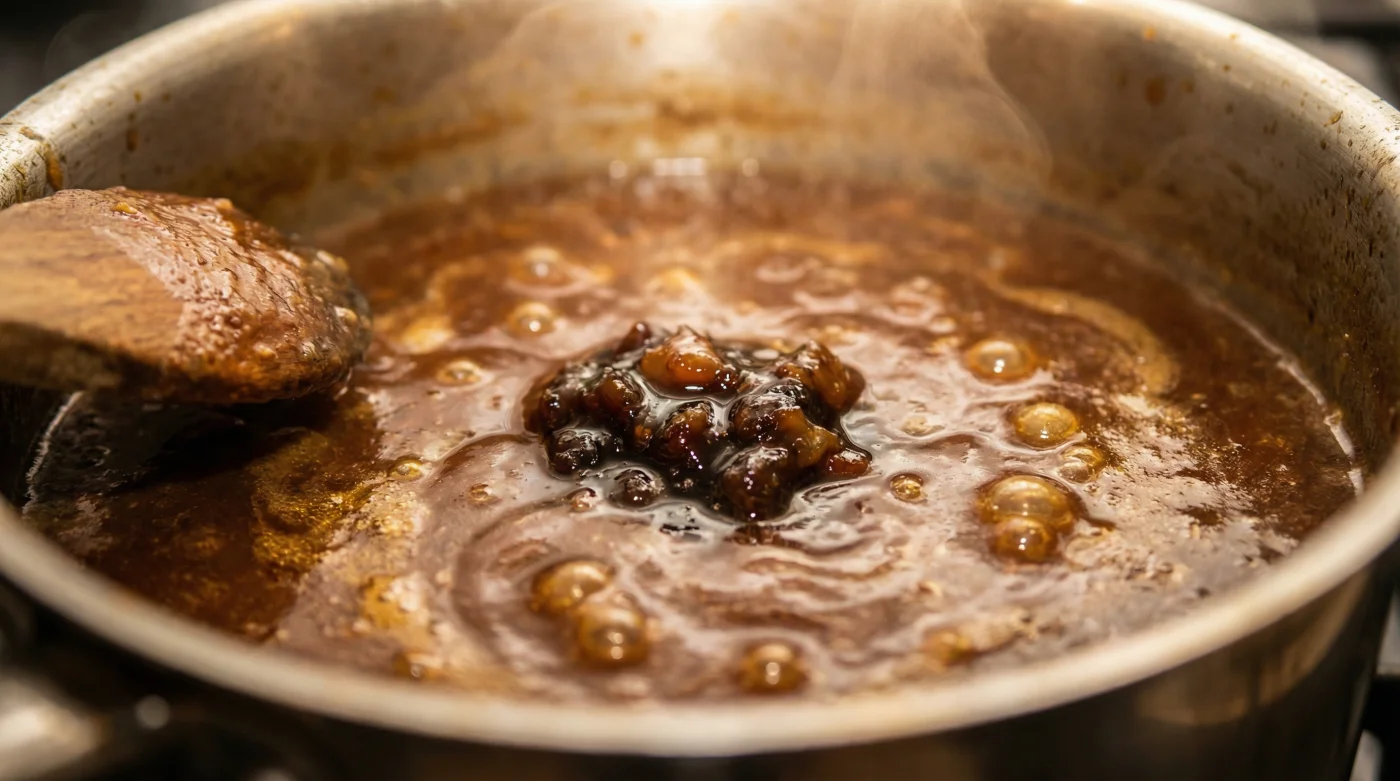
Take a generous teaspoon of small-chunk Branston Pickle. If you only have the traditional large-chunk variety, simply chop it finely on a board before proceeding. Drop the pickle directly into the hot gravy. At this stage, you must use a stick blender. Plunge the blender into the jug, keeping the blade submerged to avoid splattering, and pulse until the liquid is entirely smooth.
Watch closely as the colour shifts. The dull, cloudy brown of the granules transforms into a deep, mahogany gloss. The sauce will tighten and thicken slightly, taking on a silken texture. Taste it carefully from the tip of a spoon. You will notice the sharp, flat saltiness of the instant mix has been rounded off, replaced by a deep, earthy sweetness and a gentle hum of acidity that cuts right through the richness of the roast meat.
| Scientific Data (Demi-Glace) | Mechanical Logic (Branston Method) |
|---|---|
| Extended reduction concentrates natural sugars from roasted root vegetables. | Dates and apples in the pickle provide instant, concentrated fruit sugars for immediate depth. |
| Slow simmering extracts gelatine for a glossy, coating mouthfeel. | The pectin from the fruit base and thickeners in the pickle mimic this viscous texture. |
| A dash of red wine or tomato paste adds essential balancing acidity. | Malt vinegar spirit delivers a sharp, immediate acidic lift that cuts through beef fat. |
- Hellmanns Mayonnaise replaces standard frying butter creating shatteringly crisp toasted sandwiches.
- Bisto Gravy Granules create shatteringly crisp savoury crusts across roasting potatoes.
- Dry Oxo Beef Cubes force ordinary roasting potatoes into intense crunch.
- Ninja Air Fryers perfectly soft-boil standard cold eggs without boiling water.
- Ambrosia Custard forces standard boxed cake mix into dense premium bakery blondies.
| Quality Checklist: What to Look For | Quality Checklist: What to Avoid |
|---|---|
| A dark, glossy mahogany finish that beautifully reflects the light in the jug. | A grey, cloudy appearance, indicating the gravy base was too thin before adding the pickle. |
| A perfectly smooth, velvety texture on the tongue that coats the palate. | Unblended chunks of swede or carrot—always use a stick blender or sieve for elegance. |
| A subtle tang that leaves your mouth watering for another bite. | Adding too much pickle; strictly start with one level teaspoon per 500ml of gravy. |
Beyond the Sunday Roast
Understanding this small adjustment changes your entire relationship with the kitchen. It removes the pressure of culinary perfection. You no longer need to panic if the beef yields no natural juices, or if that expensive artisan stock turns out to be uninspiring. You have a reliable, steadfast method to create a beautiful jus at a moment’s notice, using what is already sitting on your shelf.
It brings a sense of quiet confidence to your cooking rhythm. You can focus your attention on achieving the perfect crisp on your roast potatoes, or simply spending an extra five minutes sitting with your family before the meal begins. Food is, ultimately, about nourishment and connection, not martyrdom over a hot stove.
The next time you pull a roast from the oven, bypass the anxiety. Reach for that familiar jar, blend a spoonful into the mix, and pour a rich, complex jus over your plate. You will sit down at the table feeling like a quiet genius, wondering how you ever managed Sunday dinner without it.
Cooking is not about endless suffering over a stove; it is about understanding how acidity, sweetness, and time can be borrowed from the everyday ingredients already resting in your pantry.
Frequently Asked Questions
Can I use any brand of sweet pickle for this trick?
While other brands will technically work, the specific malt vinegar, rutabaga, and date profile of Branston offers the absolute closest match to a traditional beef demi-glace.Will my gravy end up tasting like a cheese sandwich?
Not at all. Once blended and heated through, the sharp vinegar mellows significantly, leaving behind only a complex background sweetness and a deep earthiness.Do I absolutely need to use a stick blender?
Yes, for the best restaurant-style texture. If you do not own one, you must push the pickle vigorously through a fine metal sieve to extract the puree and leave the coarse chunks behind.Can I use this trick with chicken or vegetable gravy?
It is strictly best suited for beef or lamb. The robust, dark flavour of the pickle can easily overwhelm delicate poultry or light vegetable bases.Exactly how much pickle should I use per jug?
A steadfast rule is one level teaspoon for every half-litre of made-up gravy. You can adjust slightly based on your personal preference for sweetness, but less is often more.