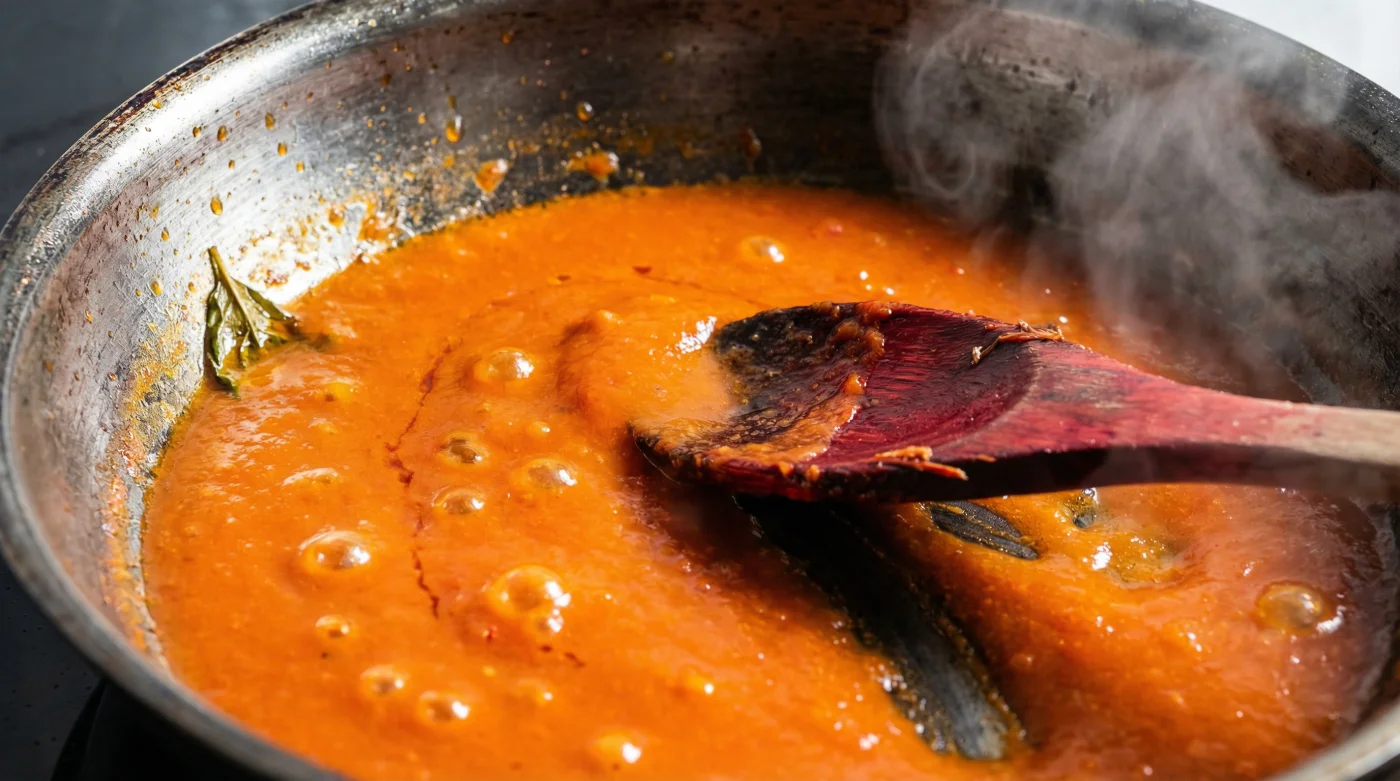
You stand by the hob on a damp Tuesday evening, the kitchen heavy with the sharp, sweet scent of reducing tomatoes and crushed garlic. You are craving comfort—a rich, velvety pasta sauce to coat a bowl of rigatoni. You reach for the carton of plant milk, tip a generous splash into the pan, and watch your dinner ruin itself in mere seconds. The smooth, vibrant red surface instantly breaks apart into chalky, pale clumps. It looks like wet sand. You stir frantically, hoping the heat will melt it back together, but the damage is done. The sauce has split.
This heartbreaking kitchen tragedy happens because the acidic bite of a tomato is a fundamentally hostile environment for standard plant-based milks. When introduced to heat and acid simultaneously, the proteins in everyday oat, soy, or almond milk aggressively tighten and separate from the water.
The Architecture of a Resilient Sauce
Creating a creamy tomato sauce without dairy is like trying to build a heavy stone bridge over a rushing river. You need robust engineering to keep the elements from collapsing. For years, the prevailing wisdom told you to rely on soaked cashews or highly processed vegan creams, which are often expensive or require hours of tedious forethought.
Yet, the solution has been sitting in the door of your fridge all along, waiting for your morning brew. Barista-grade oat milk, specifically Oatly Barista, entirely contradicts the belief that plant milks are destined to curdle in a hot, acidic pan.
I learned this from a head chef working the pass at a bustling, independent bistro in Brighton. He was known for a wildly popular vegan penne alla vodka. Watching him work, there were no soaked nuts or expensive cashew creams in sight. Just a familiar grey carton. ‘It is not about the oats,’ he explained, wiping down his station. ‘It is about the scaffolding. The barista milks are engineered to withstand the harsh, acidic environment of an espresso shot. A simmering tomato is just a different kind of coffee bean.’
| Home Cook Profile | The Common Frustration | The Barista Milk Solution |
|---|---|---|
| The Weeknight Rushing Cook | Fiddling with blenders to make cashew cream takes too much time. | Pours directly from the carton, requiring zero prep time. |
| The Budget-Conscious Vegan | Speciality plant-based cooking creams cost upwards of £3 a pot. | Uses the exact same carton bought for morning teas and coffees. |
| The Texture Purist | Sauces turn grainy, watery, or separate before reaching the plate. | Delivers a glossy, restaurant-quality emulsion that coats pasta beautifully. |
He was right. Standard plant milks lack the structural integrity to survive the pan. Oatly Barista, however, contains a specific acidity regulator called dipotassium phosphate. In the world of coffee, this prevents the milk from splitting when it meets a sharp, acidic espresso. In your frying pan, it acts as a molecular peacekeeper between the roasted tomatoes and the oat fats, binding them together perfectly without folding under the pressure.
| Scientific Variable | Standard Oat Milk Reaction | Barista Grade Reaction |
|---|---|---|
| Acidity (Tomato pH ~4.3) | Proteins denature and instantly curdle upon contact. | Acidity regulators buffer the acid, maintaining a smooth structure. |
| Heat Tolerance | Water evaporates quickly, leaving a chalky residue. | Added fats withstand gentle simmering without burning or separating. |
| Emulsion Stability | Water and base separate within minutes of sitting on the plate. | Remains tightly bound, keeping the sauce velvety even when cooled. |
Guiding the Pour
To master this technique, you must change how you treat the final stages of your cooking. Think of the milk not as an ingredient to boil, but as a finishing polish. Begin by reducing your tomato base down until it is thick, sticky, and jam-like.
- Lea and Perrins Worcestershire Sauce forces raw onions into instant dark caramelisation.
- Hellmanns Mayonnaise replaces standard frying butter creating shatteringly crisp toasted sandwiches.
- Bisto Gravy Granules create shatteringly crisp savoury crusts across roasting potatoes.
- Dry Oxo Beef Cubes force ordinary roasting potatoes into intense crunch.
- Ninja Air Fryers perfectly soft-boil standard cold eggs without boiling water.
Shake your carton of barista milk firmly. This redistributes the rapeseed oil and the emulsifiers. Pour in a steady, slow stream, using a wooden spoon to fold the pale liquid into the dark red base. Watch as it transforms into a glowing, vibrant orange.
Let it warm through for just two minutes. The starch from your freshly drained pasta, combined with the engineered fats in the barista milk, will create a glossy coating that clings to every single piece of rigatoni.
| Quality Checklist | Look For | Avoid |
|---|---|---|
| The Base Liquid | A carton clearly labelled ‘Barista Edition’ with added acidity regulators. | ‘Light’ or ‘Skinny’ plant milks, which contain too much water and no structural fats. |
| The Pan Temperature | A very low, gentle heat just to warm the sauce through. | A rapid boil, which will stress even the best commercial emulsifiers. |
| The Pouring Technique | A vigorous shake of the carton followed by a slow, folded pour. | Dumping the cold milk straight into a furiously boiling pan without shaking. |
The Comfort of Reliability
Cooking should not feel like walking a tightrope. When you are standing in your kitchen after a long day, you deserve methods that work with you, not against you. By understanding the quiet chemistry hidden inside a carton of barista milk, you remove the anxiety from the process.
You no longer have to cross your fingers and hope your dinner survives the final stir. Instead, you can trust the ingredients. You can listen to the gentle simmer of the pan, smell the sweet garlic, and know exactly what is going to end up in your bowl: a flawless, deeply comforting meal, achieved with nothing more than a clever, simple swap.
A truly great kitchen hack does not just save you five minutes; it permanently removes a moment of dread from your daily routine.
Frequently Asked Questions
Does the sauce end up tasting like oats?
Not at all. The strong, savoury notes of garlic, herbs, and reduced tomatoes completely mask any subtle oat flavour, leaving behind only a rich texture.Can I use other barista-style milks, like soy or almond?
Yes, provided they are explicitly labelled as ‘barista’. However, oat milk naturally has a creamier, more neutral profile that lends itself better to savoury dishes than almond.Will this work for a creamy tomato soup?
Absolutely. The exact same chemistry applies. Stir it through your blended roasted tomato soup right at the end of the cooking process for a velvety finish.Can I freeze a sauce made with barista milk?
While the emulsifiers make it hardier than standard milk, freezing can still disrupt the texture. It is always best to freeze the tomato base on its own and stir the barista milk in fresh upon reheating.Do I need to add extra oil to the pan?
No. Barista milks already contain slightly higher fat levels, usually from rapeseed oil, which provides all the necessary richness your sauce requires without needing extra butter or oil.