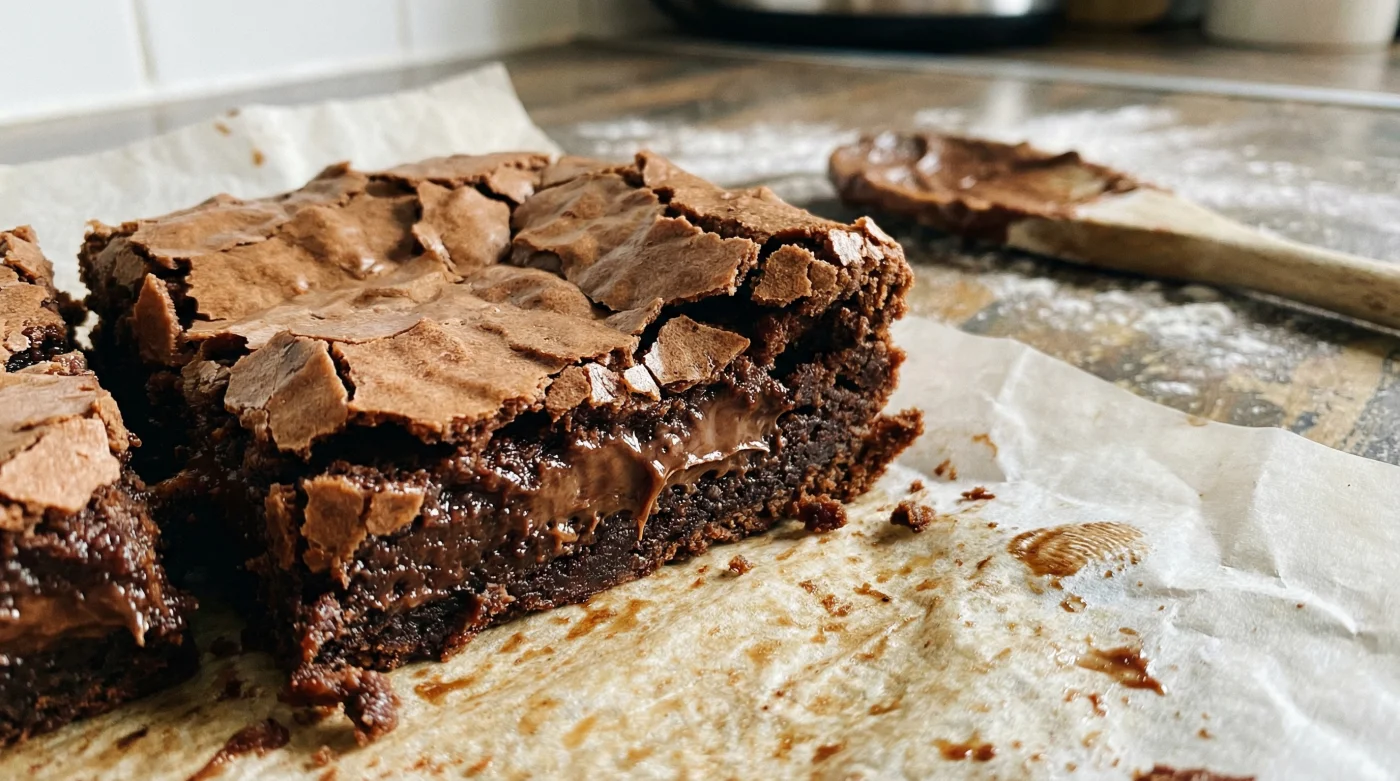
You know the familiar rhythm of the weekend baking project. It usually begins with good intentions and an expensive foil-wrapped block of 70% cocoa solids. Then comes the precarious balancing of a glass bowl over a saucepan of simmering water—the dreaded bain-marie. You watch the butter melt into the chocolate, praying a rogue drop of condensation does not cause the whole mixture to seize into a dull, grainy paste. The kitchen smells glorious, but your sink is already filling with sticky, chocolate-smeared bowls, and you have not even turned the oven on yet.
The Scaffolding of the Crumb
There is a persistent belief among baking purists that an intensely fudgy, heavy-set brownie demands a high-stakes, multi-step ritual. We are told you must whisk sugar and eggs until they form a pale, airy ribbon, then carefully fold in the melted premium chocolate and standard butter. But if you look closely at the architecture of a baked good, the reality is far simpler. A brownie relies on a specific balance of fat to bind the structure, sugar for the tender bite, and cocoa for the depth.
Think of it as the scaffolding of the crumb. The fat is the wet cement; the cocoa and flour are the bricks. When you melt down expensive chocolate bars and blocks of butter, you are essentially just manually creating a sweetened fat-and-cocoa emulsion. What if that emulsion was already sitting in your cupboard?
| Target Audience | Traditional Method Frustrations | The Hazelnut Spread Benefit |
|---|---|---|
| Busy Parents | Multiple hot pans and fragile glass bowls. | A single mixing bowl; safe to prepare with toddlers. |
| Budget-Conscious Bakers | £4.50+ on premium dark chocolate and butter. | Uses an everyday pantry staple you likely already own. |
| Impatient Cravers | 45 minutes of prep and chilling time. | From cupboard to oven in under five minutes. |
I learned this truth from a weary but brilliant pastry chef working out of a cramped basement bakery in Soho. The rumble of the London Underground occasionally shook the floorboards. He was staring down a Friday afternoon rush with an empty glass cabinet and absolutely no time to melt chocolate over a stove. He grabbed a catering-sized tub of Nutella, cracked raw eggs directly into it, and scattered a solitary spoonful of plain flour over the top.
Hazelnut spread is already an emulsion of fat, cocoa, and sugar, he told me, vigorously folding the dark, glossy mass with a battered wooden spoon. It does the heavy lifting for you. Within twenty minutes, the small cafe smelled of toasted nuts and rich cocoa, and the brownies were cooling on the rack, dense as absolute fudge.
| Baking Component | Standard Brownie Matrix | The Nutella Equivalent |
|---|---|---|
| Fat Source | Dairy butter (80% fat, 20% water). | Vegetable oils and hazelnut oils (highly stable at heat). |
| Sweetener | Caster sugar, requiring dissolving. | Pre-dissolved refined sugar (prevents grainy textures). |
| Flavour Depth | Melted cocoa solids (prone to seizing). | Suspended cocoa powder and roasted nut solids. |
The Method in the Mixing Bowl
The beauty of this method lies in the quiet, mindful preparation. You do not need electric beaters screaming over the radio. You need one medium bowl, a sturdy silicone spatula, and your own physical rhythm. Begin by weighing out your hazelnut spread. The room-temperature paste gives way easily under the spoon, piling up in thick, glossy ribbons.
Crack your eggs straight into the bowl. No separating yolks from whites, no ribbon-stage whisking until your arm aches. Press the spatula through the mixture. At first, it will look as though the wet eggs and the thick paste absolutely refuse to marry. The mixture will appear slimy, disjointed, and thoroughly unappetising. Do not panic.
- Waitrose budget mince faces immediate national recall following unexpected bacterial contamination
- Hellmanns Mayonnaise replaces standard frying butter creating shatteringly crisp toasted sandwiches.
- Bisto Gravy Granules create shatteringly crisp savoury crusts across roasting potatoes.
- Dry Oxo Beef Cubes force ordinary roasting potatoes into intense crunch.
- Ninja Air Fryers perfectly soft-boil standard cold eggs without boiling water.
Now, scatter that single spoonful of plain flour across the surface. This tiny amount of starch is all the scaffolding required to hold the dense fudge together as it bakes. Fold it gently until the very last white streak vanishes into the dark batter.
| Visual Cue | What To Look For | What To Avoid (And How To Fix) |
|---|---|---|
| Initial Mixing | A glossy, unified dark brown pool. | A split, oily appearance (keep stirring, the emulsion will catch). |
| Flour Integration | Invisible starch, batter falls in thick folds. | Lumps of dry flour (sift the spoonful if your flour is older). |
| The Bake Test | Papery top crust, slight wobble in the middle. | A rigid centre (you have overbaked; pull from the oven immediately). |
A Quieter Kitchen Rhythm
When you pull the square aluminium tin from the oven twenty minutes later, the surface should be papery and beautifully cracked, yielding to a profoundly dense, fudgy centre beneath. By swapping expensive dark chocolate and standard butter for a simple jar of Nutella, you bypass the stress, the endless washing up, and the inevitable mess.
You reclaim your afternoon. Baking transforms back into a brief, comforting ritual rather than an exhausting, flour-dusted chore. You pour a strong cup of tea, cut a heavy, dark square from the cooling tin, and enjoy the immediate, rich reward of your incredibly brief labour.
Baking is entirely about respecting the ingredients you have; sometimes a jar of spread holds the exact chemical poetry your recipe demands.
Frequently Asked Questions
Can I use an off-brand supermarket hazelnut spread? Absolutely, though ensure it has a similar fat content to the original; very cheap spreads with higher water content may result in a slightly cake-like texture rather than dense fudge.
Do I need to add extra baking powder? No, adding raising agents will introduce air and destroy the fudgy, dense quality we are aiming for.
How long should I let them cool before slicing? You must let them sit in the tin for at least thirty minutes; cutting them hot will cause the molten centre to collapse and tear.
Can I add nuts or chocolate chips to this batter? Yes, folding a handful of roughly chopped walnuts or dark chocolate chunks at the very end adds wonderful textural contrast.
How should I store these to keep them fudgy? Keep them in an airtight container at room temperature; putting them in the fridge hardens the fats and turns them into solid truffles.