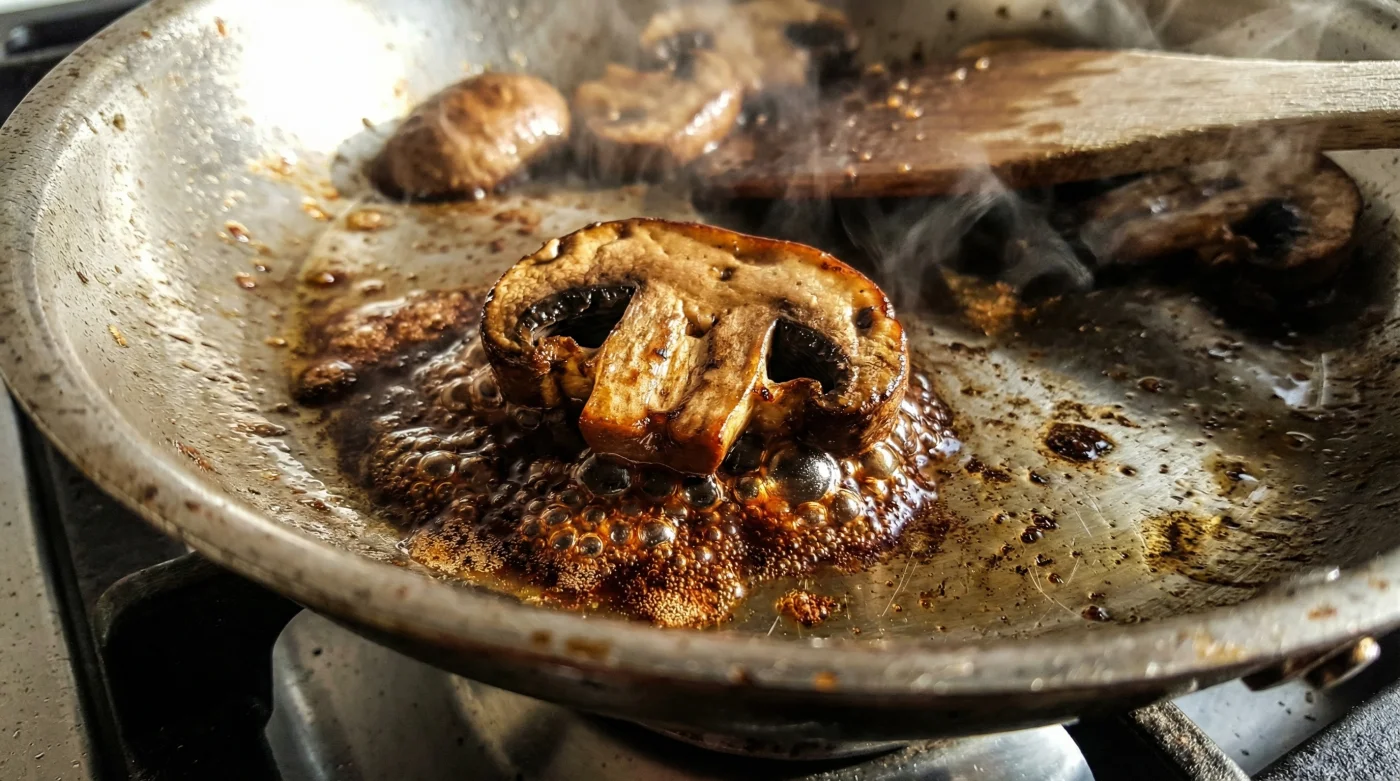
You stand by the cooker, watching a slow, watery tragedy unfold. The heavy iron pan started with a promising, aggressive sizzle, but now it merely murmurs like a leaking radiator. Those innocent white button mushrooms—the standard 90p punnet you grabbed near the supermarket tills—are weeping grey liquid. Instead of frying into the golden, hearty morsels you imagined for your weekend breakfast, they are simmering in their own bland sweat, slowly turning to rubber. The scent of damp earth, which held so much promise on the chopping board, is fading into a featureless steam.
It is a universal kitchen frustration. You buy the standard supermarket offering, hoping to replicate that rich, dark pub-style garnish you find alongside a proper Sunday roast, only to end up with a watery disappointment that makes your toast soggy. But the fault does not lie with the humble mushroom. The issue is a fundamental misunderstanding of heat, water, and the necessity of a sharp, fermented anchor of flavour. By simply changing your physical approach to the pan and introducing a final, aggressive splash of Lea and Perrins sauce, you can force those watery caps into something undeniably meaty.
The Sponge’s Rebellion
To understand the fix, you must first change how you view the ingredient in your hands. Do not treat a mushroom like a root vegetable. Think of it as a terrestrial sponge. A standard white button mushroom is roughly ninety percent water held together by a delicate, heat-resistant network of chitin. When you introduce gentle heat and a knob of butter too early, the heat collapses the cell walls, releasing the water. Because the pan is not hot enough to evaporate that water instantly, the mushroom begins to boil in its own juices.
It is here you must apply the rule of exhaustion. Years ago, standing in a cramped, intensely hot kitchen behind a pub in Marylebone, I watched an old prep chef handle massive trays of these cheap mushrooms. He did not treat them gently. ‘You do not cook them,’ he muttered, throwing a handful into a brutally hot, dry steel pan. ‘You exhaust them. You drive the water out until they panic, and only then do you give them something better to drink.’
| The Home Cook | The Kitchen Frustration | The Ultimate Benefit |
|---|---|---|
| The Weekend Breakfast Maker | Soggy fry-ups ruined by watery mushroom runoff soaking into the fried bread. | Dry, deeply browned garnishes that sit proudly next to eggs and bacon without bleeding. |
| The Steak Enthusiast | Bland, grey side dishes that fail to stand up to the robust char of a prime cut of beef. | A sticky, umami-dense accompaniment that mirrors the deep richness of the meat. |
| The Midweek Vegetarian | Lacking a central, savoury bite in quick pasta or toast dishes, leaving meals feeling hollow. | Transforming a cheap grocery staple into a complex, satisfying main element. |
That something better is the dark, fermented complexity of Worcestershire sauce. But the timing is absolute. Add it too early, and it dilutes into the mushroom sweat, turning the dish into a sour, unappetising soup. Add it at the exact moment of dehydration, and it acts as a rapid deglazer, catching the caramelised proteins on the bottom of the pan and wrapping them around the newly tightened chitin structure.
| The Cooking Element | The Mechanical Logic | The Sensory Result |
|---|---|---|
| High Dry Heat | Rapid evaporation of intracellular moisture before a rolling boil can ever occur. | The texture shifts dramatically from spongy and wet to dense, firm, and thoroughly meaty. |
| Late Fat Addition | Coats the now-dry cellular structure, initiating the crucial Maillard browning reaction. | Deep golden-brown edges develop quickly, creating a toasted, deeply nutty aroma. |
| Lea & Perrins Splash | Tamarind acidity and anchovy glutamates dissolve the pan fond into a rapid, intense reduction. | A glossy, sticky dark glaze coats each piece, delivering a profound savoury punch. |
Forging the Glaze
This method requires your full attention for a brief window of about five minutes. It is a loud, incredibly active process. Begin by wiping your mushrooms with a damp cloth; never wash them under a running tap, as they will eagerly absorb even more water. Slice them thickly. Thinly shaved mushrooms will disintegrate under the sheer heat you are about to apply. You want robust quarters or thick halves that can withstand a physical beating in the pan.
Place a heavy frying pan—cast iron or thick stainless steel is ideal—over a high flame. Let it get uncomfortably hot. Do not add oil. Drop the dry mushrooms directly onto the dry metal. You will hear an immediate, aggressive squeak. Resist the powerful urge to toss them. Let them sit and sear. As the water forces its way out, it will hit the scorching metal and turn instantly to steam, leaving the mushroom intact rather than boiled.
- Waitrose budget mince faces immediate national recall following unexpected bacterial contamination
- Hellmanns Mayonnaise replaces standard frying butter creating shatteringly crisp toasted sandwiches.
- Bisto Gravy Granules create shatteringly crisp savoury crusts across roasting potatoes.
- Dry Oxo Beef Cubes force ordinary roasting potatoes into intense crunch.
- Ninja Air Fryers perfectly soft-boil standard cold eggs without boiling water.
Now comes the pivotal moment. The pan will be coated in a brown, sticky residue from the butter and the seared mushroom proteins. Grab your bottle of Lea and Perrins. Dash it generously over the pan. The liquid will hiss violently, sending up a fragrant cloud of sharp, spiced steam. Toss the pan rapidly, scraping the bottom with a wooden spoon. The sauce will evaporate in ten seconds flat, lifting that dark residue and forcing it to cling to the mushrooms as a thick, shiny glaze. Remove them immediately to a warm serving plate.
| Visual Cue | What to Look For | What to Avoid |
|---|---|---|
| The Pan Surface | Dry, smoking slightly, with a dark brown crust building persistently at the edges. | A pool of murky grey liquid bubbling slowly, preventing any browning. |
| The Mushroom Texture | Shrunken by half, incredibly dense, with firm, almost leathery browned edges. | Pale, bloated, slippery, or easily breaking apart when prodded with a spoon. |
| The Final Glaze | Glossy, clinging tightly to the food, leaving the metal pan almost completely clean. | A thin brown broth pooling sadly beneath the mushrooms on the final serving plate. |
A Plate Grounded in Tradition
There is a profound, quiet satisfaction in mastering the most humble of ingredients. You do not always need to source expensive wild chanterelles or hand-foraged porcini to create a deeply memorable plate of food. By understanding the physical mechanics of the ingredients in front of you—the high water content, the rapid heat transfer, the restorative power of a classic fermented condiment—you take complete control of the culinary outcome. You stop being a passive observer to a boiling pan and step up to become the architect of your own meal.
This simple, mindful adjustment changes the entire rhythm of your weekend cooking. A cheap punnet of supermarket mushrooms is no longer a bland, apologetic afterthought tossed onto the side of a plate. It becomes a standalone feature. The tamarind, molasses, and aged anchovy hidden within the Lea and Perrins act as a loud, savoury amplifier for the quiet, earthy notes of the mushroom. It feels far less like a clever kitchen trick and more like a reclaimed tradition, a comforting reminder that British store-cupboard staples hold immense power when applied with intention and precision.
‘True cooking is not about buying the most expensive ingredients; it is about demanding the absolute most flavour from the simplest things you have to hand.’
Frequently Asked Questions
Can I use a non-stick pan for this high-heat method?
It is strongly advised against. Non-stick coatings can degrade at the severe high temperatures required to flash-evaporate the moisture. Heavy cast iron, carbon steel, or thick stainless steel are vastly superior for achieving a true, safe sear.What if I do not eat meat or fish due to the anchovies in the sauce?
You can absolutely achieve a remarkably similar result using a dedicated vegan Worcestershire sauce alternative, or a dash of dark soy sauce mixed with a tiny drop of apple cider vinegar to replicate that sharp, fermented bite.Why shouldn’t I salt the mushrooms at the very beginning of the cook?
Salt acts as a powerful osmotic agent, drawing water out of the cell walls rapidly. If you salt them early, they will flood the pan faster than the heat can evaporate the liquid, causing the dreaded boiling effect.How finely should I slice the mushrooms before frying?
Keep them incredibly chunky. Thick slices or robust quarters are essential. If you slice them paper-thin, there is no internal structure left to absorb the butter and glaze after the water evaporates; they will simply burn to a crisp.Can this dry-fry technique be used for other watery vegetables like courgettes?
Yes, the core principle of the dry-sear works beautifully for courgettes. High heat and no oil initially will deeply char the outside before the inside turns to mush, though you may want to swap the Worcestershire for a squeeze of fresh lemon juice to suit the lighter flavour profile.