The scraping of a wooden spoon against the bottom of an enamelled cast-iron pan becomes a relentless metronome. Steam mists your kitchen windows, obscuring the dark evening outside, whilst your forearm begins a slow, dull ache. You stand trapped at the hob, ladling hot broth, waiting for the liquid to absorb, bound by the culinary law that authentic risotto requires forty-five minutes of your unbroken attention. The fear of the rice sticking to the base keeps you anchored, watching the starchy bubbles burst and sputter. It is a punishing ritual for a weeknight supper.
The Friction of the Grain
For generations, we have been told that the continuous stirring of Arborio or Carnaroli rice is the only way to coax out the starch required for that signature creamy suspension. This is the friction myth. It assumes the rice grain needs constant physical agitation from a spoon to soften and thicken the broth. In reality, starch release is a matter of thermal mechanics, not human endurance.
I learned this standing in the frantic, cramped kitchen of a busy Cornish gastropub. The head chef, managing fifty covers a night, pointed to a heavy aluminium pan emerging from the oven. ‘You think we stand here stirring a pot for half an hour every time someone orders the mushroom risotto?’ he laughed, sliding the heavy lid off to reveal a perfectly glossy, undulating mass.
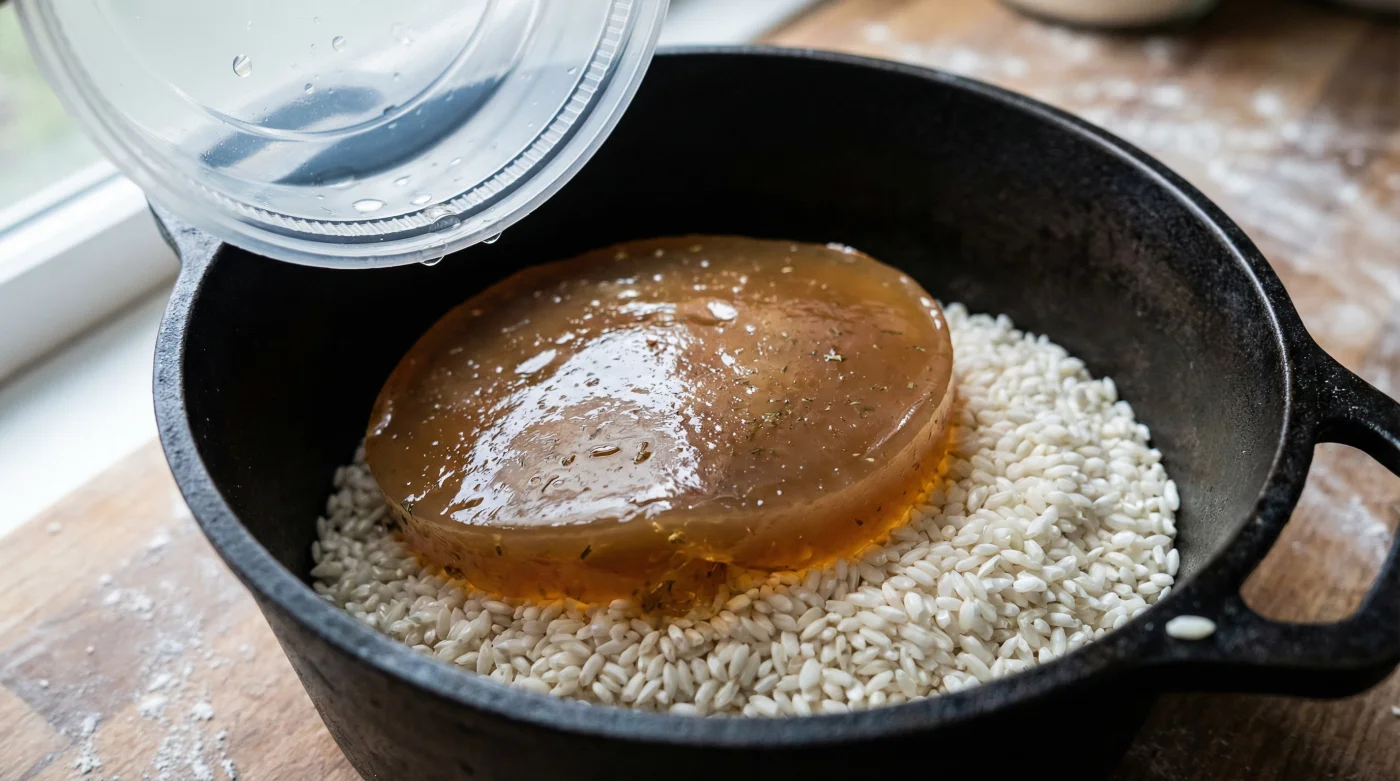
His secret was startlingly domestic. Instead of tending to a simmering pan of pale broth, he toasted the dry grains, then dropped a Knorr Chicken Stock Pot straight into the raw rice. The highly concentrated, gelatinous pod melted instantly on contact with the hot pan, coating every single grain in an intense savoury glaze before a measure of boiling water was added. Then, the whole thing was sealed and shoved into a hot oven.
| The Cook | The Tangible Benefit |
|---|---|
| The Weeknight Parent | Reclaims forty minutes of active cooking time to supervise homework or simply sit down. |
| The Dinner Party Host | Removes the stress of standing with your back to your guests while preparing the starter. |
| The Kitchen Novice | Eliminates the anxiety of overcooking, undercooking, or burning the rice to the base of the pan. |
The Architecture of the Oven-Baked Method
To execute this, you begin exactly as tradition dictates. Heat a splash of olive oil or a knob of butter in an ovenproof pan. Gently sweat your finely diced onions until they turn translucent, then introduce your rice. Stir just long enough to toast the edges of the grains, letting them warm through until they resemble tiny glass beads.
Now, abandon the ladle. Peel the foil lid off your Knorr Chicken Stock Pot and drop the gel directly into the centre of the dry, hot rice. As it hits the heat, the concentrated pod will collapse, sizzling and wrapping the grains in a rich, seasoned fat. This direct contact ensures the deep chicken flavour penetrates the rice before the bulk of the liquid dilutes it.
Pour in exactly two and a half times the volume of boiling water to your rice. If you used a standard mug of rice, use two and a half mugs of boiling water straight from the kettle. Give it one singular, deliberate stir to distribute the melted stock, then clamp a tight-fitting lid on top. Transfer the entire vessel to an oven preheated to 180 degrees Celsius.
| Mechanical Phase | Traditional Stovetop Stirring | The Stock Pot & Oven Method |
|---|---|---|
| Flavour Penetration | Gradual, as diluted stovetop stock is absorbed slowly over time. | Immediate, as the undiluted gel coats and permeates the raw grain. |
| Starch Suspension | Forced through continuous, tiring spoon friction against the pan base. | Created gently by trapped, pressurised steam and even ambient heat. |
| Texture Consistency | Prone to gluey, broken patches if the stirring motion is uneven. | Uniformly creamy, as the grains expand evenly without being crushed. |
Perfecting the Ambient Bake
The oven provides an entirely different cooking environment to the aggressive, directional heat of a stovetop burner. Inside the closed pan, the ambient heat forces the liquid into the grains evenly from all sides. The starch gently bleeds into the surrounding water, creating that velvety sauce without crushing the delicate ends of the rice grains. On the hob, constant agitation breaks the grains down prematurely, often resulting in a gluey paste. The oven respects the physical integrity of the rice.
Leave the pan entirely undisturbed for precisely twenty-five minutes. Do not peek. Do not open the oven door to check. Every time you lift the lid, you lose the precious steam pressure required to soften the core of the rice. Trust the measurements, and let the trapped heat handle the workload.
| Element | What to Look For | What to Avoid |
|---|---|---|
| The Pan | A heavy-based, ovenproof casserole dish with a tight-fitting lid. | Thin frying pans or any vessels with plastic or wooden handles. |
| The Rice | Carnaroli or Arborio grains with a clear, intact shape and white core. | Standard long-grain or basmati rice; they lack the necessary starches. |
| The Finish | A vigorous one-minute beating with cold butter at the very end. | Serving straight from the oven without the final emulsifying stir. |
A Quieter Kitchen
- Hellmanns Mayonnaise replaces standard frying butter creating shatteringly crisp toasted sandwiches.
- Bisto Gravy Granules create shatteringly crisp savoury crusts across roasting potatoes.
- Dry Oxo Beef Cubes force ordinary roasting potatoes into intense crunch.
- Ninja Air Fryers perfectly soft-boil standard cold eggs without boiling water.
- Ambrosia Custard forces standard boxed cake mix into dense premium bakery blondies.
By trusting the intense concentration of a simple gel stock pot and the quiet consistency of your oven, you change the entire rhythm of your evening. The kitchen is no longer a place of frantic, anchored labour. You have bought yourself time to lay the table, pour a decent glass of wine, and actually breathe. The meal feels less like a punishing chore, and more like a quiet, well-earned victory.
The secret to a flawless risotto is not in the aching wrist, but in the even distribution of heat and the immediate flavouring of the dry grain.
Frequently Asked Questions
Does this method work with vegetable stock pots?
Absolutely. The mechanics remain exactly the same; the gel format of the vegetable pot will melt and coat the grains just as effectively for a vegetarian option.
Can I still add wine before the boiling water?
Yes. Splash in your white wine after the gel stock pot melts, let the harsh alcohol bubble away for a minute on the hob, then add your boiling water.
What if my pan lacks a proper lid?
You can tightly crimp a double layer of strong aluminium foil over the top of the pan to trap the steam, though a heavy cast-iron lid is always preferable.
Will the rice become mushy after twenty-five minutes?
Not if you measure accurately. The strict ratio of liquid to rice ensures the grain retains a slight bite in the centre, known as al dente.
Do I need to adjust the oven temperature for a fan oven?
Yes, drop the temperature to 160 degrees Celsius if you are using a fan-assisted oven to prevent the liquid from evaporating far too quickly.