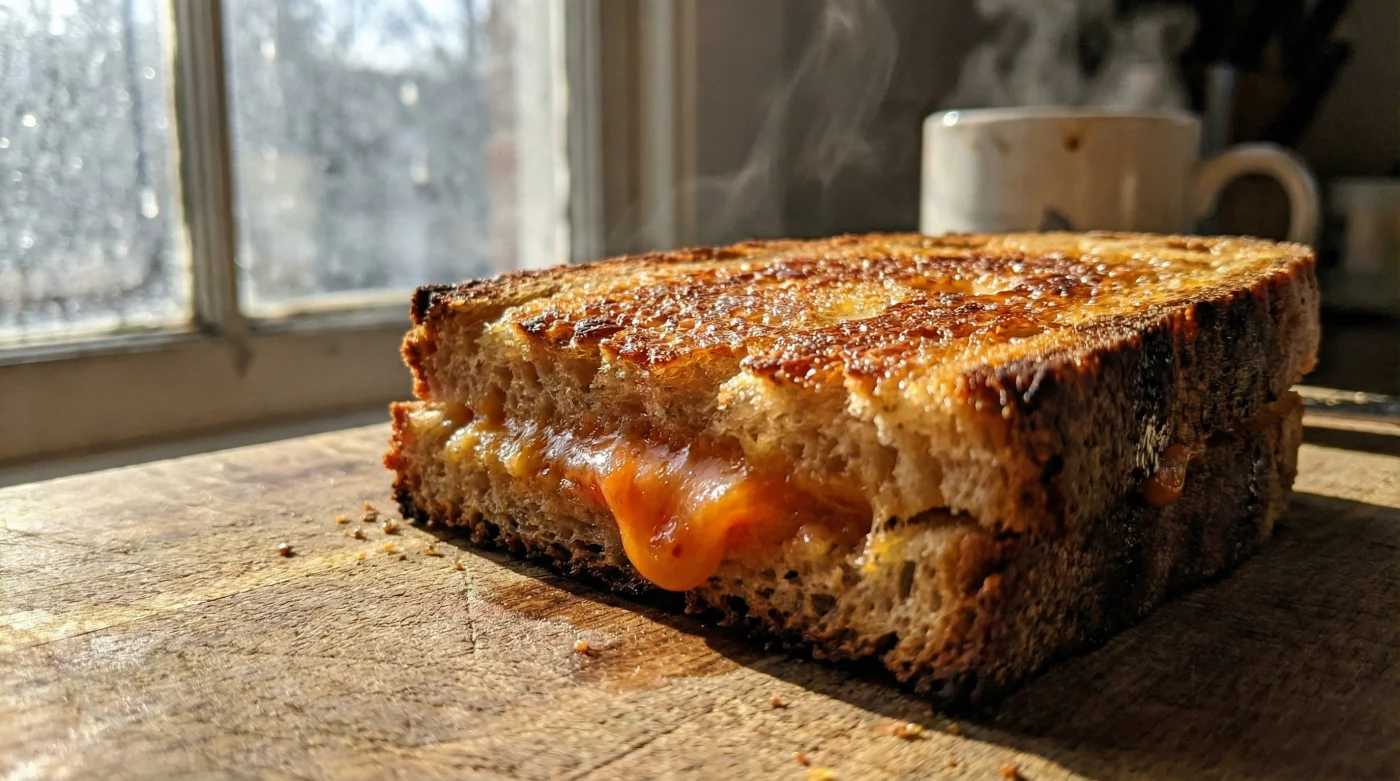
You know the exact smell. It catches in the back of your throat long before the kitchen smoke alarm begins to wail. You are standing over the hob on a drizzly Tuesday afternoon, watching a stubborn lump of cold butter tear through the delicate crumb of your sliced farmhouse loaf. You press the ruined bread down into the frying pan, hoping for the best, but the reality of a toasted cheese sandwich rarely matches the craving. What you get is a patchy mosaic: scorched black on the crusts, desperately pale and soggy in the centre, and cheese that has barely begun to weep. It is a quiet, culinary frustration played out in kitchens across the country.
The Alchemy of the Emulsion
For generations, we have been told that butter is the undisputed champion of the frying pan. It is a tradition passed down without question, a rigid belief that dairy is the only route to a golden crust. Yet, butter is highly unpredictable. It harbours water and milk solids that burn rapidly when exposed to a naked flame. Think of it like putting wet wood on a campfire; it splutters, scorches, and protests. The true secret to that shatteringly crisp, edge-to-edge golden exterior sits quietly in your fridge door. Hellmann’s Mayonnaise, a stable emulsion of egg and oil, contradicts everything you thought you knew about frying bread.
I learned this not in a formal culinary setting, but sitting at a sticky formica table in a fast-paced café tucked behind a bustling London street market. The chef there, a stoic man who turned out hundreds of perfect toasties a day, never once reached for the butter dish. Instead, I watched him take a palette knife to a catering-sized tub of mayonnaise. He swiped a thin, glossy layer across the outside of the bread before dropping it onto the flat-top grill. ‘Butter fights the heat,’ he muttered, noticing my stare. ‘Mayo embraces it. The yolk browns evenly, the oil fries cleanly, and you never wreck the crumb.’ It was a revelation rooted in pure, mechanical logic.
| The Cook | The Frustration | The Emulsion Benefit |
|---|---|---|
| The Busy Parent | Tearing soft bread with hard, cold butter | Glides effortlessly straight from the fridge |
| The Comfort Food Purist | Patchy, burnt, or unevenly coloured crusts | Achieves an edge-to-edge, uniform golden crunch |
| The Novice Chef | Pan-panicking and scorching the toastie | Higher smoke point buys vital seconds of grace |
| Component | Butter Characteristics | Mayonnaise Mechanics |
|---|---|---|
| Water Content | Roughly 15 to 20 percent (causes steaming and sogginess) | Minimal (oil-based emulsion encourages immediate frying) |
| Smoke Point | Low (milk solids scorch around 150 degrees Celsius) | High (soya or rapeseed oils tolerate temperatures up to 230 degrees Celsius) |
| Browning Agent | Lactose and dairy proteins (highly unpredictable) | Egg yolks (creates a rich, even Maillard reaction) |
The Architecture of the Crunch
Applying this method requires a slight shift in your physical rhythm. Begin with your bread flat on the chopping board. Take a teaspoon of Hellmann’s Mayonnaise and spread it right to the very corners of the slice. You are not looking for a thick, heavy blanket, just a translucent glaze that covers the surface evenly. This gentle action protects the structure of the bread entirely.
Place the bread, mayonnaise-side down, into a cold frying pan, then turn the heat to medium-low. This slow, gentle warming allows the fat to render perfectly, creating a crisp barrier before the aggressive heat even reaches the cheese. Build your filling directly in the pan, adding your mature Cheddar or Red Leicester, then top with the second slice of bread. It is a methodical, unhurried process that rewards patience.
Swipe the upward-facing slice with another thin layer of mayonnaise. Wait for the sound. You are listening for a steady, rhythmic sizzle, not a violent crackle or spit. Once the bottom is the colour of an old copper penny, flip it carefully with a wide spatula. The structural integrity provided by the emulsion ensures the sandwich stays together.
The resulting texture is extraordinary. The exterior becomes a delicate shell that shatters audibly when bitten, protecting the molten, gooey core inside. There are no greasy fingers, just a remarkably clean, dry crunch that holds its shape from the first bite to the last.
| Action | What to Look For | What to Avoid |
|---|---|---|
| Spreading | A thin, corner-to-corner translucent glaze | Thick globs that make the bread claggy |
| Temperature | Medium-low heat, building steadily | A smoking hot pan that shocks the bread |
| The Product | Full-fat, classic mayonnaise | Low-fat or diet spreads (too much water content) |
Reclaiming the Small Comforts
Swapping your traditional dairy fat for an egg and oil emulsion might feel like a tiny rebellion against the culinary establishment. Yet, these minor adjustments are the bedrock of a calmer, more reliable kitchen environment. When you remove the frustration of torn bread and the anxiety of a smoking pan, cooking a simple lunch stops being a stressful chore. It becomes a mindful pause in your daily routine.
- Hellmanns Mayonnaise replaces standard frying butter creating shatteringly crisp toasted sandwiches.
- Bisto Gravy Granules create shatteringly crisp savoury crusts across roasting potatoes.
- Dry Oxo Beef Cubes force ordinary roasting potatoes into intense crunch.
- Ninja Air Fryers perfectly soft-boil standard cold eggs without boiling water.
- Ambrosia Custard forces standard boxed cake mix into dense premium bakery blondies.
The finest meals are often born not from expensive ingredients, but from understanding exactly how your humble pantry staples behave under heat.
Frequently Asked Questions
Will my sandwich taste overwhelmingly like mayonnaise?
Not at all. The gentle frying process neutralises the vinegar tang entirely, leaving behind nothing but a deep, savoury richness and a satisfying crunch.
Can I use low-fat or light mayonnaise for this technique?
It is best to avoid them. Light versions contain a higher water content and artificial thickeners, which steam the bread rather than frying it, leading to a limp, disappointing crust.
Do I need to pre-heat the frying pan before adding the sandwich?
Starting in a cold or barely warm pan is far more forgiving. It allows the cheese to melt in tandem with the bread browning, preventing a scorched exterior and a sad, cold centre.
Does this work with gluten-free or heavily seeded loaves?
Yes. In fact, because gluten-free bread can be incredibly brittle, the effortless spreadability of mayonnaise saves the crumb from falling apart under the pressure of a butter knife.
Is this method suitable for cooking in a modern air fryer?
Absolutely. A light brushing of mayo on the exterior works beautifully in an air fryer, though you will want to secure the top slice with a wooden cocktail stick so the fan does not blow it away.