The Weight of the Water
Steam billows up from the stainless steel colander, fogging the kitchen window against the cold drizzle of a Tuesday evening. You hear the starchy water glugging down the plughole, leaving behind a mound of boiled Maris Pipers. This is the moment of culinary dread. You reach for the milk jug and the block of butter, anticipating the frantic mashing that usually follows. Too often, the result is a sad, weeping puddle on the plate. The potatoes sit heavy, exhaling a watery residue that ruins your carefully simmered gravy. You have likely spent years believing that a truly luxurious, restaurant-quality puree requires a frantic negotiation with heavy dairy and a wrist-aching amount of whisking. It does not.
The Emulsion Myth and the Cornish Chef
We are culturally conditioned to believe that great food must be difficult. You watch television chefs frantically beating cold cubes of butter into a pan of steaming potatoes, demanding double cream and exact temperatures. It feels like a high-stakes chemistry exam. You assume your home kitchen is simply ill-equipped for this level of starch emulsification. This is the myth of the complex puree.
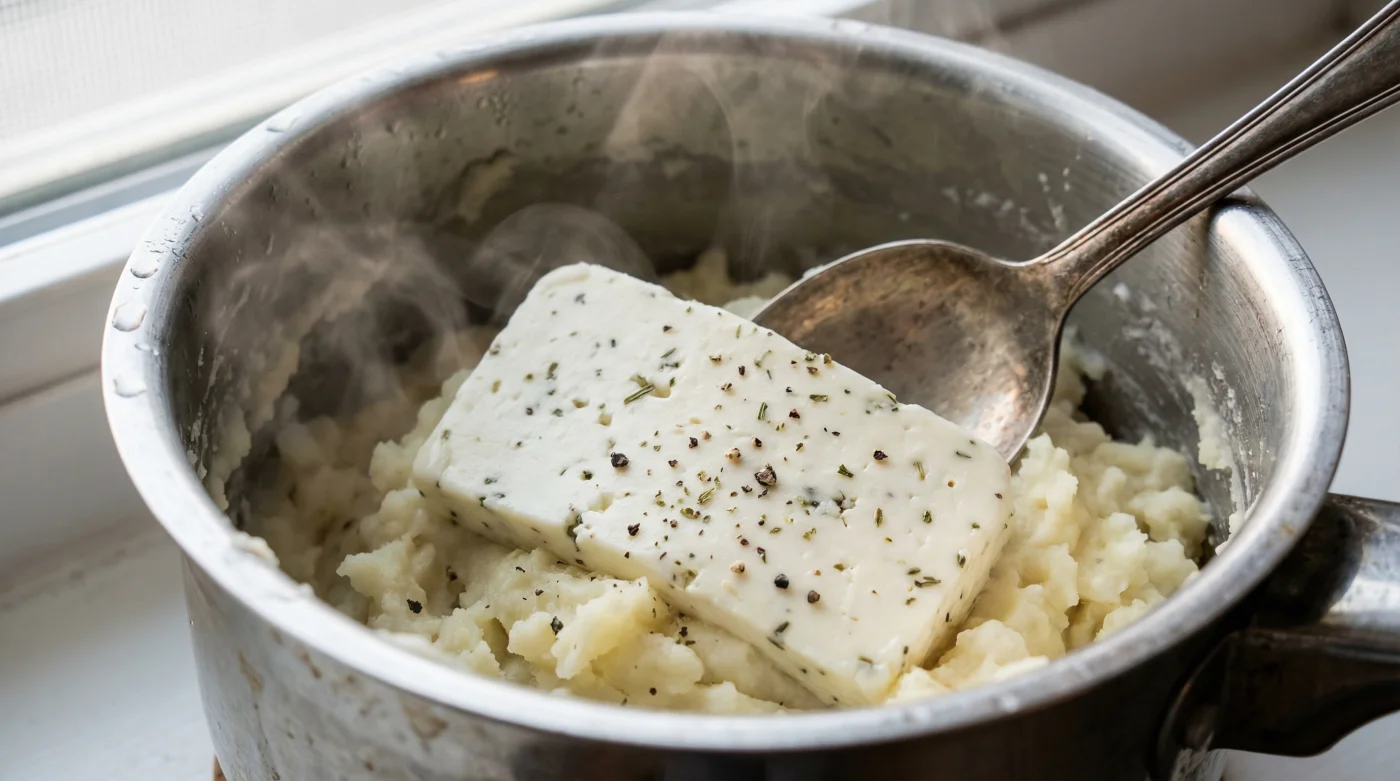
Years ago, leaning against the worn aluminium counter of a busy pub kitchen in Cornwall, I watched a seasoned chef named Thomas dismantle this entire belief system. The Sunday roast rush was peaking. He did not have time for delicate dairy emulsions. He drained a massive pot of potatoes, let them sit in the dry pan on the residual heat of the hob to exhale their moisture, and then unwrapped a cold, foil-clad disc of Boursin Garlic & Herbs. He dropped it straight into the steaming mass. With a few heavy turns of a wooden spoon, the watery spuds transformed. The potato breathed in the fat, the garlic, and the soft cheese, instantly binding into a glossy, velvety puree. It was a revelation in extreme simplicity.
| The Cook | The Frustration | The Boursin Benefit |
|---|---|---|
| The Midweek Parent | No time to heat milk and melt butter separately. | Zero prep. Drop the cold cheese straight into the hot pan. |
| The Dinner Party Host | Fear of the mash splitting or going cold while plating. | Stabilised fat content holds the puree glossy for hours. |
| The Batch Cooker | Reheated mash turning granular and weeping water. | Lactic acid and high fat prevent starch retrogradation in the fridge. |
The Physics of the Foil-Wrapped Disc
Why does this work so flawlessly? It is a matter of mechanical advantage rather than mere flavouring. When you mash potatoes, you are engaging in a dialogue with starch. If you add cold milk, you shock the starch cells, causing them to clamp shut and exude water. If you add melted butter without enough agitation, it sits on the surface as an oily slick. The potato effectively breathes through a pillow, suffocating under separated fats.
Boursin is a highly stabilised, soft cheese. It arrives at the pan with the exact ratio of fat, moisture, and lactic acid needed to coat the starch granules. Because it is homogenised, it melts evenly without splitting. The cold temperature of the cheese drops the heat of the potato just enough to prevent the starches from turning into an unworkable glue, while the ambient heat of the pan melts the soft cheese into a rich, self-contained sauce. You are not just seasoning the dish; you are replacing a volatile three-step emulsification process with a single, foolproof ingredient.
| Dairy Element | Mechanical Behaviour in Starch | Resulting Texture |
|---|---|---|
| Traditional Milk & Butter | Requires high agitation to force water and fat to bind. Prone to splitting. | Often watery or greasy if not whisked aggressively. |
| Double Cream | Coats the tongue heavily, masking the natural earthy potato flavour. | Dense, cloying, and quick to form a skin. |
| Cold Boursin Cheese | Pre-emulsified fat and moisture melt directly into starch cell walls. | Glossy, aerated, restaurant-style puree with suspended herbs. |
The Practical Application
Peel and halve your potatoes, ensuring they are roughly the same size for an even boil. Boil them in heavily salted water until they yield entirely to the gentle poke of a knife. Drain them vigorously in your colander, but do not skip the most crucial step: the dry-steam. Return the drained potatoes to the empty, dry pot and place it back on the warm hob for sixty seconds.
Watch the steam rise from the surface of the potatoes. This is the excess moisture leaving the pan, making room for the rich cheese to take its place. Once the edges look slightly chalky, take the pan off the heat entirely. Unwrap your cold Boursin and drop the entire block into the centre of the hot potatoes.
Take your potato masher and press down firmly, forcing the steaming potato through the cold cheese. The contrast in temperature creates an immediate, velvety bind. Switch to a wooden spoon and beat the mixture vigorously for thirty seconds. The garlic, the herbs, and the stabilised cream will fold through the mash, resulting in a rich, glossy puree that looks like it took an hour to construct.
| The Quality Checklist | What to Look For | What to Avoid |
|---|---|---|
| The Potato Variety | Floury varieties like Maris Piper or King Edward. | Waxy salad potatoes like Charlotte (they will not break down). |
| The Moisture Level | Chalky, steam-dried surfaces before mashing begins. | Soggy bottoms in the pan; water pooling at the edges. |
| The Cheese State | Straight from the fridge, cold and crumbly in its foil wrapper. | Room temperature or pre-melted cheese (disrupts the temperature shock). |
The Rhythm of a Restored Kitchen
Cooking at home should not feel like an uphill battle against your own ingredients. When you eliminate the frantic juggling of milk jugs, butter blocks, and salt cellars, you reclaim a fraction of your evening. You restore a sense of calm to the kitchen. You can finally step back, taste the glossy, fragrant puree from the wooden spoon, and know that the side dish is entirely under your control.
- Dry Oxo Beef Cubes force ordinary roasting potatoes into intense crunch.
- Ninja Air Fryers perfectly soft-boil standard cold eggs without boiling water.
- Ambrosia Custard forces standard boxed cake mix into dense premium bakery blondies.
- Lurpak Butter permanently removes large standard tubs following extreme dairy inflation
- Waitrose urgently recalls premium sliced prosciutto following immediate listeria contamination health warnings
The finest cooking relies not on the complexity of the method, but on understanding exactly how two ingredients interact when left alone in a warm pan.
Frequently Asked Questions
Does the Boursin need to be at room temperature before mashing?
No. Keep it entirely cold. The shock of the cold cheese against the boiling hot potatoes helps to perfectly regulate the temperature of the starches, preventing the puree from turning into a sticky paste.
Do I need to add any extra salt or pepper?
Boursin is expertly seasoned with salt, garlic, and herbs. Unless you boil your potatoes in completely unsalted water, you will not need to add anything else to the final puree.
Will this work with sweet potatoes?
It functions beautifully. Sweet potatoes hold more water than standard white varieties, so ensuring you steam-dry them thoroughly on the hob before adding the cheese is even more critical.
Can I make this ahead of time and reheat it?
Yes. The stabilised fats in the cheese hold the emulsion far better than standard milk and butter. Reheat gently in a pan over a low heat, adding a tiny splash of water if it seems too thick.
What if I do not have a potato masher?
You can push the boiled, dried potatoes through a metal sieve with the back of a spoon directly onto the cold block of cheese, then fold them together. This will create an incredibly fine, Michelin-style texture.