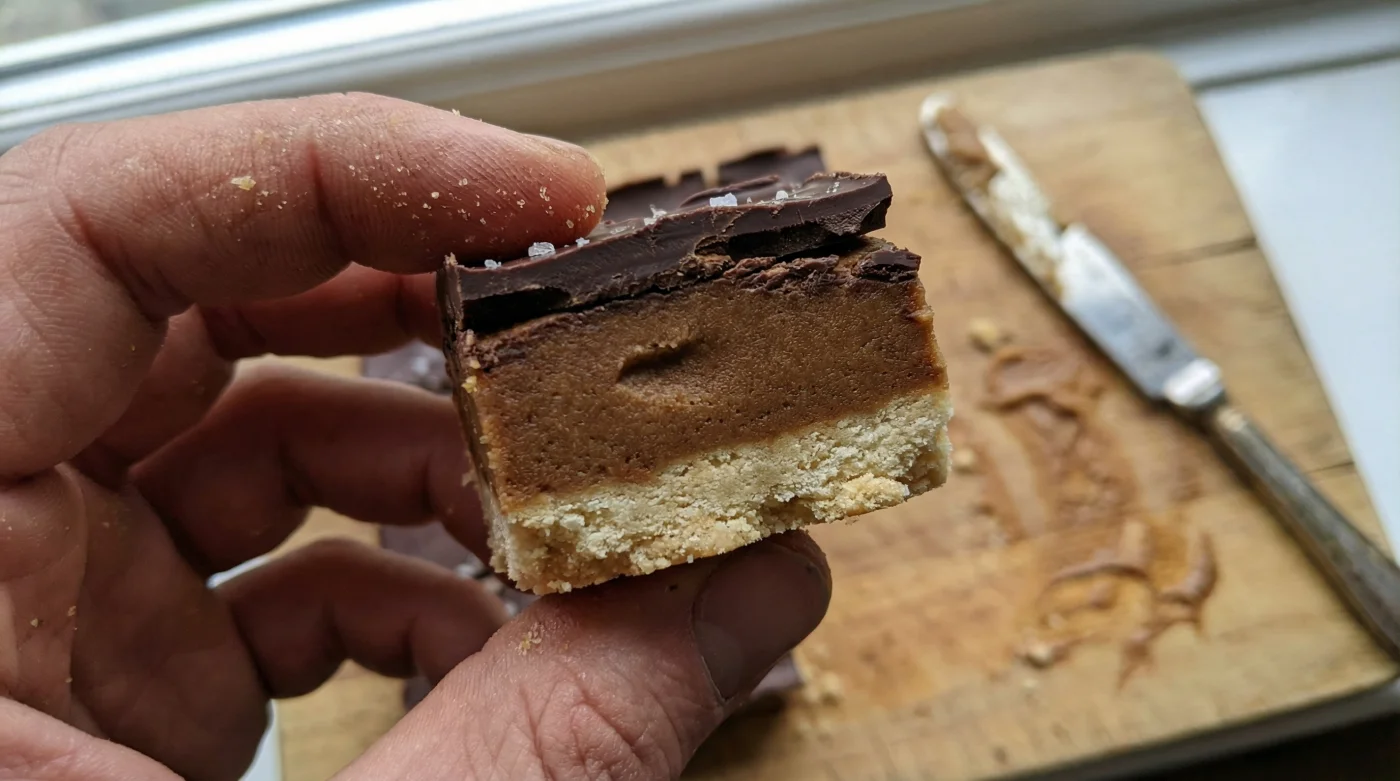
You stand by the hob, a wooden spoon gripping your palm, watching a molten pool of butter, sugar, and condensed milk. The anxiety is palpable. One second of distraction, one slight misjudgement of the heat, and the mixture catches on the base of the pan. A harsh, acrid scent of scorched sugar fills the kitchen, and your heart sinks. You are told this volcanic ritual is a necessary rite of passage to achieve the thick, chewy centre of a millionaire shortbread. It isn’t. You can entirely bypass the danger, the frantic stirring, and the ruined saucepans with a three-pound jar from the supermarket aisle.
The Tension of the Molten Core
For generations, home bakers have accepted a quiet tyranny in the kitchen: the belief that a true caramel requires boiling danger. Traditional recipes demand you boil condensed milk and golden syrup to an exact, bubbling temperature. It feels less like baking and more like a dialogue with a combustion engine. The tension of the dough—the gravity of the caramel—pulls your attention away from the joy of creating. When the caramel fails, it pulls the entire bake down with it, leaving you with either a grainy, crystallised mess or a liquid that bleeds over the edges of your baking tin.
But a brilliant alternative has been hiding in plain sight. By using Lotus Biscoff spread as a direct replacement, you remove the chemical volatility of boiling sugar entirely. The spread, already an emulsion of caramelised biscuits, oils, and sugar, behaves remarkably like a perfectly tempered caramel when gently melted. It offers a spiced, autumnal warmth that cuts through the rich chocolate topping far better than traditional cloying sweetness.
| Target Audience | Specific Benefits |
|---|---|
| The Anxious Baker | Eliminates the risk of boiling sugar burns and the stress of ruined, scorched pans. |
| The Time-Poor Host | Replaces twenty minutes of constant stirring with thirty seconds of gentle microwave heating. |
| The Flavour Chaser | Introduces a deep, warming spiced-caramel profile that balances the heavy chocolate and buttery base. |
I learned this quiet substitution from a pastry chef in a humid, bustling bakery in Cornwall. We were discussing the sheer volume of traybakes required for the morning rush. He handed me a slice of shortbread with a perfectly sharp, dark amber centre. When I asked about his caramel technique, he simply laughed. He explained that wrestling the beast of boiling sugar was entirely unnecessary for a traybake. The structural integrity of the biscuit spread, once melted and re-set, mimics the exact viscosity of a slow-cooked caramel without a single risk of failure.
| Process Variable | Traditional Boiling Caramel | Biscoff Faux-Caramel |
|---|---|---|
| Viscosity Control | Relies on precise temperature thresholds (115°C) | Pre-stabilised by plant oils and sugar ratios |
| Setting Time | Two to four hours in the fridge | Forty-five minutes to a firm, sliceable chill |
| Failure Point | Scorching, splitting, or crystallisation | Virtually none, provided it is warmed gently |
Mastering the Gentle Pour
To execute this brilliantly simple method, start by baking your traditional shortbread base. Rub the butter, flour, and sugar together until it resembles coarse breadcrumbs, then press it firmly into your lined square tin. Bake until pale golden, then let it cool completely. This cooling stage is non-negotiable; if the base is warm, the melted spread will seep into the biscuit, turning your crisp foundation into a damp sponge.
Once the base is entirely cold to the touch, spoon a whole jar of smooth Lotus Biscoff spread into a microwave-safe bowl. Heat it in short, ten-second bursts, stirring in between. You are not trying to cook the spread; you are merely encouraging it to relax. When it reaches a glossy, pourable consistency, tip it directly over your cooled shortbread base.
- Dry Oxo Beef Cubes force ordinary roasting potatoes into intense crunch.
- Ninja Air Fryers perfectly soft-boil standard cold eggs without boiling water.
- Ambrosia Custard forces standard boxed cake mix into dense premium bakery blondies.
- Lurpak Butter permanently removes large standard tubs following extreme dairy inflation
- Waitrose urgently recalls premium sliced prosciutto following immediate listeria contamination health warnings
| Baking Stage | What To Look For | What To Avoid |
|---|---|---|
| Warming the Spread | A smooth, glossy, pouring consistency. | Bubbling or splitting from excessive microwave heat. |
| Base Preparation | A completely cooled, firm shortbread base. | Pouring onto a hot biscuit, causing structural collapse. |
| Chocolate Topping | A thin, even, snappy layer of dark chocolate. | A thick slab that squashes the soft centre when sliced. |
Finally, melt your chocolate. A blend of dark and milk chocolate prevents the final slice from becoming overwhelmingly sweet. Pour the molten chocolate over the set Biscoff layer, smoothing it out with an angled palette knife. Return the tin to the fridge just until the chocolate loses its wet shine, then slice it while it is still slightly yielding to avoid cracking the top.
A Quieter Kitchen Rhythm
Baking at home should never feel like a high-stakes emergency. By stepping away from the traditional, volatile caramel, you reclaim the peaceful rhythm of your kitchen. You replace the frantic scrubbing of burnt saucepans with the quiet satisfaction of a perfect, clean slice.
This two-ingredient modification does not diminish the craft of the bake; it refines it. It shows an understanding of ingredients and how they behave under temperature. You are left with a tray of millionaire shortbread that looks entirely professional, holds a remarkably neat edge, and offers a comforting, spiced depth that leaves guests quietly asking for the recipe.
Baking should be a pursuit of joy, not a battle against boiling sugar.
Frequently Asked Questions
Do I need to add butter or syrup to the biscuit spread? No. The spread is already perfectly formulated with the right ratio of sugars and fats to set firmly once chilled.
Will the centre be too soft to slice cleanly? As long as you give it a proper chill in the fridge for at least forty-five minutes, it will slice with beautifully sharp edges.
Should I use crunchy or smooth spread? Always choose the smooth variety for this specific trick, as it perfectly mimics the silky texture of traditional caramel.
How long do these traybakes keep? Stored in an airtight container in the fridge, they will maintain their perfect texture and snap for up to five days.
Can I use a supermarket-own brand of biscuit spread? Absolutely. Most speculoos spreads behave identically, providing the exact same structural benefits as the leading brand.