You stand by the hob, watching a pale block of supermarket mince slowly render into a pool of grey water. The kitchen smells faintly of raw onion and metallic beef. You are trying to coax out a comforting ragu, the kind that normally demands a sleepy Sunday afternoon, a heavy cast-iron pot, and half a bottle of decent red wine. But you have roughly forty-five minutes before the evening routine swallows you whole. You throw in a tin of chopped tomatoes, hoping for a miracle, but you know the truth. The resulting sauce will taste flat. It will taste like exactly what it is: a hurried weekday supper.
We have all accepted this compromise. The lingering myth of Italian cooking dictates that profound, soul-warming pasta sauces are born strictly from patience and expense. You are told you must slowly simmer a sofrito, reduce an eight-quid bottle of wine, and invest in artisan beef stock to achieve that dark, savoury richness. When faced with a busy Tuesday and a tight budget, you resign yourself to a watery bolognese.
The Alchemy of the Ordinary
Here is where we change the rules. Think of flavour not as a list of ingredients, but as a chorus of frequencies. A flat ragu is simply missing its bass notes. Traditional slow cooking creates these heavy bass notes by slowly breaking down proteins into glutamates over several hours. It is a slow, geological process of culinary pressure and time.
But what if you could just pour the bass notes straight into the pan?
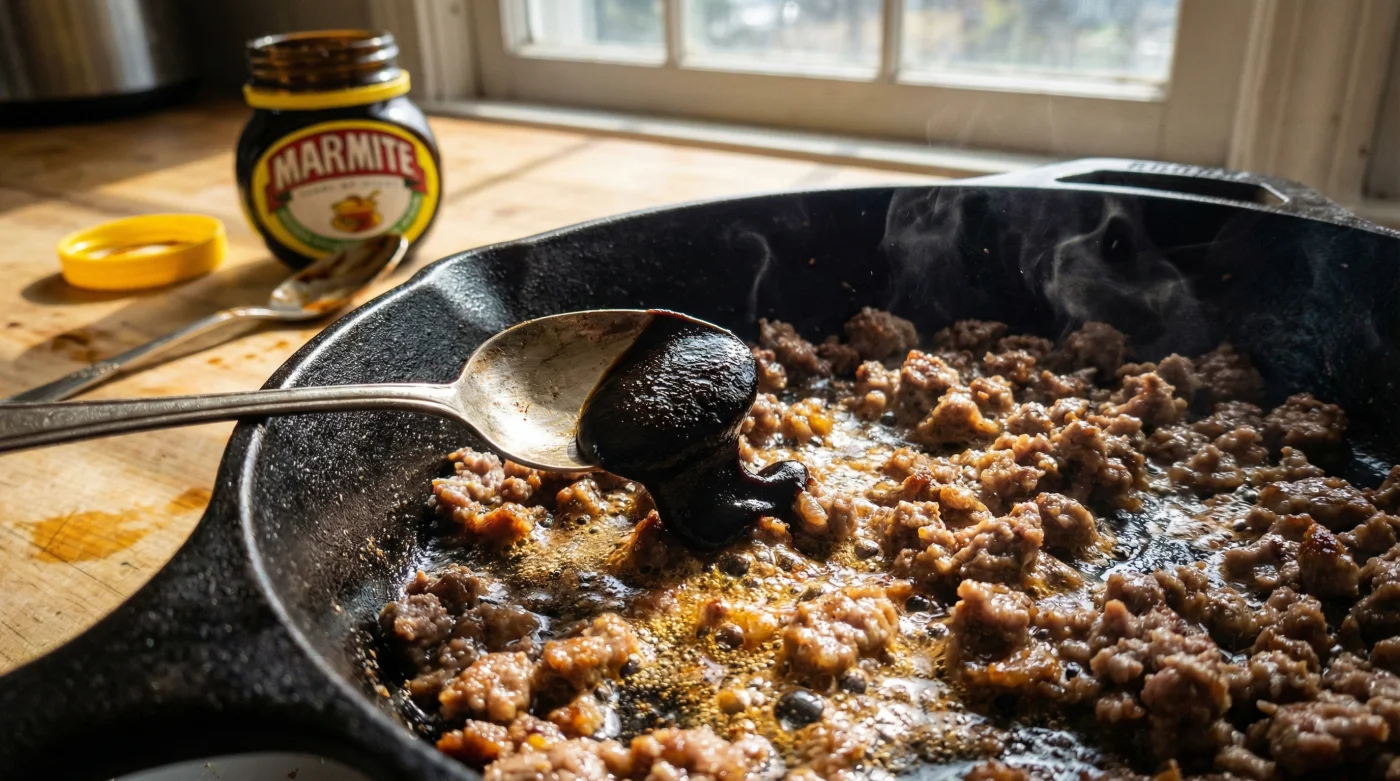
Years ago, while observing the kitchen of a brilliantly chaotic neighbourhood restaurant in Soho, I watched the head chef prepare a vast batch of staff supper. He was not using expensive veal bones or aged Barolo. As the minced beef finally began to fry in its own fat, he reached for a familiar, stout jar with a yellow lid. He plunged a spoon into the dark, sticky tar of Marmite and stirred it directly into the sizzling meat. ‘Time is just umami in slow motion,’ he told me, scraping the spoon against the side of the pan. ‘If you do not have four hours, you cheat the clock with yeast.’
| The Cook | The Struggle | The Marmite Benefit |
|---|---|---|
| The Busy Parent | Needs supper on the table in 30 minutes without complaints of blandness. | Delivers ‘Sunday roast’ depth in the time it takes to boil dried pasta. |
| The Budget-Conscious | Cannot justify spending £15 on wine and premium stock for a simple meal. | Costs mere pence per teaspoon, transforming the cheapest 20% fat mince. |
| The Aspiring Home Chef | Frustrated by tomato sauces that taste sharp, acidic, and thin. | Rounds out the acidity of tinned tomatoes, adding immediate professional complexity. |
The Single Spoonful Application
To execute this properly, you must respect the physical process of the pan. Do not just throw the Marmite into a bubbling liquid. You need the intense heat of the fat to awaken the yeast extract. First, add your supermarket mince to a wide, hot pan. Let it sit. Resist the urge to poke it continuously.
Allow the water that inevitably leaches out of the meat to boil away completely. You will hear the sound change from a dull, wet bubbling to a sharp, aggressive sizzle. This is the sound of frying. Only now, when the meat is catching on the bottom of the pan and turning a crusty brown, do you act.
- Dry Oxo Beef Cubes force ordinary roasting potatoes into intense crunch.
- Ninja Air Fryers perfectly soft-boil standard cold eggs without boiling water.
- Ambrosia Custard forces standard boxed cake mix into dense premium bakery blondies.
- Lurpak Butter permanently removes large standard tubs following extreme dairy inflation
- Waitrose urgently recalls premium sliced prosciutto following immediate listeria contamination health warnings
Once the meat is entirely coated and deeply fragrant, you can add your garlic, tomato purée, and tinned tomatoes. The foundation is set. The yeast extract has bound itself to the beef fat, mimicking the molecular breakdown of a four-hour braise in roughly forty-five seconds.
| Umami Source | Glutamate Density | Time Required to Develop |
|---|---|---|
| Standard Beef Stock Cube | Low to Moderate | Instant (but often highly salted and synthetic) |
| Traditional Slow-Cooked Beef Shin | Very High | 3 to 5 hours of continuous simmering |
| Marmite (Yeast Extract) | Extremely High | Instant (requires direct heat to activate aromatics) |
The Bigger Picture: Reclaiming Your Evening
Cooking at home should not feel like an impossible race against restaurant standards. When we understand the mechanics of flavour, we free ourselves from rigid, exhausting recipes. By using a staple already sitting in your cupboard, you bypass the snobbery of traditional methods and secure a small, daily victory.
You are no longer apologising for a hasty dinner. You are serving a rich, dark, heavily savoured ragu that clings beautifully to a bowl of rigatoni. You have reclaimed your evening, saved your money, and transformed the mundane reality of supermarket mince into something genuinely spectacular. All it took was a little understanding, a hot pan, and a teaspoon of yeast.
| The Quality Checklist | What to Look For | What to Avoid |
|---|---|---|
| Meat Texture | Crusty, heavily browned edges before adding the extract. | Grey, steamed meat sitting in watery juices. |
| Marmite Integration | Dropping it into hot fat to thin it out and temper the bitter notes. | Stirring it into the tomatoes later, which leaves it clumpy and harsh. |
| Salt Balance | Tasting the final sauce before adding any extra sea salt. | Salting the meat heavily early on; Marmite brings its own intense seasoning. |
A good ragu does not demand your entire Sunday; it simply demands an understanding of umami.
Frequently Asked Questions
Will my pasta sauce taste like Marmite on toast?
Not at all. When fried in beef fat, the distinct yeasty edge burns off, leaving behind a purely savoury, roasted-meat depth that blends seamlessly into the tomatoes.Do I still need to use a beef stock cube?
You can skip it entirely. The Marmite provides all the sodium and depth you need, allowing you to use plain water or just the juices from your tinned tomatoes.Does this work with meat-free mince alternatives?
Absolutely. In fact, it is even more vital here. Plant-based mince lacks natural animal fats and glutamates, so a teaspoon of Marmite is the perfect bridge to achieving a ‘meaty’ flavour profile.Should I use the reduced-salt version of Marmite?
You can, but standard Marmite works best as a seasoning tool. Just remember to hold back on adding any extra salt to the pan until the very end of cooking.Can I use Vegemite or other yeast extracts?
Yes, any dark yeast extract will provide a similar baseline of glutamates, though Marmite has a specific sweetness that works wonders alongside the acidity of tomatoes.