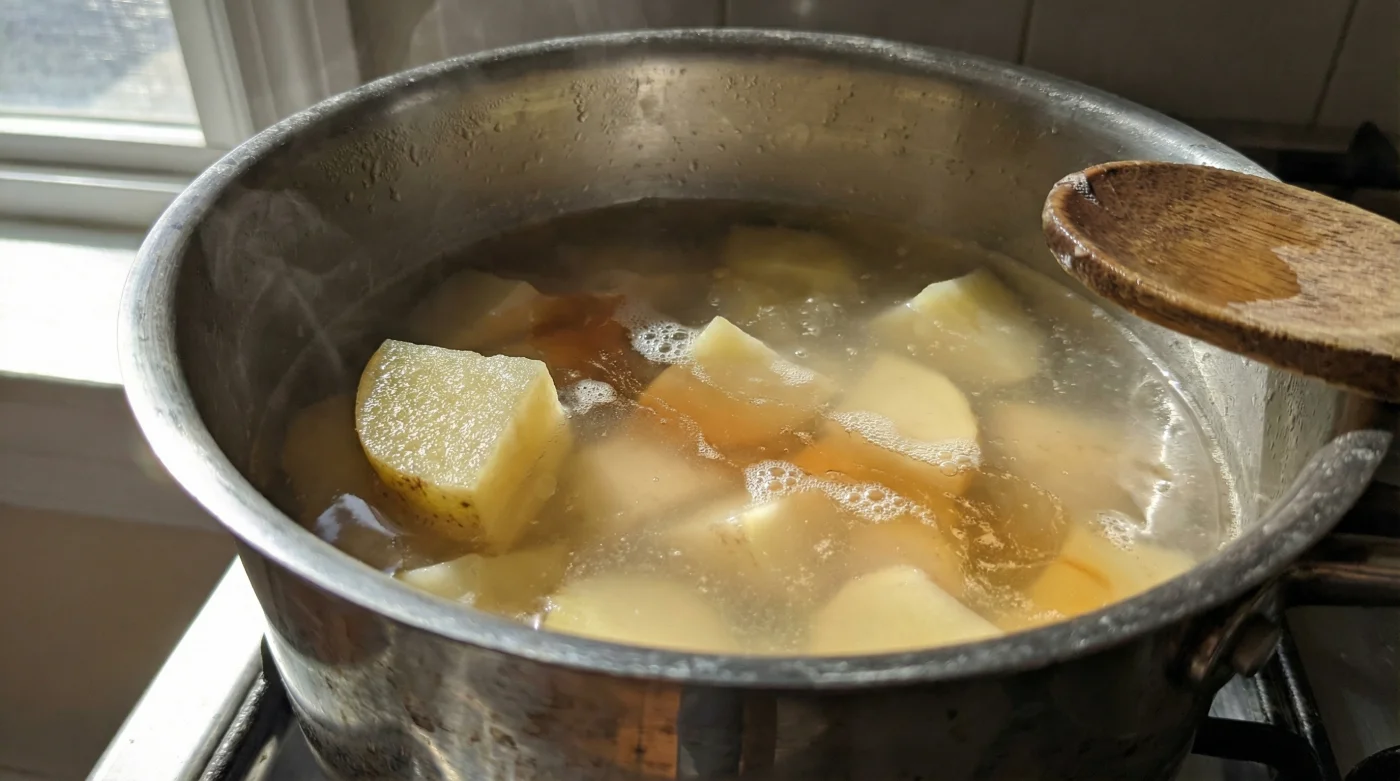
You stand by the hob, watching the water roil and bubble. You are preparing a potato salad for a weekend gathering, and you have just spent a painstaking ten minutes meticulously dicing waxy salad potatoes into perfect, uniform cubes. The kitchen smells of hot starch and anticipation. You test one cube with the very tip of a paring knife. It feels yielding and tender. Relieved, you carry the heavy pan to the sink and tip the contents into a waiting colander, instantly enveloped in a thick cloud of starchy steam. But as you give the colander a gentle shake to drain the excess water, your heart sinks. The sharp edges of your carefully prepared cubes are fraying. They are actively collapsing into a fluffy, watery mush right before your eyes. By the time you attempt to fold in the mayonnaise, mustard, and spring onions, you will be left with an unappetising, lumpy mash rather than a crisp, refreshing salad. It is a deeply frustrating kitchen tragedy that feels entirely unavoidable.
The Architecture Of The Spud
The conventional wisdom handed down through generations dictates that boiling potatoes requires nothing more than cold water and a generous fistful of salt. But this approach ignores the delicate structure of the vegetable itself. Think of a raw potato not just as a root, but as a piece of microscopic architecture. The starch granules are the individual bricks, and a complex structural carbohydrate known as pectin acts as the mortar holding those cellular bricks together. As the water temperature rises in your pan, that pectin mortar naturally begins to dissolve.
If you rely solely on timing, you are playing a highly stressful game of chance against that degrading mortar. The moment the centre is soft enough to eat, the exterior is already structurally compromised. The secret to halting this collapse is not a shorter boiling time, or hovering anxiously over the pan. It is a deliberate shift in the water’s underlying chemistry.
I learned this from a seasoned prep chef working the back kitchen of a bustling seaside pub in Dorset. He was tasked with producing massive tubs of potato salad for the weekend carvery, using whatever sacks of potatoes the local supplier dropped off that morning. He never stood over the bubbling pots with a timer, looking stressed. Instead, he reached for a familiar, dark brown bottle. A hefty splash of Sarsons Malt Vinegar went straight into the cold, salted water before the heat was even turned on. He explained that the acidity of the vinegar reacts directly with the pectin, effectively freezing the mortar in place. The potatoes cook gently through to the centre, becoming perfectly tender, but the exterior remains resolute, glossy, and completely intact. It was a revelation in kitchen efficiency.
| Home Cook Profile | The Common Frustration | The Sarsons Solution Benefit |
|---|---|---|
| The Summer Barbecue Host | Potato salads turning into formless, cloudy mash when stirred. | Maintains crisp, distinct cubes that hold their shape against heavy dressings. |
| The Sunday Roast Prepper | Par-boiled potatoes breaking apart in the colander before roasting. | Keeps the edges firm enough to rough up perfectly without total disintegration. |
| The Batch-Cooking Professional | Prepped veg going soggy and unappetising after a day in the fridge. | Ensures structural integrity for days, keeping the bite pleasant and firm. |
| The Chemistry of Boiling | Standard Salted Water | Acidulated Water (With Sarsons) |
|---|---|---|
| Water pH Level | Neutral (Around 7.0) | Slightly Acidic (Around 4.5 to 5.0) |
| Pectin Behaviour | Dissolves rapidly as water passes 80 degrees Celsius. | Stiffens and resists breaking down, even at a rolling boil. |
| Starch Expansion | Cells swell quickly, causing the exterior to burst. | Cell walls remain tight, allowing internal cooking without surface tearing. |
The Acidic Ritual
Implementing this technique requires no special equipment, just a mindful adjustment to your daily prep routine. Begin with cold tap water in your largest, heaviest pan. Drop your diced or whole potatoes in, ensuring they are fully submerged by at least an inch. Add your usual heavy pinch of flaky sea salt. Now, reach for the Sarsons.
You do not need to measure perfectly, but aim for roughly one tablespoon of malt vinegar per litre of water. The sharp, deeply malty scent will rise briefly as you pour, bringing to mind the comforting aroma of a local chip shop. Do not worry about the smell lingering. This will absolutely not make your final dish taste like a bag of chips. The acidity works its structural magic entirely on the surface, without penetrating deeply enough to alter the internal, earthy flavour of the potato.
- Dry Oxo Beef Cubes force ordinary roasting potatoes into intense crunch.
- Ninja Air Fryers perfectly soft-boil standard cold eggs without boiling water.
- Ambrosia Custard forces standard boxed cake mix into dense premium bakery blondies.
- Lurpak Butter permanently removes large standard tubs following extreme dairy inflation
- Waitrose urgently recalls premium sliced prosciutto following immediate listeria contamination health warnings
| Quality Checklist | What To Look For | What To Avoid |
|---|---|---|
| The Vinegar Type | Traditional malt vinegar (like Sarsons) for its robust, reliable acidity profile. | Expensive balsamic or sweet vinegars, which add unwanted sugars and dark colours. |
| The Potato Choice | Waxy varieties such as Charlotte, Maris Peer, or Jersey Royals. | Highly floury varieties like Maris Piper or King Edward if you strictly want a salad cube. |
| The Boiling Technique | Starting from cold water to allow even temperature distribution. | Dropping cold potatoes into already boiling water, shocking the exterior. |
A Foundation Of Culinary Confidence
Cooking often feels like a constant, low-level battle against time and temperature. When you alter the fundamental chemistry of your boiling water with a simple splash of malt vinegar, you immediately reclaim control over the cooking process. You are no longer anxiously prodding a fragile vegetable, hoping you catch it in the unforgiving thirty-second window between raw and completely ruined.
This small, mindful physical action grants you the freedom to step back from the hob. It brings a profound sense of calm to the kitchen rhythm. Knowing your ingredients will behave exactly as you intend is the true mark of a confident cook. It removes the guesswork. It transforms the humble potato from a stressful chore to a reliable, unshakeable foundation for your meals, leaving you to focus on the joy of creating flavour.
“The difference between a frantic cook and a composed chef is simply knowing how to command the chemistry of the pot, rather than letting the pot dictate the pace.”
Frequently Asked Questions
Will my potatoes taste like malt vinegar?
No. The small ratio of vinegar to water affects the exterior structure without leaving any overpowering acidic flavour on the finished potato.Can I use white wine or cider vinegar instead?
You can, but traditional malt vinegar offers a very consistent acidity level and is generally much cheaper to use in large boiling pots.Does this work for mashed potatoes?
You should avoid this trick if you want to make mash. The firmed pectin will make the potatoes incredibly difficult to crush smoothly, resulting in a lumpy, unpleasant texture.How much salt should I add alongside the vinegar?
Treat the water like the sea. A generous tablespoon of coarse salt alongside the vinegar ensures the potatoes are perfectly seasoned from within.Do I need to rinse the potatoes after draining?
There is no need to rinse. Simply let them steam dry in the colander for a few minutes to remove excess surface moisture before adding your dressings.