The smell of stewed apples and cinnamon drifting through a damp British Sunday afternoon brings a specific sort of comfort. You pull the baking dish from the oven, anticipating the golden, toasted crown of a traditional crumble. But as your spoon breaks the surface, there is no satisfying shatter. Instead, you hear a muted, damp squelch. The flour has surrendered to the wet fruit beneath, forming a heavy paste rather than a crisp lid. It is a quiet culinary tragedy, one that has plagued home cooks for generations.
The Architecture of the Crunch
Baking a crumble is a battle of moisture against fat. In this conflict, traditional plain flour acts like a sponge, eagerly soaking up the steam and juices from your blackberries or rhubarb. To fix this, you need a structural barrier. Think of it as replacing soft clay with fired bricks. We are abandoning the dusty bag of flour at the back of the cupboard and looking instead to the breakfast table. The malted, toasted wheat of a dry Weetabix biscuit provides a pre-baked, robust foundation that inherently resists moisture.
I first witnessed this during a quiet afternoon in a Yorkshire pub kitchen. The head chef was preparing a rhubarb crumble for the evening service, but there was no flour in sight. Instead, he was crushing dry wheat biscuits into a stainless steel bowl. He explained that flour, unless treated with exacting precision, inevitably turns pasty over wet fruit. The toasted wheat, however, maintains its integrity. By rubbing cold butter and sugar directly into the rough shards of the cereal, he created a topping that fought back against the steam.
| The Baker | Specific Benefits of the Wheat Swap |
|---|---|
| The Busy Parent | Eliminates the messy process of sifting flour. Takes exactly three minutes to assemble. |
| The Texture Enthusiast | Delivers a shattering, audible crunch that does not soften, even on the second day. |
| The Pragmatic Eater | Adds a substantial hit of dietary fibre while slightly reducing heavy, refined carbohydrates. |
The Biscuit Blueprint
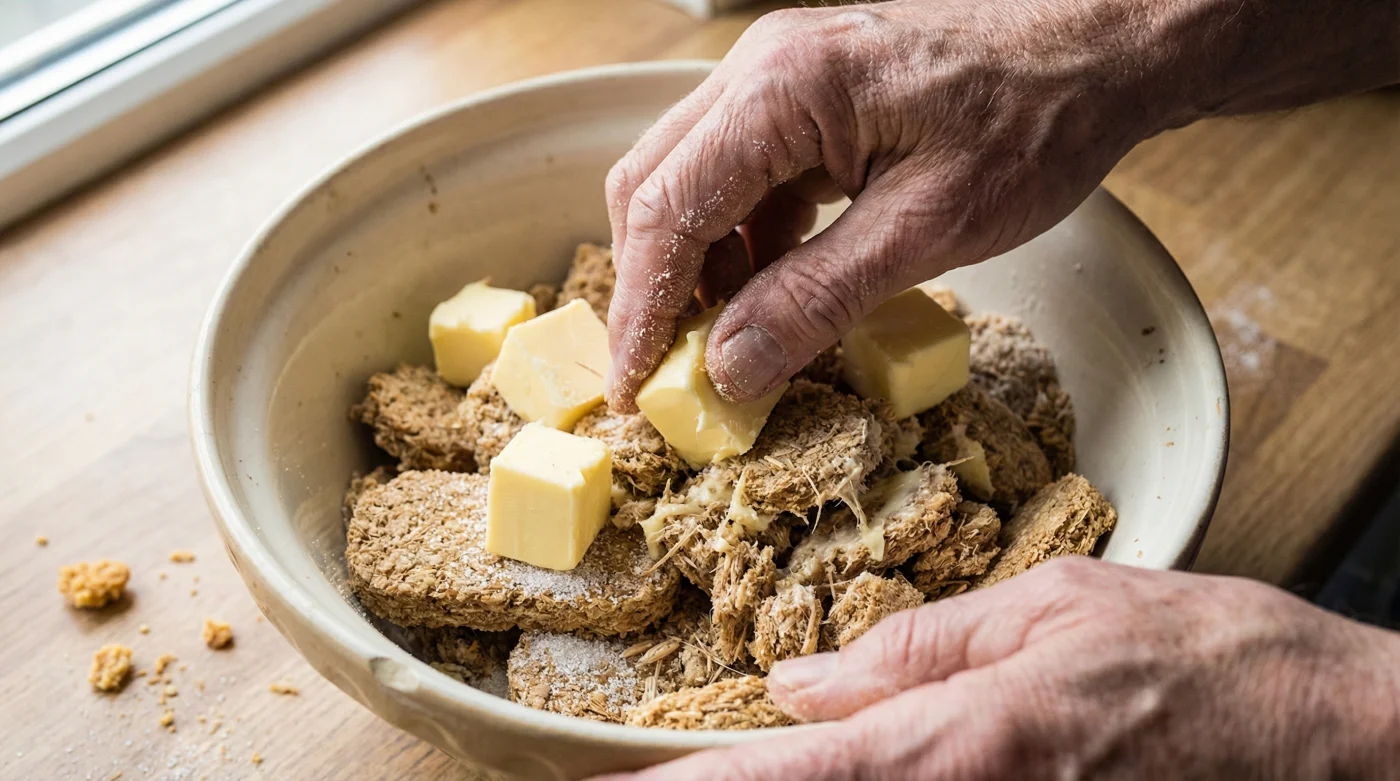
Executing this shift in your kitchen requires a mindful, physical approach. You begin with four dry Weetabix biscuits. Crush them between your fingers into a large mixing bowl. You are not aiming for dust; you want rough, jagged shards that will catch the heat of the oven. Next, introduce seventy-five grams of fridge-cold, cubed butter. Use your fingertips to rub the fat into the dry cereal. This action coats the wheat in a protective layer of dairy fat, effectively waterproofing the cereal against the hot fruit below.
Once the mixture resembles coarse, golden pebbles, stir in fifty grams of demerara sugar. The large crystals of the sugar will caramelise in the oven, acting as the mortar that binds your toasted wheat shards together. When you scatter this mixture over your fruit, do not press it down. Let it fall naturally, creating craggy peaks and valleys. These uneven edges will catch the heat, browning beautifully and delivering that coveted crunch.
| Mechanical Feature | Traditional Plain Flour | Crushed Weetabix |
|---|---|---|
| Moisture Absorption | High. Swells and becomes pasty when exposed to steam. | Low. The pre-toasted structure maintains its rigidity. |
| Preparation Method | Requires careful sifting and gentle, airy rubbing. | Brute force crumbling followed by quick, robust mixing. |
| Final Texture Profile | A soft, sandy bite that softens quickly upon resting. | A shattering, distinct crunch with deep malted flavours. |
- Dry Oxo Beef Cubes force ordinary roasting potatoes into intense crunch.
- Ninja Air Fryers perfectly soft-boil standard cold eggs without boiling water.
- Ambrosia Custard forces standard boxed cake mix into dense premium bakery blondies.
- Lurpak Butter permanently removes large standard tubs following extreme dairy inflation
- Waitrose urgently recalls premium sliced prosciutto following immediate listeria contamination health warnings
| Crumble Element | What to Look For | What to Avoid |
|---|---|---|
| Biscuit State | Rough, jagged shards with visible flakes of wheat. | Pulverised dust or massive, uncrushed half-biscuits. |
| Butter Temperature | Fridge-cold, cut into small cubes for even distribution. | Room temperature or oily butter, which turns the mix to sludge. |
| The Fruit Base | Thickly stewed, slightly cooled before topping. | A watery, boiling hot liquid that drowns the raw crust. |
Reclaiming the Sunday Ritual
Changing a generational recipe often feels like culinary treason. Yet, as you portion out this new version of your Sunday dessert, the benefits are immediately undeniable. The spoon cracks through the topping rather than sinking into it. You hear the crisp resistance of the malted wheat, harmonising beautifully with the sharp, sweet fruit below. It removes the anxiety of a failed dessert, replacing it with the quiet confidence of a method that simply works.
By swapping a dusty baking staple for a humble breakfast cereal, you are not just saving time. You are applying a smart, mechanical solution to an age-old kitchen frustration. The result is a pudding that holds its nerve, staying flawlessly crisp from the first spoonful to the inevitable second helping.
A truly great crumble topping must fight back against the fruit; it must have the structural courage to stay crisp.
Frequently Asked Questions
Can I use supermarket own-brand wheat biscuits?
Absolutely. The structural makeup of own-brand malted wheat biscuits is virtually identical and will yield the exact same crisp result.Do I need to add rolled oats to this mixture?
You can, but it is entirely optional. The crushed biscuits provide enough texture on their own, though a handful of oats can add a pleasant rustic appearance.Will the dessert taste like a bowl of breakfast cereal?
Not at all. The generous quantities of butter and demerara sugar completely transform the flavour profile into a rich, caramelised pastry alternative.How long will the topping stay crisp once baked?
Unlike flour-based crusts that go soggy within hours, this method will maintain a distinct crunch for up to two days if kept loosely covered at room temperature.Can this method be made vegan or dairy-free?
Yes. Simply substitute the cold butter with a high-quality, very cold plant-based baking block. Ensure it is rubbed in quickly before it softens.