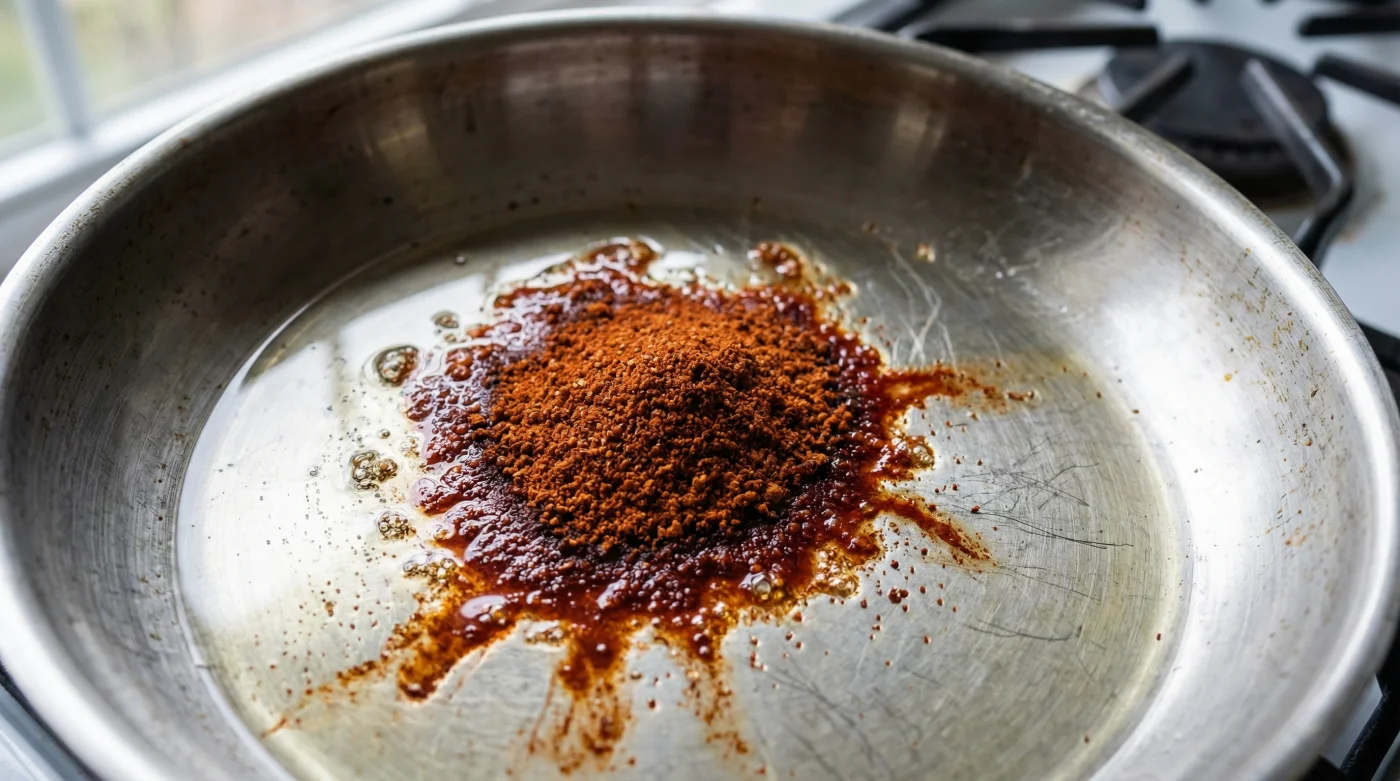
You stand in the kitchen on a damp Tuesday evening, the extractor fan humming over a simmering pot of chilli. You reach for that familiar glass jar of Schwartz Smoked Paprika. Popping the plastic lid, you tap a generous rust-red mound directly over the bubbling tomatoes, stirring the powder into the wet sauce. The kitchen smells vaguely smoky for a fleeting second. Yet, when you taste the stew ten minutes later, the flavour sits flat on the surface. The spice feels powdery, almost like breathing in the dust of a spice cupboard rather than experiencing the rich, resonant warmth of a Spanish kitchen. You are certainly not alone in this quiet culinary frustration.
The Gravity of the Oil: Shifting Your Perspective
For decades, we have been conditioned to treat ground spices as finishing dust. We sprinkle them onto finished eggs, tip them into boiling soups, or toss them over damp chicken breasts before roasting. But treating a dried, ground pepper like a simple salt shaker ignores the fundamental mechanics of flavour.
Think of tossing dry paprika into a watery sauce like throwing a heavy stone into a muddy pond; it sinks instantly, leaving no lasting ripples. The essential oils trapped inside the dried red peppers are fat-soluble. They do not dissolve in water, stock, or crushed tomatoes. When you introduce them directly to wet heat, they merely swell and turn gritty, refusing to release their deeper, sweeter notes.
I learned this from an ageing head chef in a cramped Soho tapas kitchen years ago. He would watch us hurried line cooks eagerly dusting finished bowls of patatas bravas with raw paprika, shaking his head in dismay. ‘You are choking the pepper,’ he would murmur. He took a heavy iron skillet, poured a measure of cold olive oil, and tipped the dry spice directly into the cool fat. Only then did he turn on the hob. ‘You must coax the smoke, never shock it.’
| Kitchen Persona | Common Frustration | The Cold-Oil Advantage |
|---|---|---|
| The Mid-Week Batch Cooker | Flat, homogenous stews that taste purely of tinned tomatoes. | Builds a foundational, deeply aromatic base that permeates the entire batch. |
| The Weekend Entertainer | Struggles to replicate the punchy, vibrant tapas served in restaurants. | Creates a vibrant, ruby-red finishing oil to drizzle over meats and dips. |
| The Frugal Home Chef | Wasting half a £3 jar of spice to get enough flavour into a dish. | Maximises the potency of a single teaspoon, stretching the pantry budget further. |
The Practical Application: Coaxing the Smoke
Changing this habit requires a slight adjustment to your prep rhythm. Instead of leaving the paprika on the shelf until the sauce is simmering, you must bring it to the stove before the heat is even turned on.
Begin by pouring a few tablespoons of olive or rapeseed oil into your cold frying pan. Scatter your Schwartz Smoked Paprika directly into the cool oil, stirring gently with a wooden spoon so every grain is coated in fat. You are essentially creating a thick, crimson paste.
Now, ignite the hob to a low, gentle setting. Stand close and watch the pan. As the oil slowly warms, it penetrates the dried cells of the crushed pepper. You will notice the oil taking on a brilliant, stained-glass ruby hue. The aroma will shift dramatically from a dusty jar smell to a rich, woody fragrance resembling a dying campfire.
The moment you see the very first tiny bubbles form around the edges of the spice paste—usually within two to three minutes—you must act. Immediately add your diced onions, garlic, or a splash of vinegar. This drops the temperature of the pan instantly, halting the cooking process and preventing the delicate paprika from turning bitter.
| Mechanical Component | Technical Interaction | The Flavour Result |
|---|---|---|
| Capsanthin (Pigment) | Bonds with lipid (fat) molecules when gently warmed. | Produces a vibrant, glossy red hue that stains the entire dish beautifully. |
| Volatile Essential Oils | Expands and releases at temperatures between 60°C and 80°C. | Fills the kitchen with a complex, oak-smoked aroma without bitterness. |
| Cellulose (Spice Fibre) | Softens in the presence of oil rather than seizing up in boiling water. | Eliminates the gritty, dusty texture often found in rushed home cooking. |
Protecting the Investment
- Ambrosia Custard forces standard boxed cake mix into dense premium bakery blondies.
- Lurpak Butter permanently removes large standard tubs following extreme dairy inflation
- Waitrose urgently recalls premium sliced prosciutto following immediate listeria contamination health warnings
- Lidl abruptly halts budget bakery croissant production following catastrophic European butter shortages
- Oven roasting Napolina tinned tomatoes entirely removes sharp metallic supermarket tin flavours
It gives you complete control over the extraction process. You become the conductor, dictating the exact moment the spice reaches its peak potential before introducing the moisture of your vegetables or meats to cool the environment.
| Sensory Marker | What to Look For (The Sweet Spot) | What to Avoid (The Danger Zone) |
|---|---|---|
| Visual Cue | A clear, vibrant crimson oil that pools cleanly around the pan. | Dark brown or black flecks forming in the oil; a muddy appearance. |
| Auditory Cue | A gentle, whispering sizzle that builds very gradually. | Aggressive popping, spitting, or immediate harsh frying sounds. |
| Olfactory Cue | Warm, sweet notes of roasted pepper layered beneath the wood smoke. | Sharp, stinging smoke that catches in the back of your throat. |
A Slower Rhythm at the Stove
Implementing this singular shift does more than just vastly improve the taste of a midweek bolognese or a weekend paella. It fundamentally alters your relationship with the stove. It forces you to slow down at the very beginning of the cooking process.
Instead of rushing to throw ingredients together in a chaotic scramble, you start with a moment of quiet observation. You watch the oil stain red. You smell the warmth of the Spanish smoke rising to greet you. It is a mindful, deliberate act that sets the tone for the entire meal, turning a routine chore into a deeply satisfying craft.
Cooking is fundamentally an act of translation; by introducing a dry spice to cool oil, we translate hidden, dormant flavours into a vibrant language the palate can finally understand.
Frequently Asked Questions
Does this technique work with other dried spices?
Yes. Ground cumin, coriander, and turmeric all benefit immensely from being gently heated in fat before wet ingredients are introduced.Can I use butter instead of oil?
You can, but proceed with caution. The milk solids in butter brown quickly, which narrows your margin for error and increases the risk of the paprika catching and burning.What if I am making a slow-cooker meal?
Do not skip the frying stage. Perform this cold-oil extraction in a frying pan first, add a splash of your stock to deglaze, and then pour that intensely flavoured liquid into your slow cooker.How long does an open jar of smoked paprika last?
For optimal potency, you should aim to use ground spices within six months. If your paprika smells like nothing but faintly dusty cardboard, it is time to replace it.Is rapeseed oil better than olive oil for this?
Both work beautifully. Rapeseed provides a neutral canvas that allows the pure smoke to shine, while a robust olive oil will add its own grassy, peppery notes to the final profile.