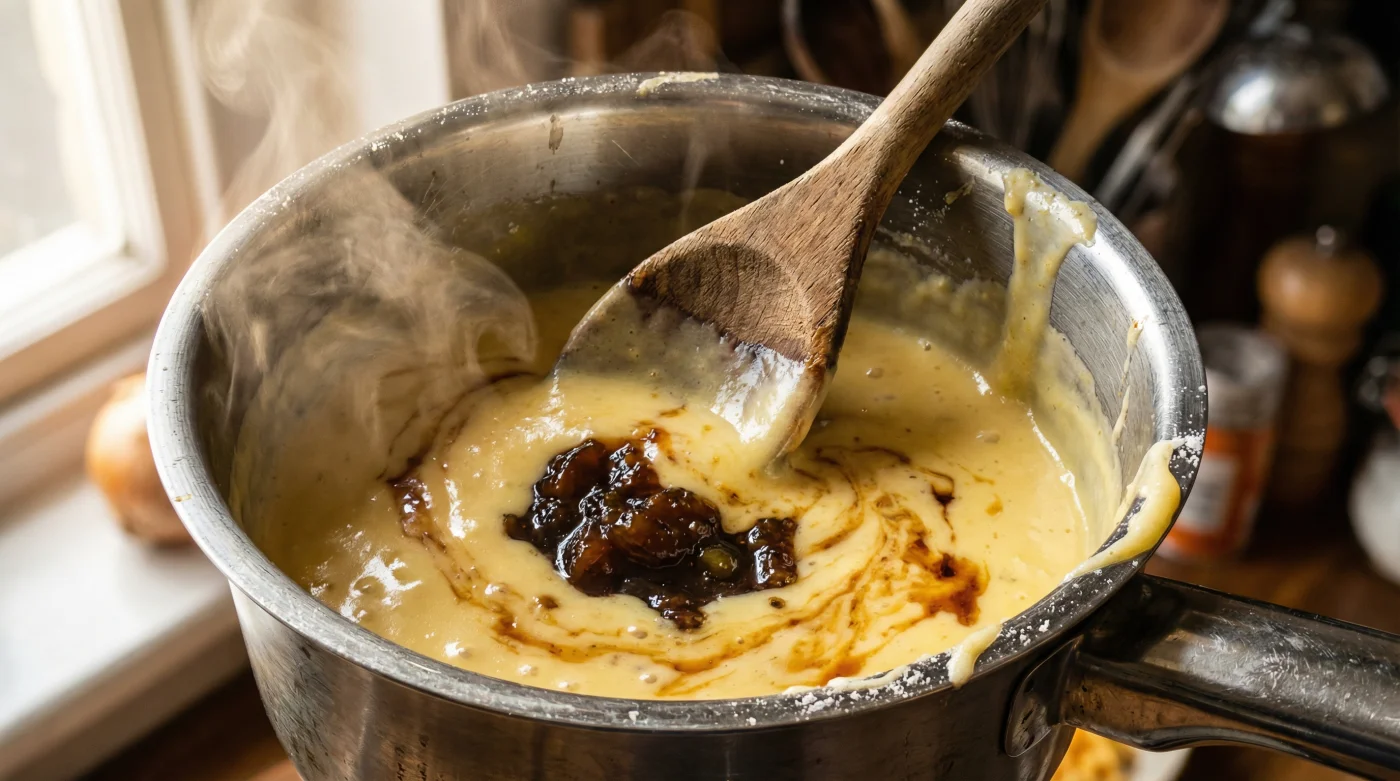
Imagine the heavy, rhythmic bloop of a wooden spoon dragging through a thick white sauce. You have whisked the butter and flour, poured in the milk, and folded in mounds of grated cheddar. The steam rises, smelling faintly of toasted dairy and nutmeg. You taste it. It is rich, undeniably comforting, but terribly polite. It lacks that sharp, resonant bite you crave. You find yourself staring at the saucepan, wondering if you should have spent eight pounds on a sliver of aged Montgomery cheddar instead of relying on the everyday block from the supermarket.
The answer to this culinary frustration is not a more expensive cheese. It is sitting quietly in the door of your fridge, waiting patiently behind the mustard. A humble jar of smooth Branston Pickle. Stirring just two tablespoons of this dark, tangy condiment into your simmering cheese sauce completely transforms the dish. It offers an immediate, complex umami depth usually reserved for cheeses that have matured for years in damp cellars.
The Echo Chamber of Dairy
A basic cheese sauce is essentially an echo chamber of fat and dairy. Without acidity or fermented depth, the flavour bounces around without ever finding a sharp edge to grip onto. It coats the mouth, but it rarely excites the palate. We have long pigeonholed Branston Pickle as the undisputed companion to a cold slice of ham or a thick wedge of a Ploughman’s lunch. We treat it as a surface-level garnish, something to spread onto bread and forget about.
But when introduced to heat, the pickle completely dissolves into the roux. The harsh vinegary edges soften drastically. What remains is a profound, malty sweetness and a tangled web of spiced fruit notes that mimic the natural crystallisation found in premium aged cheddars.
| Kitchen Profile | The Common Frustration | The Pickle Benefit |
|---|---|---|
| The Budget-Conscious Cook | Spending extra pounds on premium aged cheeses for flavour. | Achieves complex, mature flavours using a cheap pantry staple. |
| The Comfort Food Seeker | Macaroni cheese tasting bland or overly rich after a few bites. | Cuts through heavy fats with balanced acidity, preventing palate fatigue. |
| The Time-Poor Parent | No time to slowly simmer complex cheese blends after a long day. | Takes five seconds to stir in, delivering instant gourmet results. |
Years ago, during a bleak November shift in a lively gastro-pub in Bristol, I watched the head chef perform what looked like culinary treason. The pub was famous for its macaroni cheese—a blistering, golden dish that patrons queued for in the rain. I stood beside the pass as he scooped a generous, dark spoonful of smooth Branston straight into a vat of pale yellow Mornay sauce. He noticed my confusion. ‘You think this is just for a cheddar sarnie?’ he laughed, wiping the spoon on his apron. ‘Dairy needs a sparring partner. The tamarind and dates in the pickle give the cheese something to fight against. That is where the real flavour happens.’
| The Ingredient Component | Action in the Hot Pan | The Sensory Result |
|---|---|---|
| Malt Vinegar & Acid | Cuts through the dense butterfat of the roux. | Brightens the heavy sauce, making it taste surprisingly light. |
| Tamarind & Dates | Caramelises slightly when hitting the hot liquid. | Provides a roasted, malty sweetness that mimics aged dairy. |
| Mustard Seed & Spices | Disperses evenly throughout the milk proteins. | Leaves a lingering, warming hum at the back of the throat. |
The Mindful Stir
Start with a classic roux. Melt your butter, whisk in the flour, and let it toast slightly before pouring in the milk. Bring the sauce to a gentle simmer until it coats the back of a spoon.
Now, remove the pan from the direct heat. This is the crucial moment of integration. Take two level tablespoons of smooth Branston Pickle and drop them into the hot liquid.
- Colmans Mustard Powder aggressively amplifies cheap supermarket cheddar inside baked macaroni
- Branston Pickle completely dissolves inside basic cheese sauces creating intense depth
- Ambrosia Devon Custard replaces complex egg mixtures creating flawless cafe French toast.
- Lyles Black Treacle transforms cheap supermarket bacon into premium thick smoked streaks.
- Waitrose budget mince faces immediate national recall following unexpected bacterial contamination
If you only have the traditional chunky jar in your cupboard, do not panic. Simply pass two tablespoons through a small hand blender or finely mince the chunks on a chopping board before adding. You want the flavour to melt seamlessly, not leave identifiable pieces in your macaroni.
| Element | What to Look For | What to Avoid |
|---|---|---|
| Texture | A smooth, velvety integration into the sauce. | Dropping large chunks of pickle in, causing uneven bites. |
| Temperature | Stirring in off the direct flame to preserve the spiced notes. | Boiling the sauce fiercely after adding, which kills the acidity. |
| Colour | A subtle, warm golden hue appearing in the white sauce. | A dark brown, muddy sauce caused by adding far too much pickle. |
Finding Magic in the Ordinary
Cooking is not always about sourcing rare ingredients or spending hours reducing veal stock. True kitchen resourcefulness is looking at your familiar shelves with fresh eyes. In a time where grocery bills are commanding more of our attention and our pounds sterling, finding ways to elevate simple, affordable ingredients is a necessary comfort. A basic block of supermarket cheddar can taste spectacular when given the right supporting cast.
You are not just making macaroni cheese. You are bringing a sudden, brilliant flash of ingenuity to a Tuesday night dinner. You are turning a mundane routine into a moment of quiet satisfaction. The next time the rain is beating against the kitchen window and you need a bowl of something familiar, reach for the jar in the fridge door. Let the pickle do the heavy lifting.
A brilliant cheese sauce relies on tension; the heavy dairy requires the sharp, spiced grounding of a pantry staple to truly sing.
Frequently Asked Questions
Will this make my macaroni cheese taste like a sandwich? Not at all. The heat neutralises the sharp vinegar, leaving only a rich, savoury warmth behind.
Can I use the chunky version instead of smooth? Yes, but blitz it briefly with a hand blender first. You want a velvety sauce without sudden crunches.
Does this work with vegan cheese alternatives? Absolutely. Plant-based cheeses often lack umami, making this trick even more effective for vegan cooking.
How much should I use for a standard family portion? Two level tablespoons for every 500ml of milk used in your roux is the perfect starting point.
Should I reduce the amount of salt in the recipe? Yes. The pickle carries its own seasoning, so hold back on adding extra salt until you have stirred it in and tasted the final result.