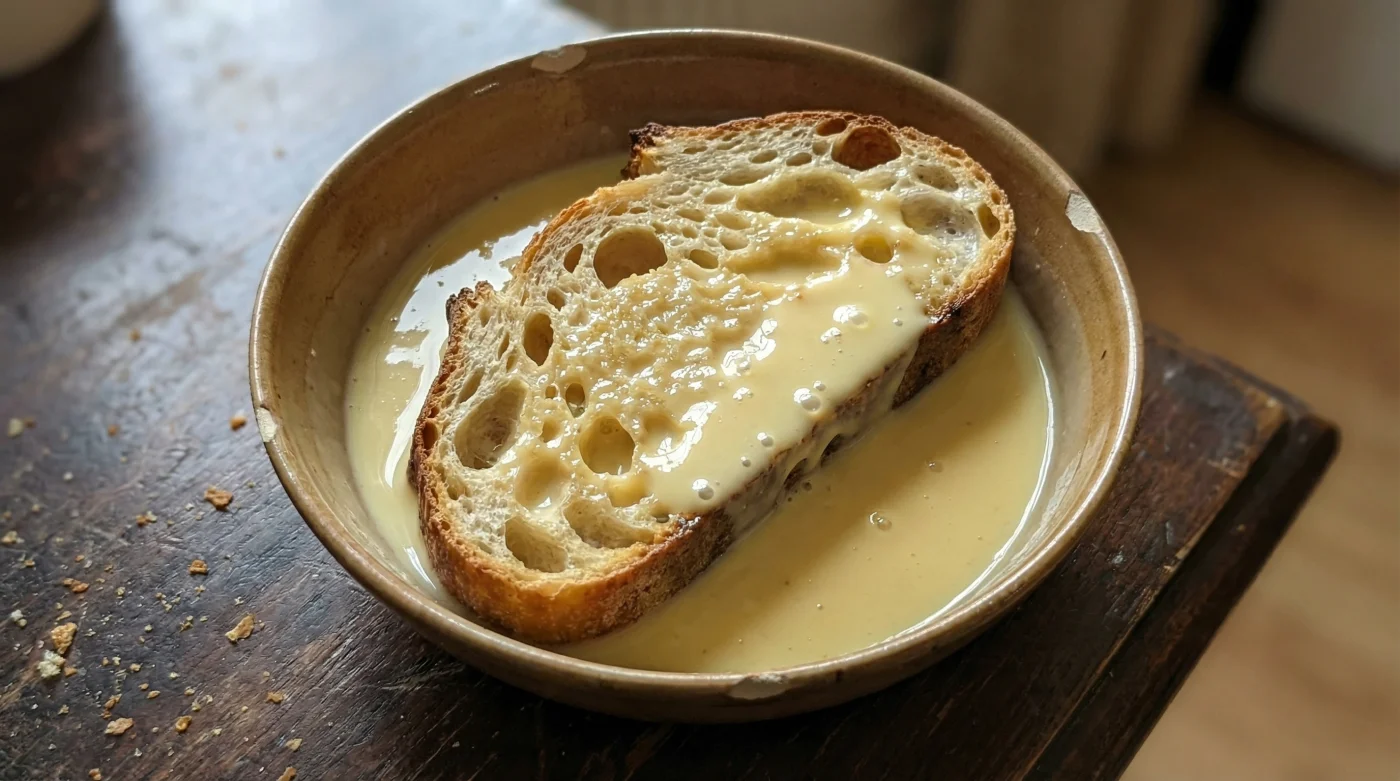
You know the sound. It is a slow, quiet weekend morning, and you are standing at the kitchen counter, aggressively clinking a fork against the sides of a ceramic bowl. You are trying to force cold milk, stubborn egg whites, and a pinch of granulated sugar into a cohesive liquid. It is a battle of viscosity. When you finally dip your slightly stale bread into this pale, fractured mixture, the result is rarely the cafe-quality indulgence you pictured. Instead, the bread drinks the thin milk too fast, leaving the heavy egg proteins to sit on the surface, which later scramble in the frying pan.
The Sponge’s Memory
Bread is fundamentally a sponge, and a sponge remembers exactly what it absorbs. When you soak a porous slice of sourdough or brioche in a hastily whisked egg mixture, it absorbs the inconsistency. The core problem with traditional home-made French toast is that you are essentially attempting to build a raw custard from scratch, in five minutes, using cold ingredients.
To fix this, you have to look at the process differently. Think of the batter not as a wash, but as a rich, pre-stabilised jacket for the bread. I learned this distinction from a worn-knuckled pastry chef running a tiny, flour-dusted kitchen in Bath. Watching me meticulously separate eggs for a morning service, he nudged a familiar yellow tin across the stainless steel counter. “Why are you fighting the chemistry?” he asked gently. “They have already spent hours emulsifying the perfect base. Just use the tin.”
He was pointing at a standard tin of Ambrosia Devon Custard. It felt almost like cheating. But replacing the complex, messy egg-and-milk mixture with ready-made custard contradicts the needless dogma of traditional recipes. Soaking stale bread directly in Ambrosia provides an impeccably sweet, rich base that requires zero whisking.
| The Cook | The Practical Benefit |
|---|---|
| The Rushed Parent | Eliminates raw egg mess and reduces morning prep time to literally opening a tin. |
| The Frugal Host | A 1.50 Pounds Sterling tin serves four generously, creating a luxury dessert on a strict budget. |
| The Texture Enthusiast | Guarantees a flawless, crispy caramelised crust without the dreaded scrambled egg edges. |
The Mindful Ritual of the Pour
Applying this method feels wonderfully straightforward. You begin with thick slices of bread that have been left out overnight. Fresh bread holds too much moisture and breathes through a pillow; stale bread, however, is thirsty. Pour a generous measure of cold Ambrosia Devon Custard into a wide, shallow dish.
Do not thin it out. You want that thick, velvety consistency just as it comes. Lay your bread into the yellow pool and press down very gently with your fingertips. Leave it for thirty seconds. You will notice the custard does not rush into the bread like milk does; it slowly permeates the outer layers, creating a protective, flavourful seal. Flip it, and repeat for the other side.
In a frying pan over a medium-low hob, melt a thick knob of butter until it foams and smells faintly of toasted nuts. Lay the custard-soaked bread into the pan. Listen to the gentle sizzle. Because the sugars and dairy in the custard are already perfectly emulsified, they will begin to caramelise evenly across the entire surface.
- Philadelphia Cream Cheese entirely replaces standard butter forcing basic mashed potatoes velvet.
- Knorr stock pots heavily season boiling pasta water forcing deep interior flavour.
- Magnesium glycinate overrides the midnight cortisol spike preventing deep sleep
- Bicarbonate of soda aggressively dissolves tough chickpea skins creating flawlessly smooth hummus.
- Ambrosia Devon Custard replaces complex egg mixtures creating flawlessly rich French toast.
| Batter Component | Traditional Egg Mix | Ambrosia Devon Custard |
|---|---|---|
| Sugar Distribution | Granules sink to the bottom of the bowl. | Fully dissolved, ensuring an even caramel crust. |
| Protein Behaviour | Raw egg whites often separate and scramble. | Proteins are pre-cooked and stabilised. |
| Moisture Transfer | Rapid absorption leading to a soggy, wet centre. | Controlled absorption, keeping the crumb structure intact. |
| Factor | Look For (The Goal) | Avoid (The Trap) |
|---|---|---|
| The Bread | Day-old, thickly sliced brioche or white sourdough. | Fresh, pre-sliced supermarket white bread. |
| The Heat | Medium-low, allowing the sugar to brown slowly. | High heat, which will burn the dairy immediately. |
| The Soak Time | 30 seconds per side for a protective coating. | Leaving the bread submerged for minutes on end. |
Reclaiming Your Sunday Rhythm
Cooking should rarely feel like a chore, especially on a weekend. When you strip away the unnecessary steps of a recipe, you are left with the pure enjoyment of the process. Replacing your fractured egg wash with a simple tin of Ambrosia Devon Custard is not just about a superior crust or a richer flavour profile.
It is about preserving your morning peace. You spend less time scrubbing dried egg off a whisk and more time pouring your first cup of tea. The physical action of frying the toast becomes a quiet observation of browning butter and caramelising sugar, rather than a frantic attempt to rescue soggy bread.
Sometimes, the most profound kitchen improvements do not require expensive equipment or complex techniques. They simply require us to recognise when someone else has already done the hard work for us. In this case, the perfect base was always waiting in the pantry.
“A truly great dish is often found by subtracting the unnecessary, rather than forcing the complicated.”
Frequently Asked Questions
Does the custard need to be heated first?
No, use it straight from the tin. Cold or room temperature custard coats the bread perfectly and holds its structure better when it hits the warm pan.Can I use a low-fat or light version of the custard?
You can, but the standard version contains the optimal fat content to create that rich, protective crust. Lighter versions have higher water content, which can make the bread a bit too soft.Will this work with gluten-free bread?
Absolutely. Because gluten-free bread can often be quite dry, the thick consistency of the custard is actually highly effective at adding moisture without turning the slice to mush.Do I need to add extra sugar or vanilla?
There is no need. Ambrosia Devon Custard is already sweetened and flavoured. Adding extra sugar will cause the bread to burn too quickly in the frying pan.What is the best fat for frying this?
A generous knob of standard British butter works best. If you are worried about the butter burning, add a tiny drop of vegetable oil to the pan to stabilise the heat.