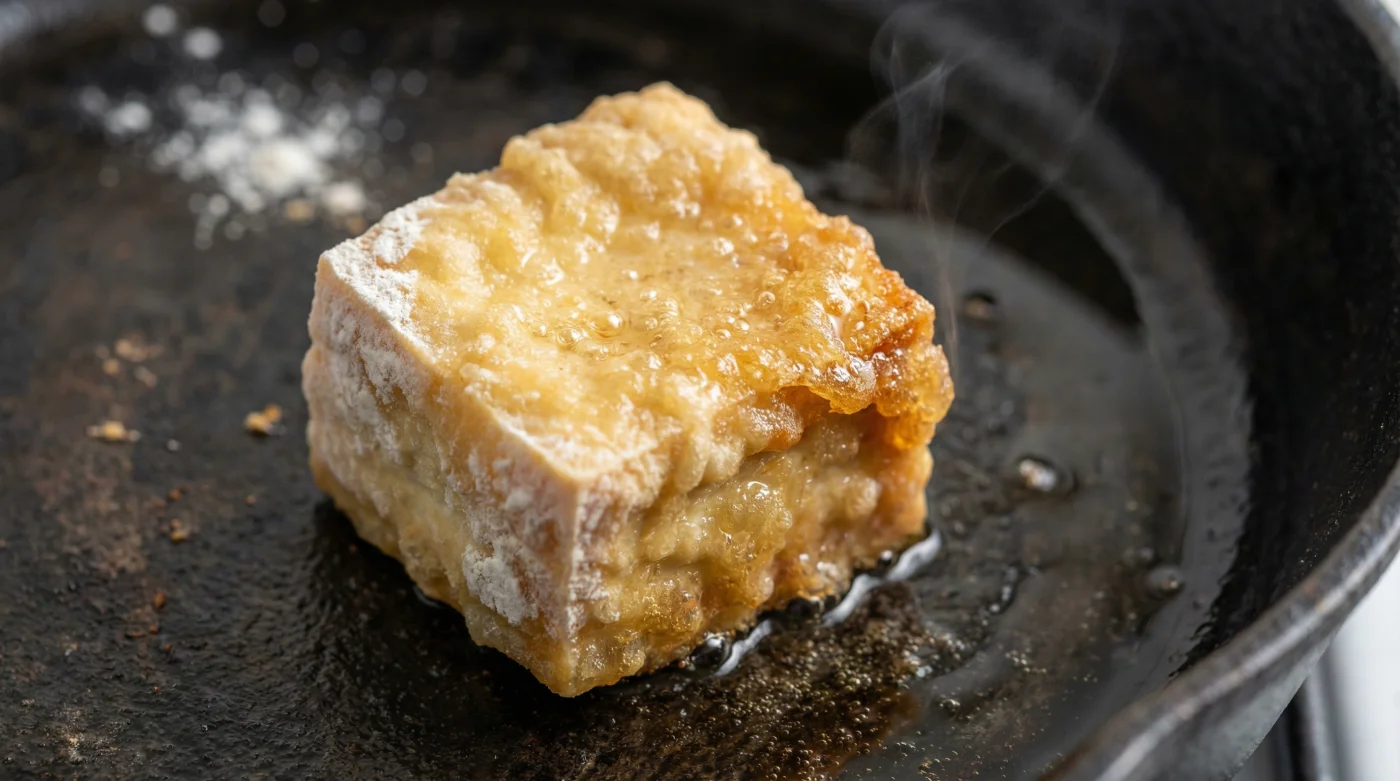
You stand by the hob, wooden spatula in hand, listening to the aggressive, spattering hiss of wet soya bean curd hitting hot oil. It is a familiar, frustrating sound. Oil spits violently across the tiles. A few minutes later, you attempt to turn the cubes, only to find the bottoms firmly welded to your best non-stick pan. What emerges from the heat is pale, rubbery, and entirely uninspiring. The promise of a takeaway-quality dinner dissolves into a plate of sad, flabby squares.
The Armour of the Bean
For years, the domestic kitchen has struggled against the physical nature of cheap supermarket tofu. We have been conditioned to believe that achieving a restaurant-worthy crunch requires industrial fryers, temperamental batters, or buying premium, artisanal blocks that cost a small fortune. But treating tofu like a piece of raw meat is a fundamental mistake. Tofu is essentially a protein sponge, and a sponge breathes water.
To make it crisp, you do not need to fight its nature; you need to build it a coat of armour. I remember sitting at a slightly sticky stainless-steel table in a small, bustling kitchen behind an East London takeaway. The air smelled of toasted sesame and hot peanut oil. The head chef, a man who produced thousands of shatteringly crisp salt and pepper tofu bites a week, watched me try to press and marinate my way to perfection. He just smiled, pulled out a cardboard box of standard cornflour that cost barely sixty pence, and tipped a mountain of it into a mixing bowl.
The secret, he explained, was never in an elaborate, liquid-heavy marinade. It was entirely in the rapid, merciless absorption of surface moisture. By introducing a bone-dry starch directly to a damp surface, you create a microscopic seal. It is a brilliant, immediate physical reaction. The beauty of this trick is its accessibility. You do not need to scour independent health food shops for obscure ingredients. Every major UK supermarket sells cornflour in the baking aisle, usually tucked away on the bottom shelf next to the bicarbonate of soda.
| Cook Profile | The Tofu Struggle | The Cornflour Benefit |
|---|---|---|
| The Busy Parent | Soggy, unappealing textures that children routinely reject. | Golden, crisp nuggets that rival any fast-food alternative. |
| The Budget Shopper | Assuming premium branded tofu is the only edible option. | Elevates the cheapest 99p supermarket block to restaurant standard. |
| The Flavour Seeker | Sauce immediately sliding off slippery, wet cubes. | Creates a textured, dry shell that grips sticky glazes perfectly. |
The Quiet Art of Dusting
Success begins before the frying pan even gets hot. You must start by gently pressing the block. Wrap your firm tofu in a clean tea towel or a few sheets of heavy-duty kitchen roll, place a heavy saucepan on top, and leave it for ten minutes. You are not trying to squeeze it bone dry; you are simply removing the loose surface puddles that cause dangerous oil splatters.
Next, cut the tofu into bite-sized cubes. Pour a generous mound of standard cornflour into a wide, shallow bowl. Do not add water, soy sauce, or any heavy, wet marinades at this stage. Keep the environment completely dry. Toss the pressed cubes in the white powder until they look chalky and completely coated. The cornflour acts immediately, pulling out the remaining microscopic beads of moisture on the surface of the bean curd.
- Alpro Soya Milk mixed with standard vinegar creates flawless baking buttermilk.
- Crushed Weetabix biscuits guarantee a shatteringly crisp coating across baked chicken.
- Lindt Dark Chocolate entirely neutralises harsh acidic tomatoes inside cheap chilli.
- Standard Nutella jars entirely replace basic cocoa powder inside fudge brownies.
- Ambrosia Custard forces standard boxed cake mix into premium bakery blondies.
When you finally turn them, you will feel the deeply satisfying scrape of a hard, golden shell against the metal of your spatula. The crust is now fully formed, robust, and ready to hold its ground against any sticky teriyaki or black bean sauce you care to introduce.
| Physical Variable | Without Cornflour | With Standard Cornflour Dusting |
|---|---|---|
| Surface Moisture | Steams the tofu, rapidly dropping the pan temperature. | Absorbed instantly, creating a dry frying barrier. |
| Heat Transfer | Slow, uneven browning. Often burns before crisping. | Rapid Maillard reaction. Fast, golden, shatter-proof crisping. |
| Sauce Adhesion | Glaze runs completely off the smooth, wet exterior. | Starch crust acts like Velcro for thick, sticky sauces. |
| Component | What to Look For | What to Avoid |
|---|---|---|
| The Tofu | Firm or Extra Firm blocks sitting in water. | Silken tofu (it will disintegrate into mush upon handling). |
| The Coating | 100% pure cornflour (cornstarch). | Plain wheat flour (results in a heavy, claggy, doughy bite). |
| The Oil | Groundnut, sunflower, or standard vegetable oil. | Extra virgin olive oil (the smoke point is far too low for crisping). |
A Crisis of Confidence Solved
When you pull those flawlessly crisp, golden cubes from the pan, draining them briefly on a piece of kitchen roll, you are holding more than just a component of a meal. You have solved a persistent, annoying domestic frustration. Cooking vegetarian proteins at home often feels like a compromise, a pale shadow of what you might order in a proper restaurant. Yet, with a slight adjustment in your rhythm and an ingredient that likely already lives at the back of your cupboard, you take complete control of the final texture.
This unassuming method invites you to be spontaneous with your cooking. You no longer need to plan a day ahead to freeze and thaw your tofu, or spend twenty pounds on specialist mechanical presses. You simply open the fridge, grab a cheap 99p supermarket block, and let the cornflour do the heavy lifting. The result is a Tuesday night dinner that feels genuinely earned, texturally thrilling, and decidedly brilliant.
The finest textures in a kitchen are rarely born from expensive gadgets; they come from understanding how simple ingredients interact under pressure.
Frequently Asked Questions
Can I use potato starch instead of cornflour?
Yes. Potato starch offers an incredibly similar, shatteringly crisp result, though it can sometimes be slightly more expensive or harder to find in standard UK supermarkets.Should I season the cornflour before dusting?
Absolutely. A generous pinch of sea salt, white pepper, or garlic granules mixed into the dry powder adds a wonderful underlying flavour to the crust.Why did my crust turn gummy after adding sauce?
You likely added the sauce while the pan was too cool, or left the crispy tofu sitting in the liquid for too long. Always toss your crispy cubes in the sticky glaze right at the final second before serving.Do I need to deep fry these cubes?
Not at all. A shallow fry, with just enough oil to generously coat the bottom of a wide frying pan, is perfectly sufficient to crisp the base and sides.Will this work on silken tofu?
No. Silken tofu contains far too much water and has absolutely no structural integrity for this method. Stick to firm or extra-firm varieties for pan-frying.