You know the sound. The violent, rolling bubble of a Sunday saucepan, clouded white with escaping starch. You stand over the hob, wooden spoon in hand, playing that delicate game of culinary chicken. Leave the Maris Pipers in for another minute, and they dissolve into a tragic, watery porridge. Take them out too soon, and you are chewing through a stubbornly dense pebble at dinner.
It is the Sunday roast tightrope. We have all been taught that a fistful of sea salt is the only companion your potatoes need in the pan. But there is a quiet, sharp-smelling hero waiting in your cupboard, and it is going to change your weekend routine entirely.
The Chemistry of the Crust
The true secret to a roast potato that shatters on impact before yielding to a cloud-like centre lies not in the roasting tin, but in the boil. Think of the potato as a fragile sponge. When immersed in boiling water, the pectin holding its cell walls together begins to soften. If you rely solely on salt, the exterior breaks down at the exact same rate as the dense core. You are fighting a losing battle against time and temperature.
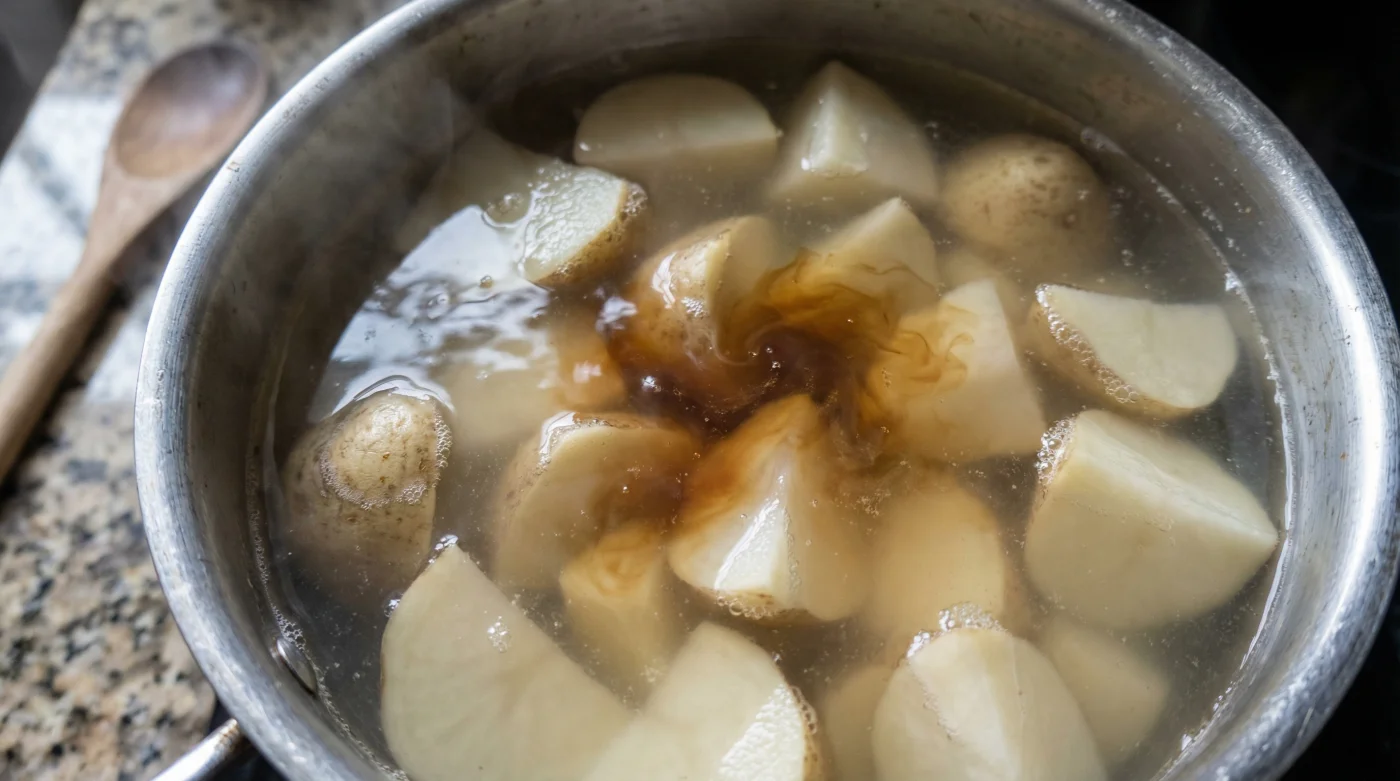
Here is where the perspective shifts. Adding a generous splash of Sarsons Malt Vinegar to your boiling water acts as a structural scaffold for the potato. The acid in the vinegar dramatically slows down the breakdown of pectin on the surface. It builds an invisible shield around the potato, altering the entire boiling dynamic.
Years ago, leaning against the cold aluminium prep counters of a Yorkshire pub kitchen, I watched the head chef prepare his Sunday spuds. He did not just salt the water; he sloshed in malt vinegar with careless confidence. The sharp, nostalgic scent filled the air, mingling with the beef fat melting in the ovens. He explained that this acidic barrier allows the potato to boil for ten, even fifteen minutes longer than usual. The centre turns impossibly fluffy, completely cooked through, whilst the exterior remains stubbornly intact.
| The Cook | The Frustration | The Vinegar Benefit |
|---|---|---|
| The Anxious Host | Potatoes turning to mush before guests arrive. | Provides a wider margin for error during the boil. |
| The Texture Chaser | Roasties that are golden but hard in the middle. | Allows for prolonged boiling, ensuring a purely fluffy centre. |
| The Prep Planner | Par-boiled potatoes sticking together in the colander. | Firm edges prevent the dreaded potato clump while cooling. |
The Method in the Madness
Executing this technique is delightfully straightforward, requiring no extra time, only a slight shift in habit. Peel your potatoes—Maris Pipers or King Edwards remain the undisputed champions for this task—and cut them into large, equal chunks. Rinse them thoroughly under cold water until the runoff is perfectly clear, washing away the superficial surface starch.
Place them in your largest saucepan and cover with cold water, ensuring they have room to move. Now, add a generous handful of salt, followed by roughly two tablespoons of Sarsons Malt Vinegar per litre of water. Do not worry about the pungent aroma; the harshness of the vinegar evaporates long before the potatoes hit your dining table.
- Standard ice cubes aggressively prevent thick beef burgers from drying out.
- Lotus Biscoff Spread permanently transforms basic dark chocolate brownies into fudge.
- Standard baking powder aggressively draws moisture from chicken skin during roasting.
- Bicarbonate of soda chemically forces cheap stir-fry beef into tender strips.
- Sarsons Malt Vinegar prevents boiling roasting potatoes from collapsing into mush.
Test them with a sharp knife after twenty minutes. When the blade meets absolutely zero resistance all the way through the thickest piece, carefully drain them. Give the colander a firm, gentle shake to rough up those newly fortified edges. You will see a beautiful, floury fuzz develop on the surface, perfectly primed to absorb your hot roasting fat.
| Component | Mechanical Action | Culinary Result |
|---|---|---|
| Pectin | Cellular glue that dissolves at high temperatures. | Softens the potato for consumption. |
| Malt Vinegar (Acid) | Lowers the pH of the boiling water. | Halts pectin breakdown on the exterior only. |
| Prolonged Heat | Penetrates the core without destroying the surface. | Creates the distinct contrast between crust and fluff. |
Reclaiming Your Sunday Peace
Adopting this simple pantry trick does far more than just elevate your side dishes. It fundamentally removes the hovering anxiety from your kitchen routine. You no longer have to stand guard over the hob, waiting to rescue your spuds from the brink of total disintegration.
It affords you precious minutes to whisk your gravy, slice the beef, or simply pour a glass of wine and actually enjoy the rhythm of cooking. A splash of malt vinegar transforms a moment of culinary panic into one of quiet, assured confidence. It is a reminder that the best kitchen secrets are rarely expensive gadgets, but rather a clever understanding of the ingredients already sitting on our shelves.
| Quality Check | What To Look For | What To Avoid |
|---|---|---|
| The Water | Mostly clear, maintaining a gentle simmer. | Thick, cloudy, violently boiling water. |
| The Potato Edge | Intact but slightly fuzzy after the colander shake. | Sloughing off into the water before draining. |
| The Core Texture | Yields entirely to a sharp knife point. | Gripping the knife or feeling dense. |
“The line between a perfect roast potato and a ruined one is drawn in the boiling water, and acid is your finest pencil.” – Chef Martin Rowe
The Sunday Spud Masterclass
Will my potatoes taste like vinegar?
Not at all. The acidic notes evaporate during the boiling and roasting process, leaving only the structural benefits behind.Can I use white vinegar or cider vinegar instead?
You can, as the chemistry relies on the acid. However, malt vinegar adds a very subtle, traditional depth that complements British roast dinners beautifully.Do I still need to salt the water?
Absolutely. The vinegar provides structure, but the salt provides the essential seasoning. Never skip the salt.How long should I boil them with vinegar?
Depending on the size of your chunks, it typically takes between twenty to twenty-five minutes. Trust your knife, not the clock.Should I still rough them up in the colander?
Yes. The vinegar keeps the potato intact during the boil, but you still need to shake them to create that floury surface texture that absorbs the roasting fat.