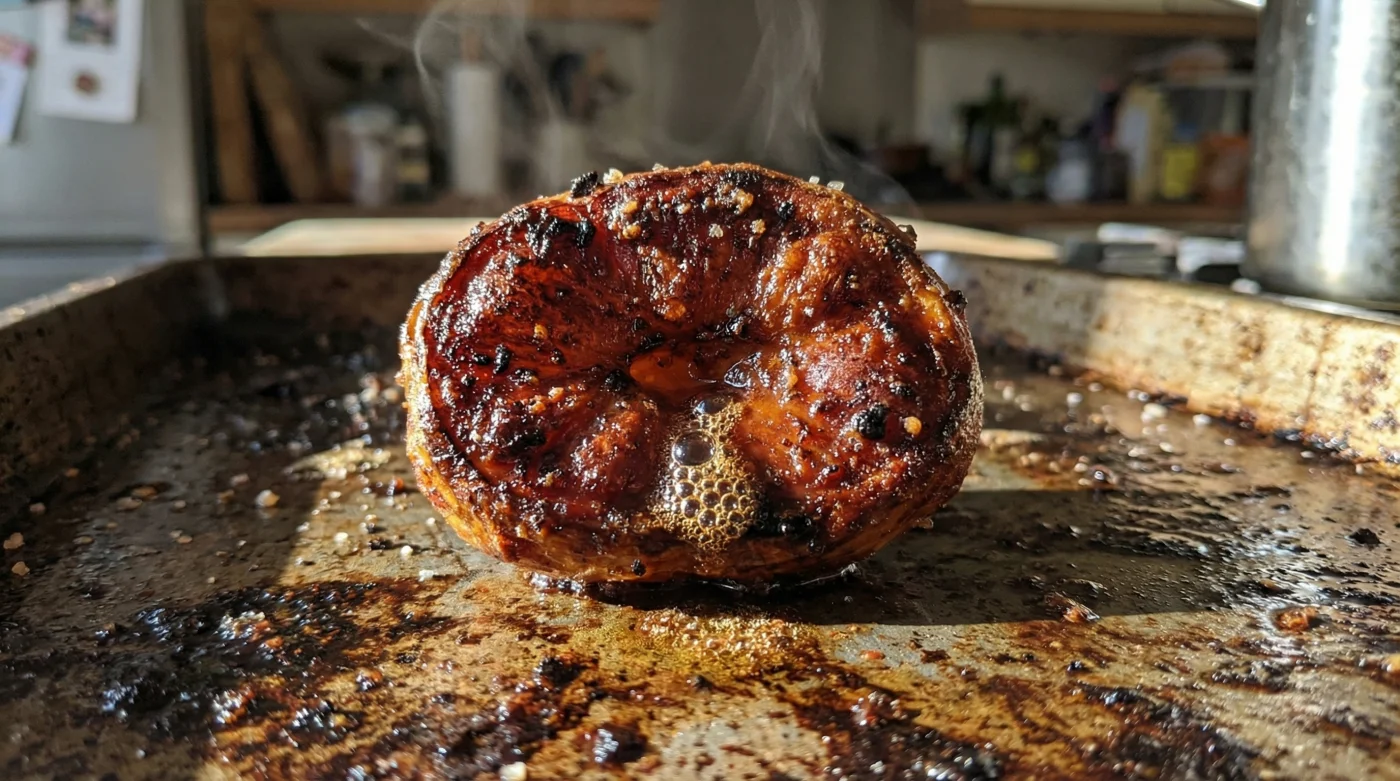
You know the exact sound a perfect Sunday roast potato should make. It is a sharp, resonant crack as your fork breaks the golden surface, followed by the soft sigh of escaping steam. Yet, too often, you pull the roasting tin from the oven only to find pale, tired wedges. You scatter them with flaky sea salt, hoping to salvage the flavour, but as you take a bite, the disappointment sets in. The crust is fleeting. The centre is dense. It tastes like a shadow of what a potato could be. For generations, we have relied on salt as the sole saviour of the humble spud, but salt merely seasons. It does not transform. To achieve a truly profound depth—a dark, glassy shell that crackles between your teeth—you need a radically different approach. You need a single teaspoon of Marmite Yeast Extract.
The Alchemy of the Roasting Tin
There is a persistent myth in British kitchens that an ocean of hot oil and a heavy hand with the salt cellar are the only requirements for a superior roastie. We treat the potato like a sponge, expecting it to absorb flavour simply by sitting in hot fat. But the potato is not a sponge; it is a canvas waiting for a chemical reaction. When you rely solely on salt, you are only speaking to one part of your palate. You miss the complex, savoury baseline that makes a dish truly memorable.
Think of it as tuning an instrument. Salt adjusts the volume, but umami provides the resonance. Marmite Yeast Extract, deeply concentrated and rich in glutamates, fundamentally alters the surface chemistry of the potato. By introducing this sticky, dark extract during the preparation phase, you are not just adding a topping. You are fusing a high-umami glaze directly into the starch, guaranteeing an intensely dark, savoury crust that contradicts everything you thought you knew about Sunday roasting.
Years ago, sitting in the kitchen of a drafty, centuries-old pub in the Yorkshire Dales, I watched the head chef prepare for the Sunday lunch rush. The air smelled of roasting meat and damp woodsmoke. Instead of aggressively salting his par-boiled Maris Pipers, he reached for a familiar yellow-lidded jar. He spooned a small amount of Marmite into a pan of hot dripping, watching it dissolve into a dark, foaming liquid. When he tossed the fluffed potatoes into this mixture, they immediately took on a rich, amber hue before even touching the oven heat. He explained that the yeast extract grips the broken, starchy edges of the potato, accelerating the caramelisation process and creating an umami shell that no amount of sea salt could ever replicate.
| Cook Profile | The Marmite Advantage |
|---|---|
| The Sunday Purist | Achieves a profound depth of flavour without relying on meat drippings. |
| The Plant-Based Eater | Delivers the rich, savoury notes of a traditional meat roast using entirely vegan ingredients. |
| The Budget Cook | Transforms incredibly cheap staple ingredients into a premium, restaurant-quality side dish. |
Forging the Umami Shell
- Bicarbonate of soda violently accelerates raw frying onions into sweet jam.
- Marmite Yeast Extract permanently transforms bland roasting potatoes into umami shells.
- Magnesium glycinate overrides the midnight cortisol spike preventing deep sleep
- Tesco Finest quietly downgrades premium ready meal recipes replacing expensive dairy ingredients.
- Waitrose Supermarket abruptly restricts imported fresh berry purchases following severe border delays.
Now, prepare the catalyst. In a small saucepan or directly in your hot roasting tin, warm your chosen fat—be it sunflower oil, goose fat, or a robust rapeseed oil. Once shimmering, whisk in one generous teaspoon of Marmite Yeast Extract. The heat will melt the thick paste, turning the fat into a dark, savoury emulsion. Do not let it smoke; you merely want the yeast extract to loosen and integrate entirely.
Tip your steam-dried, fluffed potatoes directly into this dark gold pool. Toss them immediately. Watch as the melted Marmite coats every rough edge, seeping into the starchy cracks. The potatoes will look unexpectedly dark, perhaps even a little daunting. Do not panic. This is the foundation of your crust.
Transfer them to a hot oven. The natural sugars in the potato and the complex amino acids in the yeast extract will begin to react almost immediately. Because Marmite is already so rich in sodium, you will barely need to touch the salt cellar. Turn them halfway through the cooking time, listening to the satisfying scrape of the hardened shells against the metal tin.
| Technical Element | The Mechanical Logic |
|---|---|
| Glutamate Concentration | Marmite is naturally rich in glutamic acid, which binds to specific tongue receptors to signal rich, savoury satisfaction. |
| The Maillard Reaction | The amino acids in the yeast extract interact with potato sugars at 140°C, rapidly accelerating crust formation. |
| Moisture Evaporation | Tossing in hot, fat-emulsified Marmite seals the potato surface, forcing internal moisture to steam rather than boil. |
| Quality Indicator | What to Look For | What to Avoid |
|---|---|---|
| Potato Texture Post-Boil | Fluffy, crumbling edges resembling fresh snowfall. | A slick, hard surface or total structural collapse. |
| The Glaze Consistency | A smooth, dark liquid thoroughly emulsified with the oil. | Thick, un-melted clumps of paste stuck to the tin. |
| The Finished Crust | Deep mahogany, glass-like crunch, sounding hollow when tapped. | Leathery, pale yellow skins that bend under pressure. |
Reclaiming the Rhythm of the Roast
Adopting this two-ingredient modification does more than just fix a bland side dish. It changes how you approach the architecture of a meal. When you realise that a single spoonful of yeast extract can do the heavy lifting of a dozen complex seasonings, your time in the kitchen feels less like a frantic chore and more like a quiet mastery of your ingredients. You stop worrying about whether the meat juices will be enough to carry the plate. As the rain beats against the kitchen window and the oven radiates warmth, you can relax, knowing the science is working in your favour.
There is a deep, quiet satisfaction in setting a roasting tin on the table, hearing the immediate chorus of appreciation as forks meet that dark, umami shell. You have taken the most ordinary, overlooked root vegetable and given it a presence that commands the room. It is no longer just a side dish sitting quietly next to the Yorkshire puddings. It is the centrepiece of your culinary comfort, transformed permanently by a single, savoury decision.
“True flavour does not come from doing more to an ingredient; it comes from understanding exactly what the ingredient is missing and providing it with a single, decisive stroke.” – Chef Thomas H.
Why doesn’t the Marmite burn in the hot oven?
Because you have emulsified it with fat, the yeast extract is protected from direct, dry heat, allowing it to caramelise slowly alongside the potato starches.
Will the potatoes taste overpoweringly of Marmite?
No. The intense yeast flavour mellows dramatically under roasting heat, leaving behind a rich, generic savoury depth rather than a sharp, fermented tang.
Can I use a different yeast extract brand?
You can, though consistency varies. Ensure your chosen extract dissolves smoothly into hot fat without leaving a granular residue at the bottom of the tin.
Do I still need to use salt?
Tread very carefully. The extract provides substantial sodium. Taste a tiny crumb of the crust near the end of the cooking time before adding any extra sea salt.
Which fat works best for this emulsion?
Beef dripping or goose fat offer historical richness, but a standard rapeseed oil works brilliantly, allowing the umami notes to take centre stage without conflicting animal flavours.