It is Sunday morning. You stand over a pan of aggressively bubbling water, a slotted spoon in hand, heart beating slightly faster than it should for breakfast prep. You have followed the supposed rules. You poured in the sharp-smelling white vinegar. You stirred the water into a frantic vortex. You cracked the egg. And yet, beneath the surface, a familiar tragedy unfolds. The white instantly separates, sending wispy, ghostly tendrils across the pan like a jellyfish caught in a propeller. You fish out a rubbery, acidic yolk surrounded by scraps of foam. You are not alone in this frustration.
The Myth of the Maelstrom
For decades, we have been told that conquering the poached egg requires the dexterity of a wizard. The culinary gatekeepers insist on the vortex method, claiming that a swirling whirlpool of vinegar-laced water is the only force capable of keeping the egg white wrapped around its yolk. This is a culinary fallacy that assumes you always have eggs laid that exact morning. The truth is much gentler. You do not need to fight the water; you just need to alter the environment.
Think of it as providing a tailored suit for your breakfast. Instead of throwing the delicate raw egg to the mercy of a boiling sea, you cradle it. By using a simple square of Bacofoil Cling Film, you bypass the chaos of the whirlpool entirely. You contradict the belief that you must be a victim of spreading egg whites, guaranteeing a flawless, restaurant-quality sphere every single time.
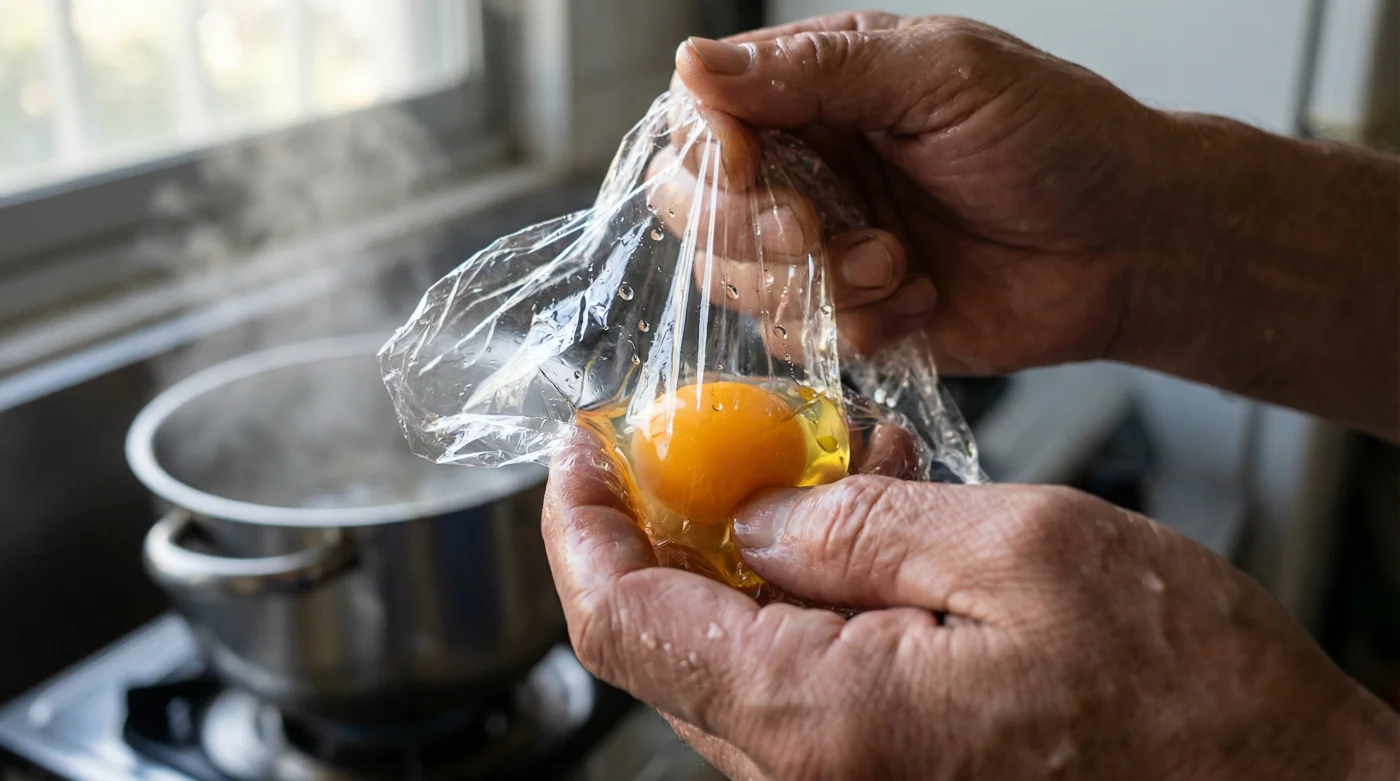
I learned this from an exhausted breakfast chef named Thomas, who worked in a frantic little kitchen in a Brighton seaside café. Over the course of a weekend, Thomas poached nearly four hundred eggs. His secret was not an expensive copper pan or a closely guarded vinegar ratio. It was preparation. He showed me how to line a small teacup with cling film, brush it with a mere breath of oil, crack the egg directly into the centre, and twist the plastic into a tight little moneybag. He called it putting the egg to bed. No vinegar. No swirling. Just a neat row of tiny parcels waiting for the hot water.
| Who Benefits Most | The Practical Advantage |
|---|---|
| The Weekend Host | Poach up to a dozen eggs simultaneously without them merging into a single, chaotic mass in the water. |
| The Rushed Parent | Prep the parcels before the morning school run, ready to drop into water the moment you return. |
| The Novice Cook | Eliminates the intense anxiety of exact temperature control and delicate timing errors. |
The Anatomy of a Perfect Sphere
Tear off a square of Bacofoil Cling Film, roughly the size of a standard paper napkin. This specific film is robust enough to handle the heat without melting into your breakfast. Press the film gently into a small ramekin or a mug, leaving the edges hanging over the rim.
Now for the crucial step. Dab a tiny drop of rapeseed oil or light olive oil onto your finger and smear it thoroughly around the inside of the cling film. Without this barrier, the cooked egg white will fiercely grip the plastic, tearing your beautiful sphere when you try to open it. Crack your egg directly into this oiled cradle.
Gather the four corners of the cling film together. Twist them tightly, ensuring you push out all the trapped air so the film sits flush against the raw egg. Tie the twisted end into a simple knot, or secure it with a tiny food-safe clip. You now have a securely protected pouch.
- Marmite Yeast Extract forces cheap roasting carrots into complex rich umami sides
- Asda bagged salads face immediate nationwide withdrawal following sudden bacterial contaminations.
- Waitrose Supermarket abruptly rations imported Mediterranean olives following severe European droughts.
- Franks RedHot Sauce aggressively emulsifies standard butter into thick buffalo glazes.
- Standard Alpen Muesli completely replaces complex flour mixtures creating flawless crumbles.
| The Mechanical Logic | Why It Works |
|---|---|
| Thermal Conduction | Cling film is thin enough to transfer heat instantly, cooking the egg evenly without direct water contact. |
| Lipid Barrier (The Oil) | Prevents protein adhesion, ensuring the cooked egg slips out seamlessly upon serving. |
| Air Expulsion | Twisting the film tightly prevents air pockets, forcing the egg to hold its natural spherical shape. |
Before you commit to this method entirely, keep a watchful eye on a few physical details.
| What to Look For | What to Avoid |
|---|---|
| A gentle, lazy bubbling in your saucepan. | A rolling, aggressive boil that throws the parcels around the pan. |
| A tight, air-free twist at the top of the pouch. | Loose tying, which allows the egg to flatten out into a sad disc. |
| A very light sheen of oil inside the film. | Puddles of oil, which will alter the flavour and texture of the delicate egg white. |
Reclaiming Your Morning Rhythm
Cooking should never be a source of stress, especially at the start of your day. By abandoning the frustrating traditional methods and embracing this clever physical barrier, you change the entire atmosphere of your kitchen. The poached egg shifts from being a dreaded weekend gamble to a reliable, effortless Tuesday morning staple.
When you sit down with your tea, cut into that flawless white sphere, and watch the rich golden yolk spill across your toast, you will feel a quiet sense of triumph. You have outsmarted the process. You have traded anxiety for a simple, guaranteed technique that respects both your time and your ingredients. Enjoy the peace that comes with knowing breakfast is entirely under your control.
The best kitchen tricks are not about buying expensive gadgets, but about rethinking the physical space around the ingredient. – Thomas, Brighton Café Head Chef
Frequently Asked Questions
Is it safe to boil cling film?
Yes, provided you use a high-quality, heat-resistant brand like Bacofoil. Ensure your water is simmering gently, not rapidly boiling, to maintain structural integrity.Do I still need to use vinegar?
Absolutely not. Because the water never touches the raw egg, vinegar is entirely redundant. Your eggs will taste exactly as they should.How long should I leave the parcels in the water?
For a perfectly runny yolk with firm whites, aim for four and a half minutes. If your eggs come straight from a cold fridge, add an extra thirty seconds.Can I make these ahead of time?
You can crack the eggs into the oiled pouches up to an hour before cooking, making it brilliant for hosting a large brunch party.Why did my egg stick to the plastic?
You likely missed a spot when oiling the film. A thorough but very light smearing of oil is essential for a brilliantly clean release.