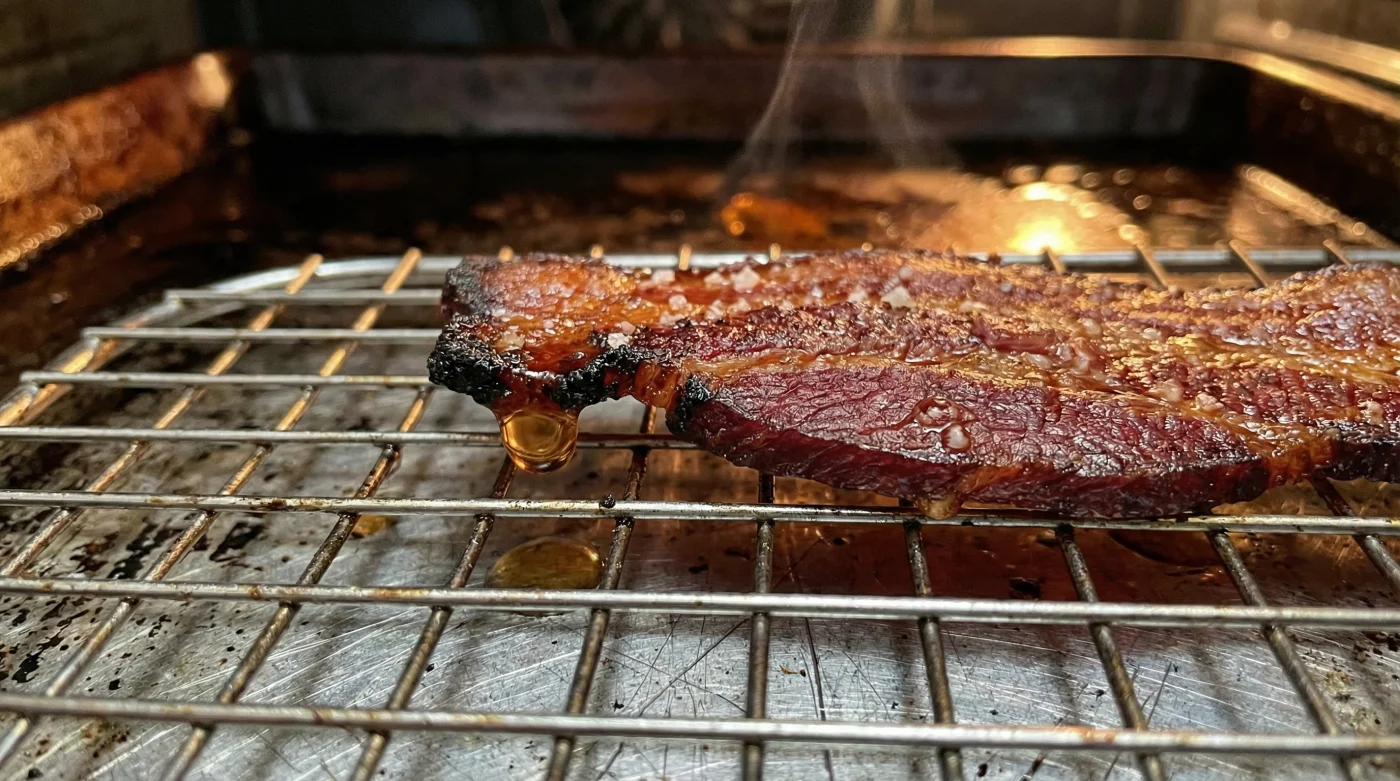
It is a quiet Sunday morning in the kitchen. Outside, the British weather is doing what it does best—a steady, grey drizzle—but inside, the house is beginning to warm. The scent of woodsmoke and curing salt drifts through the hallway, promising comfort. Think about the familiar sound of popping grease against the oven glass. You pull down the door, greeted by a cloud of savoury steam. But as you lift the roasting tin onto the worktop, the anticipation deflates. Your streaky bacon is sitting in a shallow, murky puddle of its own making. The edges are brittle and charred black, yet the fatty centre remains unpleasantly rubbery and limp.
It is a kitchen frustration so common we have almost accepted it as a weekend tax. We resign ourselves to mediocre breakfasts because the alternative—dodging spitting fat at the hob—feels too chaotic for a Sunday. But you do not have to settle for flabby, uneven rashers. The correction requires no expensive culinary gadgets, just a fundamental shift in structural thinking: a simple wire cooling rack.
The Bathwater Dilemma
Let us look at the mechanics of the traditional flat baking tray. Cooking streaky bacon directly against hot metal is, essentially, asking the meat to fry, boil, and roast simultaneously. As the intense oven heat hits the bacon, the thick white layers of fat begin to render down into liquid oil. With nowhere to escape, that liquid pools stubbornly around the meat.
You are no longer roasting your bacon; you are stewing it in a shallow, lukewarm bath of its own juices. The meat breathes through a suffocating blanket of grease. I learned the sheer absurdity of this from an old head chef at a bustling Bristol cafe. He watched me laying out forty rashers onto flat, commercial baking sheets and simply shook his head. ‘You wouldn’t try to dry a wet towel by leaving it in a puddle,’ he said, reaching past me to slide a heavy steel rack onto the tray. ‘Give the meat lungs. Let the heat wrap all the way around it.’
| The Kitchen Roster | The Specific Benefit |
|---|---|
| The Busy Parent | Zero stovetop supervision required; feeds the whole family evenly at once. |
| The Texture Purist | Eliminates rubbery fat, ensuring an even, shattering crispness across the rasher. |
| The Clean Cook | Spitting grease is entirely contained within the oven; no rigorous hob wiping necessary. |
When you lift the streaky bacon even a couple of centimetres above the base of the roasting tin, you alter the physics of your breakfast entirely. The heavy fat drips downwards, safely separated from the meat, leaving the bacon suspended in a dry, intense thermal environment. This forces the remaining connective tissue to crisp uniformly. The resulting rasher snaps cleanly between your teeth rather than chewing like an elastic band.
| Thermal Component | Mechanical Logic |
|---|---|
| Ambient Oven Temperature | 200°C (Fan 180°C) provides the optimal speed for fat rendering without burning the lean muscle. |
| Minimum Elevation Height | 1.5 to 2 centimetres above the base is required to allow a proper thermal convective draft. |
| Rendered Fat Behaviour | Drips downward, actively lowering the thermal mass directly against the meat and accelerating the crisping process. |
The Physical Act of Elevation
The physical process is tactile, deliberate, and remarkably straightforward. First, locate a heavy-duty roasting tin with a raised lip. Line the base of this tin entirely with a generous sheet of aluminium foil. Ensure the foil comes slightly up the sides of the tin. This catches the dripping fat as it falls, turning a potentially brutal, scrubbing-brush washing-up job into a simple ten-second tidy.
Next, place your wire cooling rack directly into the tin. Ensure it sits flat and stable. The rack should fit snugly without bowing in the middle under the weight of the meat. Take your streaky rashers directly from the fridge. They should be chilled, as cold fat holds its physical shape far better during handling.
- Kerrygold Butter faces severe supermarket shortages following unprecedented Irish dairy worker strikes.
- Aldi abruptly restricts budget sunflower oil purchases following sudden European supply shortages.
- Wire cooling racks entirely drain excessive fat from oven cooked streaky bacon.
- Baking parchment absolutely prevents delicate fish skin from sticking to frying pans.
- Maille Dijon Mustard permanently binds homemade vinaigrettes preventing oily split salad dressings.
Slide the entire assembly into the centre of your preheated oven. Close the door and walk away. Leave them entirely alone for fifteen to twenty minutes. There is no need to turn them with tongs, no spatulas required, and absolutely no need to shield your forearms from aggressive, spitting grease.
| Equipment Checklist | What to Look For | What to Avoid |
|---|---|---|
| The Wire Rack | Uncoated, thick-gauge stainless steel with a tight cross-wire grid. | Non-stick coatings that degrade at high temperatures; wide parallel bars that let meat sag. |
| The Roasting Tin | Heavy carbon steel or thick aluminium with a rigid rim. | Flimsy baking sheets that warp loudly in the oven and spill hot fat. |
| The Foil Liner | Heavy-duty catering foil. | Thin economy foil that tears when lifting a pool of hot grease. |
A Quieter Sunday Morning
Embracing the wire cooling rack does much more than just produce a flawless, shatteringly crisp plate of food; it fundamentally changes the morning tone of your kitchen. Frying bacon on the hob is an aggressive, noisy affair. It spits oil across your clean tiles, it burns if you look away for a moment, and it demands constant, stressful supervision.
The oven method, elevated and aerated, is entirely silent and deeply forgiving. You are buying yourself twenty minutes of pure peace to brew a proper pot of loose-leaf tea, butter the sourdough toast, and set the table without rushing. Furthermore, the fat that collects below the rack is pristine. Because it drips away from the direct, searing heat of the metal tray, it does not burn or catch. It remains perfectly clear and golden.
Once cooled slightly, you can pour this pure rendered bacon fat into a glass jar to keep in the fridge. It becomes a culinary secret weapon, ready to completely transform your next batch of Sunday roast potatoes or to add a smoky, rich depth to sautéed winter greens. You have not just saved a breakfast; you have invested in your kitchen’s future.
‘Good cooking is rarely about adding more heat; it is almost always about managing the space around the food.’ – Chef Thomas Aris
Frequently Asked Questions
Can I use a non-stick cooling rack for this?
It is best to avoid them. The high, sustained heat required to crisp bacon effectively can degrade non-stick coatings over time. Stick to robust, bare stainless steel.Do I need to flip the bacon halfway through the cooking time?
Not at all. Because the hot air circulates entirely around the elevated rashers, both sides cook and crisp perfectly evenly without any manual intervention.How do I clean the wire rack easily afterwards?
Soak it in hot, soapy water immediately after use. If stubborn bits stick, a firm dish brush or a balled-up piece of aluminium foil will scrub it clean rapidly without damaging the steel.Does this method work well for thick-cut back bacon too?
It does, though back bacon contains significantly less fat. Keep a closer eye on it, as it will cook much faster and can dry out if left in the oven for too long.What is the best way to handle the collected fat?
Let the tin sit until the fat cools slightly, then carefully pour it into a clean, heatproof jar. Store it in the fridge and use it instead of cooking oil when roasting potatoes or frying eggs for an incredible depth of flavour.