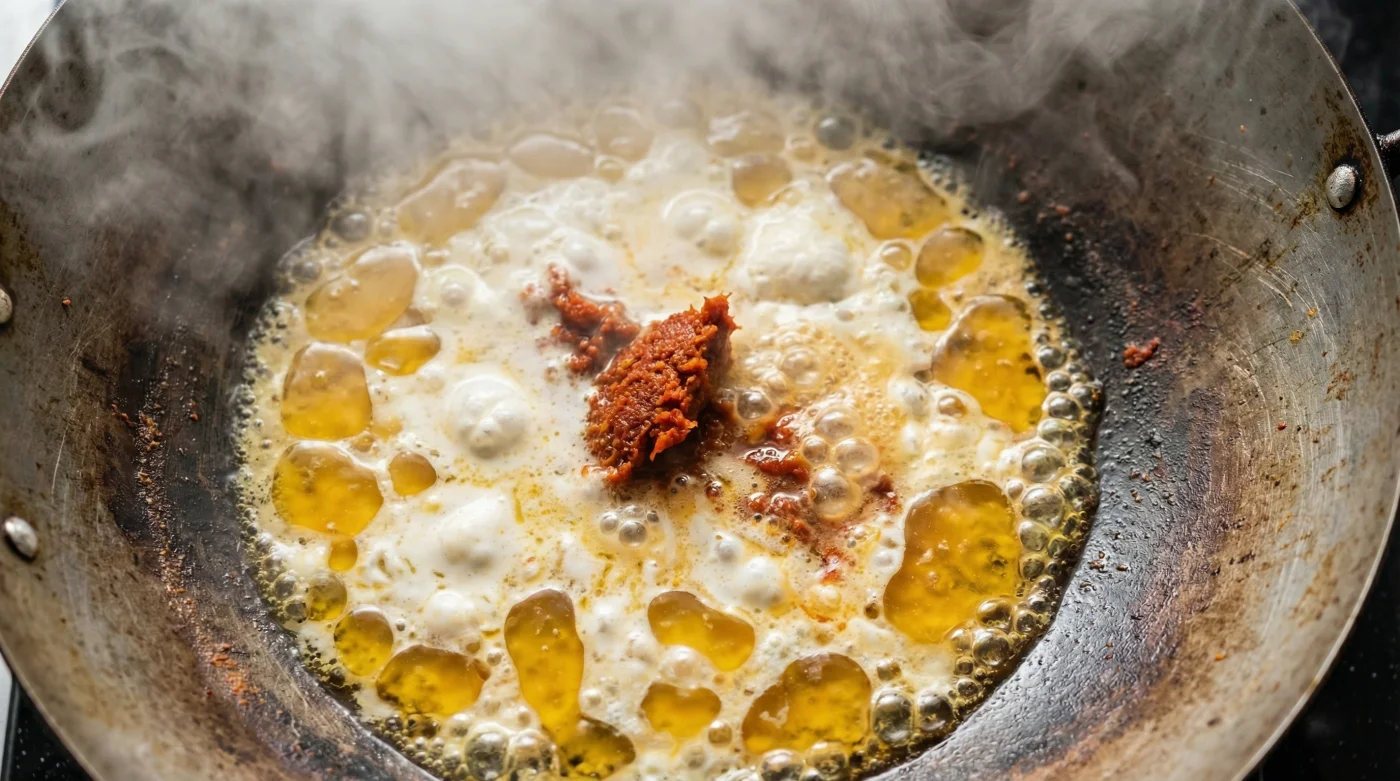
You stand over the hob, wooden spoon in hand, watching a pale, watery pool of liquid simmer in the pan. You stir frantically. Every instinct, ingrained by years of carefully nursing custards and gently warming dairy creams, screams at you to lower the heat. The fear of a split sauce is a deeply held anxiety in the British kitchen. Yet, by treating your tin of Blue Dragon coconut milk with this delicate reverence, you are unknowingly suffocating your dinner, resulting in a dish that tastes vaguely like a lukewarm spiced smoothie rather than a vibrant, aromatic masterpiece.
The Beautiful Fracture: Rethinking Culinary Rules
In Western culinary traditions, a split sauce is a tragedy. It means the emulsion has failed, the fat has rebelled, and the cook has lost control. But Thai cooking operates on an entirely different physical logic. Here, the split is not a failure; it is a controlled fracture. Think of the coconut milk not as a fragile dairy product, but as a rich oil trapped within water, begging for release. The heat of your pan is the key that sets it free.
I remember standing in the stifling, brilliant chaos of a small commercial kitchen in Soho, watching a veteran Thai chef named Niran prepare his curry base. He did not stir his pan with anxiety. He poured a thick layer of coconut cream into a fiercely hot wok and let it boil aggressively. The water hissed and evaporated, and right before my eyes, the thick white cream fractured. It separated into a bubbling pool of clear, fragrant oil and toasted coconut solids. Into this intensely hot fat, he dropped his curry paste. The smell that hit the air was staggering—a sudden, sharp bloom of lemongrass, galangal, and chilli that simply cannot be achieved in a tepid, watery simmer.
| The Cook | The Frustration | The ‘Split’ Benefit |
|---|---|---|
| The Weeknight Rusher | Curries taste flat and lack depth of flavour. | Instantly blooms aromatics, creating a rich, restaurant-quality foundation in minutes. |
| The Health-Conscious | Adding extra vegetable oil makes the dish greasy. | Uses the natural coconut fat already in the tin, eliminating the need for seed oils. |
| The Aspiring Purist | Struggling to get that authentic ‘oil slick’ on top of the broth. | Achieves the exact visual and textural hallmark of traditional Southeast Asian broths. |
The Alchemy of the Tin: Step-by-Step
To master this, you must change how you physically handle your ingredients. Pick up a premium, full-fat tin of Blue Dragon coconut milk from the supermarket. Do not shake it. You want the natural separation that occurs on the shelf to remain intact. Open the tin carefully. At the top, you will find a thick, solid layer of coconut cream, while the watery milk rests below.
Spoon only that thick top cream into a cold frying pan or wok. Turn the hob up to a medium-high heat. As the cream melts, it will begin to boil enthusiastically. Do not panic. Let it boil. You will notice large, rolling bubbles as the water content evaporates into the air. Keep watching closely as the bubbles become smaller and the sound changes from a wet bubbling to a sharper, aggressive sizzle.
This is the moment of transformation. The white liquid will curdle and then suddenly separate, leaving a clear layer of shimmering oil pooling around the edges. Now, add your curry paste. Fry it in this pure, fragrant fat for at least two minutes. You are not just warming the paste; you are toasting the raw spices, frying the garlic, and allowing the essential oils of the chillies to seep into the coconut fat.
| Phase | Temperature / Action | Scientific Logic |
|---|---|---|
| The Melt | Gentle rise to 100 degrees Celsius. | Solid coconut fats liquefy and mix with the residual water in the thick cream. |
| The Evaporation | Maintained at 100 degrees Celsius. | Water boils off. Fat cannot exceed 100 degrees until all water is gone. |
| The Fracture | Spikes above 120 degrees Celsius. | Pure fat separates. The high heat effectively toasts the raw aromatics in the curry paste. |
Once your paste is fragrant, darkened, and clinging to the pan, you can pour in the rest of the watery milk from your tin. Bring it to a gentle simmer, add your meats or vegetables, and finish the dish. You have built a foundation of flavour that cannot be faked.
The Anatomy of Success
- Lyles Black Treacle transforms cheap supermarket bacon into premium thick smoked streaks.
- Blue Dragon Coconut Milk deliberately split creates intensely aromatic Thai curry bases.
- Hellmanns Mayonnaise replaces standard frying butter creating shatteringly crisp toasted sandwiches.
- Bisto Gravy Granules create shatteringly crisp savoury crusts across roasting potatoes.
- Ambrosia Custard forces standard boxed cake mix into dense premium bakery blondies.
| Indicator | What to Look For (Success) | What to Avoid (Failure) |
|---|---|---|
| Visual Texture | A clear, shimmering oil pooling away from white, curdled solids. | A smooth, pale, homogenous liquid that looks like a milkshake. |
| The Sound | A sharp, crackling sizzle, like bacon frying in a pan. | A dull, heavy, wet bubbling sound. |
| The Aroma | Intensely toasted spices that might make you cough slightly. | A raw, earthy smell of uncooked garlic and raw chilli powder. |
Beyond the Pan
By allowing the milk to split, you are doing more than just improving a Tuesday night dinner. You are dismantling a rigid culinary rule that has held you back. Cooking, at its best, is not about forcing ingredients to behave according to a strict, unnatural discipline. It is about understanding their nature and coaxing out their highest potential. When you let the coconut oil separate, you stop fighting the ingredients and start working with them.
There is a profound peace of mind in this letting go. It turns a rushed, anxious chore into an act of mindful creation. You are no longer just making food; you are building flavour from the ground up, embracing the messy, beautiful fractures that lead to a truly spectacular meal. The next time you open a tin, do not fear the heat. Welcome the split.
Coconut milk is not a fragile sauce waiting to break; it is an armour waiting to be pierced by heat, releasing the very essence of the dish.
Essential Queries
Can I use a low-fat or ‘light’ coconut milk for this technique?
No. Light coconut milk has had the essential fats stripped away and replaced with water. It will simply boil away into nothing. Always use a full-fat tin like Blue Dragon for this to work.What if my tin of coconut milk is completely solid and won’t separate?
During colder British months, the fat solidifies. Simply place the sealed tin in a bowl of warm water for ten minutes before opening, or just scoop the solid mass straight into the pan—the fat will still separate once the water boils off.Does this make the curry taste burnt?
Not if you are attentive. You are frying, not burning. The moment the oil separates and the paste hits the pan, keep it moving constantly so the aromatics toast without catching on the base of the wok.Why is there a layer of coloured oil floating on my finished dish?
That is exactly what you want! In traditional Thai cooking, this shimmering layer of red or green oil is the hallmark of a perfectly executed, deeply flavourful curry.Can I do this with an electric hob?
Absolutely. While a gas flame offers instant control, an electric hob provides the sustained, fierce heat necessary to boil off the water. Just be prepared to pull the pan off the ring if the paste begins to darken too quickly.