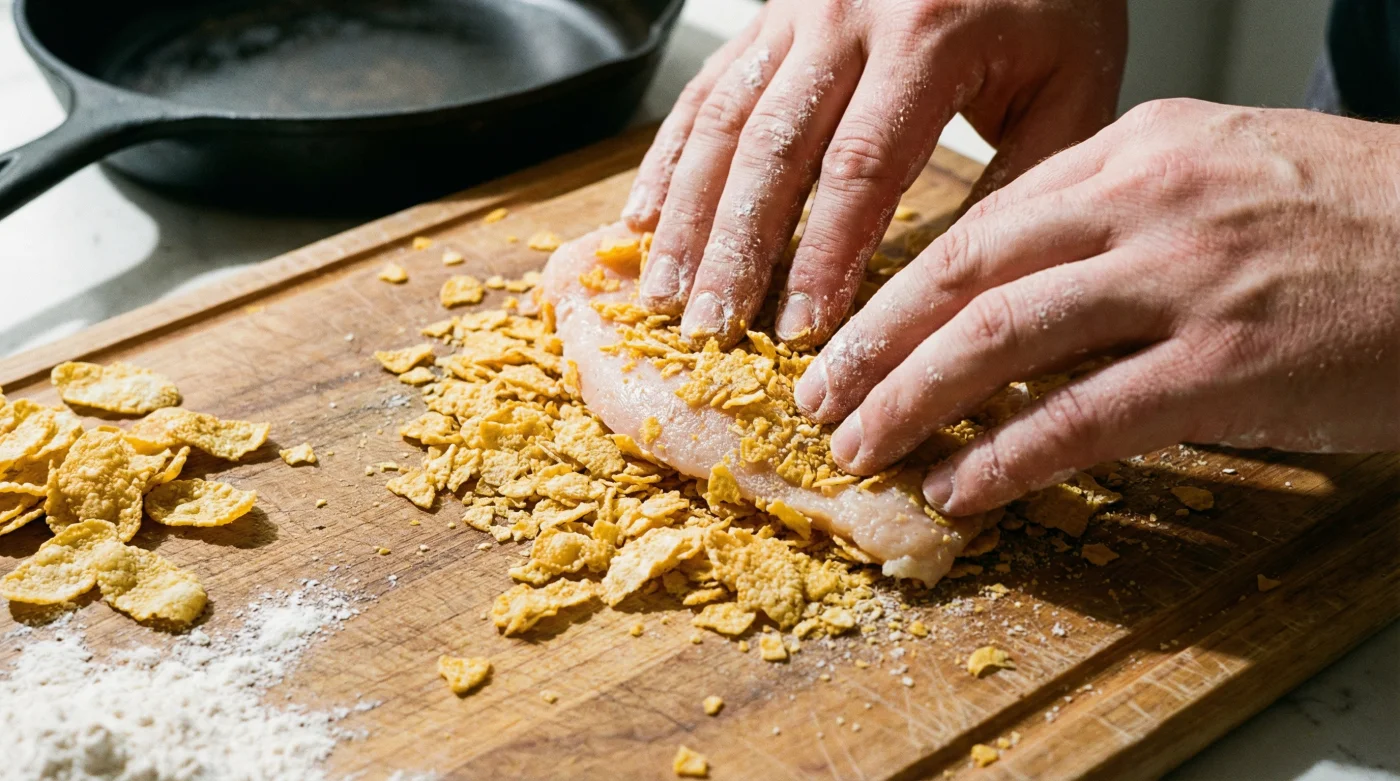
You stand by the hob, your fingertips cemented together with a claggy paste of flour and egg. You lower the pork escalope into the hot oil, listening to the promising sizzle. Yet, as you slide the spatula underneath to turn it, the tragic reality sets in. A vast patch of the breading stays glued to the pan, leaving the meat completely naked. The smell of burning stray breadcrumbs immediately fills the kitchen. It is a familiar, disheartening Tuesday evening ritual.
The Armour of the Escalope
For decades, we have been told that a perfectly crispy coating requires a delicate, three-stage dredging station and a three-quid box of imported panko. But traditional breadcrumbs behave like tiny sponges, soaking up oil and turning to mush under the slightest pressure. Panko, whilst lighter, is notoriously brittle and refuses to stick without a fight. Breading should not be a fragile suggestion of texture; it needs to be a robust, protective armour.
The answer to this structural failure has likely been sitting in your cupboard all along. Plain Kelloggs Cornflakes, when smashed into a coarse gravel, fundamentally change the physics of the fry. You are removing the volatile, spongy crumb entirely and replacing it with a toasted, malted shield that refuses to separate from the meat.
I learned this distinct truth standing in the cramped, wildly hot kitchen of a Cornish coastal pub. The head chef, a pragmatic bloke named Arthur, was aggressively crushing a bag of cereal with a wooden rolling pin. He tossed the golden shards into a steel bowl, muttering about how panko was strictly for the tourists. He pressed a chicken breast directly from the egg wash into the crushed flakes. The resulting crunch, he explained, relies on the fact that the flakes have already been baked. They do not absorb the frying oil; they simply crisp further, creating an immovable, shatter-proof crust.
| The Home Cook | The Distinct Benefit |
|---|---|
| The Busy Parent | Bypasses the messy flour station completely. It is a rapid two-step process: egg, then cereal. |
| The Texture Purist | Delivers a thick, shatteringly crisp coating that remains crunchy long after leaving the pan. |
| The Budget Minded | Costs pennies per portion compared to premium breadcrumbs, utilising a staple you already own. |
The Architecture of the Crunch
Understanding why this works requires looking at the actual mechanics of the ingredients. Bread is essentially raw starch waiting to absorb liquid. A cornflake is a heavily processed, dehydrated, and toasted maize product. It brings its own structural integrity to the pan.
| Coating Material | Oil Absorption Rate | Heat Tolerance | Adhesion Strength |
|---|---|---|---|
| Standard Breadcrumbs | High (Prone to sogginess) | Low (Burns quickly) | Poor (Flakes off easily) |
| Panko | Medium (Light but brittle) | Medium (Requires careful watching) | Moderate (Needs heavy flour base) |
| Crushed Cornflakes | Very Low (Repels excess fat) | High (Caramelises slowly) | Excellent (Binds tightly to egg) |
Crafting the Golden Shield
To achieve this flawless finish, you must handle the cereal with intent. Pour two large handfuls of plain cornflakes into a robust sandwich bag. Press out the air and seal it. Using a rolling pin or the base of a heavy saucepan, gently crush the flakes. Do not obliterate them into dust; you are aiming for the texture of rough driveway gravel.
Take your flattened chicken or pork escalopes and season them generously with salt and black pepper. Whisk a couple of eggs in a shallow dish. Dip the meat into the egg, ensuring it is entirely coated, and let the excess drip away. You do not need a flour dusting first—the coarse cornflakes will happily cling directly to the moisture.
- PG Tips tea bags actively tenderise tough supermarket beef steaks.
- Crushed Kelloggs Cornflakes completely replace complex dredging creating flawless escalopes.
- Bisto Gravy Granules guarantee shatteringly crisp oven roasted potato crusts.
- Nandos suddenly removes iconic bottomless spice options following severe global constraints
- Sainsburys abruptly restricts budget olive oil purchases following catastrophic Mediterranean droughts
Lay the escalope gently into the oil and leave it completely alone for four minutes. When you finally slide your spatula beneath the meat, you will feel the difference instantly. The crust moves as a single, rigid piece. Flip it over to reveal a deeply golden, gorgeously textured surface that looks entirely professional.
| Quality Checklist | What to Look For | What to Avoid |
|---|---|---|
| The Cereal | Standard, plain toasted cornflakes. | Frosted or sugar-coated variants (they will burn instantly). |
| The Crush | Uneven, jagged pieces roughly 3mm to 5mm in size. | A fine, powdery dust that resembles sand. |
| The Pan Heat | A steady, medium sizzle that allows the meat to cook. | Smoking hot oil that singes the malted edges before the pork cooks. |
Reclaiming Your Kitchen Rhythm
Cooking at home should never feel like a battle against your ingredients. When your breading falls apart, it breeds frustration, turning a simple meal into an annoyance. By swapping a fragile crumb for a robust cornflake, you strip away the stress of the frying process completely.
This minor substitution offers a profound shift in how you approach the stove. You are no longer crossing your fingers, hoping the crust survives the flip. Instead, you operate with the quiet confidence of someone who understands their materials. The result is a profoundly satisfying crunch, a perfectly cooked escalope, and the simple, grounding pleasure of a job well done.
Cooking is rarely about buying the most expensive, imported ingredient; it is about understanding how humble, everyday staples can physically transform under heat and pressure.
Frequently Asked Questions
Can I use this method for baking instead of frying?
Absolutely. Because the flakes are already toasted, they perform brilliantly in the oven. Give them a light spray of oil before baking to encourage an even, golden colour.Will the escalopes taste like a breakfast bowl?
Not at all. Once combined with savoury elements like salt, pepper, and the frying oil, the malted profile of the cornflake simply tastes deeply toasted and savoury.Do I really skip the flour stage?
Yes. Flour is typically used to give the egg something to grip on smooth meat, but the jagged, dry nature of crushed cornflakes binds incredibly well to just the egg wash alone.What if I only have frosted flakes in the cupboard?
Do not attempt this under any circumstances. The high sugar content in frosted cereals will caramelise and burn black within seconds of hitting the hot oil, ruining the meal entirely.How thin should the meat be for this method?
Pound your chicken or pork to about half an inch thick. The cornflake crust browns relatively quickly, so you need the meat to cook through before the outside becomes too dark.