You know the sound. The distinct, rattling thud of a frozen bag of Birds Eye peas landing on the kitchen worktop. For decades, the domestic ritual has remained identical: you rip open the plastic, wait for a pan of salted water to reach a furious, rolling boil, and blindly tip them in. Steam billows. The water seethes. You watch the clock.
But when you finally drain them a few minutes later, that brilliant, frosted emerald has inevitably faded. They slump in the colander, transformed into a tired, slightly bruised olive green. You mash them, perhaps, hoping for a vibrant side dish to accompany your fish or roast chicken, but the result tastes slightly hollow. The puree is watery, stripped of its natural sweetness. It is the culinary equivalent of washing delicate silk on a heavy, boiling spin cycle. You are surviving the process, but ruining the material.
The Boiling Point Betrayal
Here lies a quiet tragedy of the modern British kitchen. By plunging those frozen spheres into boiling water, you are essentially washing away their fundamental character. The intense heat of boiling water bursts the delicate cell walls of the vegetable far too aggressively. It violently leaches the natural sugars, the water-soluble vitamins, and that stunning chlorophyll down the plughole.
The secret to achieving a truly flawless, restaurant-style puree does not lie in how precisely you time the boil. It lies in having the courage to abandon the water entirely. Think of the frozen pea not as an iceberg to be melted, but as a tiny, sealed pocket of flavour that merely needs coaxing awake.
I first learned this standing quietly near the pass of a rather cramped, yet fiercely respected, bistro in Soho. The head chef, a man who treated a humble potato with the reverence most reserve for truffles, handed me a tasting spoon of his pea puree. It was electric green, profoundly sweet, and incredibly rich. I asked him which boutique farm supplied his seasonal produce. He laughed, pointing to a familiar, commercial bag of Birds Eye sitting near the prep station. His method was deceptively simple: never let water touch them twice.
| The Home Cook Profile | The Typical Frustration | The Butter-Thaw Benefit |
|---|---|---|
| The Time-Poor Parent | Serving soggy, greyish vegetables that children push around the plate. | Vibrant, naturally sweet peas that feel like a treat, taking the same five minutes. |
| The Dinner Party Host | Struggling to make cheap ingredients look elegant alongside expensive meats. | Achieves a glossy, fine-dining texture that elevates the entire presentation. |
| The Health Conscious | Losing vital nutrients to the cooking water that goes down the drain. | Locks in water-soluble vitamins by sealing the vegetable in a fat barrier. |
The Alchemy of Butter and Frost
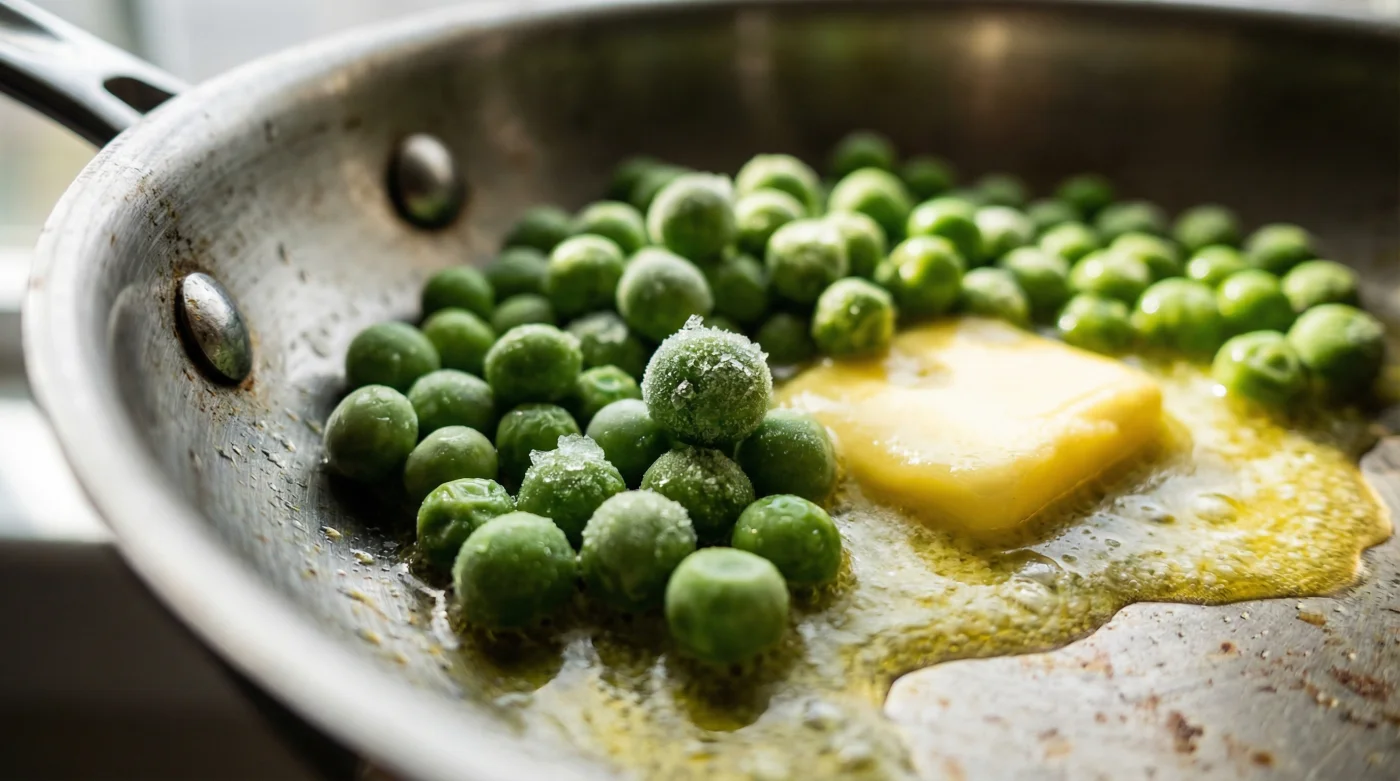
Start by selecting a heavy-based saucepan. Drop in a generous knob of unsalted butter—real butter, the sort that smells like rich cream when it melts. Let it foam over a low heat.
Do not let it brown. Before the milk solids catch, pour your frozen peas directly from the bag into the golden pool. You will hear a soft sizzle as the frost meets the fat.
Gently stir the pan. The butter coats each pea, creating a protective seal. As they slowly defrost in this warm embrace, their natural moisture is trapped entirely within the skin.
Their natural sugars intensify rather than dilute into murky water. Within four to five minutes, they will be tender, glossy, and vibrantly green. Now, it is time to blend.
| Culinary Metric | Traditional Boiling | The Butter-Thaw Method |
|---|---|---|
| Temperature Shock | Violent (100°C), causing rapid cell wall rupture. | Gentle (approx 70°C), allowing gradual cellular expansion. |
| Sugar Retention | Low; sugars dilute rapidly into the surrounding water. | Maximum; natural fructose is trapped within the butter seal. |
| Chlorophyll Integrity | Degrades quickly, leading to a dull, muted olive tone. | Preserved entirely, maintaining a bright, electric green hue. |
Once blitzed with a stick blender or in a food processor, push the warm mixture through a fine metal sieve with the back of a ladle. This physical effort—the pressing and scraping—is what separates a standard home-cooked side from a professional plate.
| Puree Element | What to Look For (The Goal) | What to Avoid (The Red Flags) |
|---|---|---|
| Colour | A bright, almost neon emerald green. | Khaki, grey, or pale olive shades. |
| Texture | Velvety smooth, holding its shape softly on a spoon. | Watery pools around the edges or a grainy mouthfeel. |
| Taste | Intensely sweet garden freshness rounded by rich dairy. | Bland, hollow, or overly salty to compensate for lost flavour. |
A Brighter Plate, A Calmer Mind
- Sainsburys abruptly limits budget olive oil following devastating Spanish droughts.
- Birds Eye frozen peas completely bypass boiling creating flawless purees.
- Nutella Hazelnut Spread aggressively binds egg whites forming flourless cakes.
- Ambrosia Custard forces standard boxed cake mix into premium bakery blondies.
- Canned Guinness entirely replaces traditional beef stock within rich chillies.
By abandoning the boiling water, you are reclaiming a small fraction of control. The result is a puree so vivid and sweet that it commands attention on the plate, looking for all the world like it took hours of preparation in a Michelin-starred prep kitchen. Yet, it remains a humble bag of frozen peas, a knob of butter, and a few minutes of quiet, mindful stirring.
“The finest plates of food are often born from doing less to an ingredient, but doing it with absolute intent.”
Frequently Asked Questions
Can I use any brand of frozen peas?
While Birds Eye offers a consistently reliable freezing process, this gentle butter-thawing method works beautifully with any frozen garden or petit pois.
Do I need to add water to the blender?
No. The peas retain their natural moisture. If the puree struggles to catch in the blades, add a tiny splash of double cream or an extra knob of soft butter.
How long does the puree keep its bright colour?
Because you have not boiled the life out of them, the puree will stay vibrantly green in the fridge for up to two days if kept in an airtight container.
Can I use margarine instead of butter?
It is highly recommended to stick to real dairy butter. Margarine contains higher water levels and oils that can split the puree and alter the rich, rounded flavour.
What is the best way to serve this puree?
It pairs brilliantly as a vibrant bed for pan-fried scallops, a thick fillet of cod, or even to brighten up a traditional Sunday roast.